Free exercise library

Watercolour Exercises

A comprehensive library of exercises to build your skills systematically — from water control and values to colour mixing and composition. Each one is designed for a focused 15-minute practice session.

81
free exercises

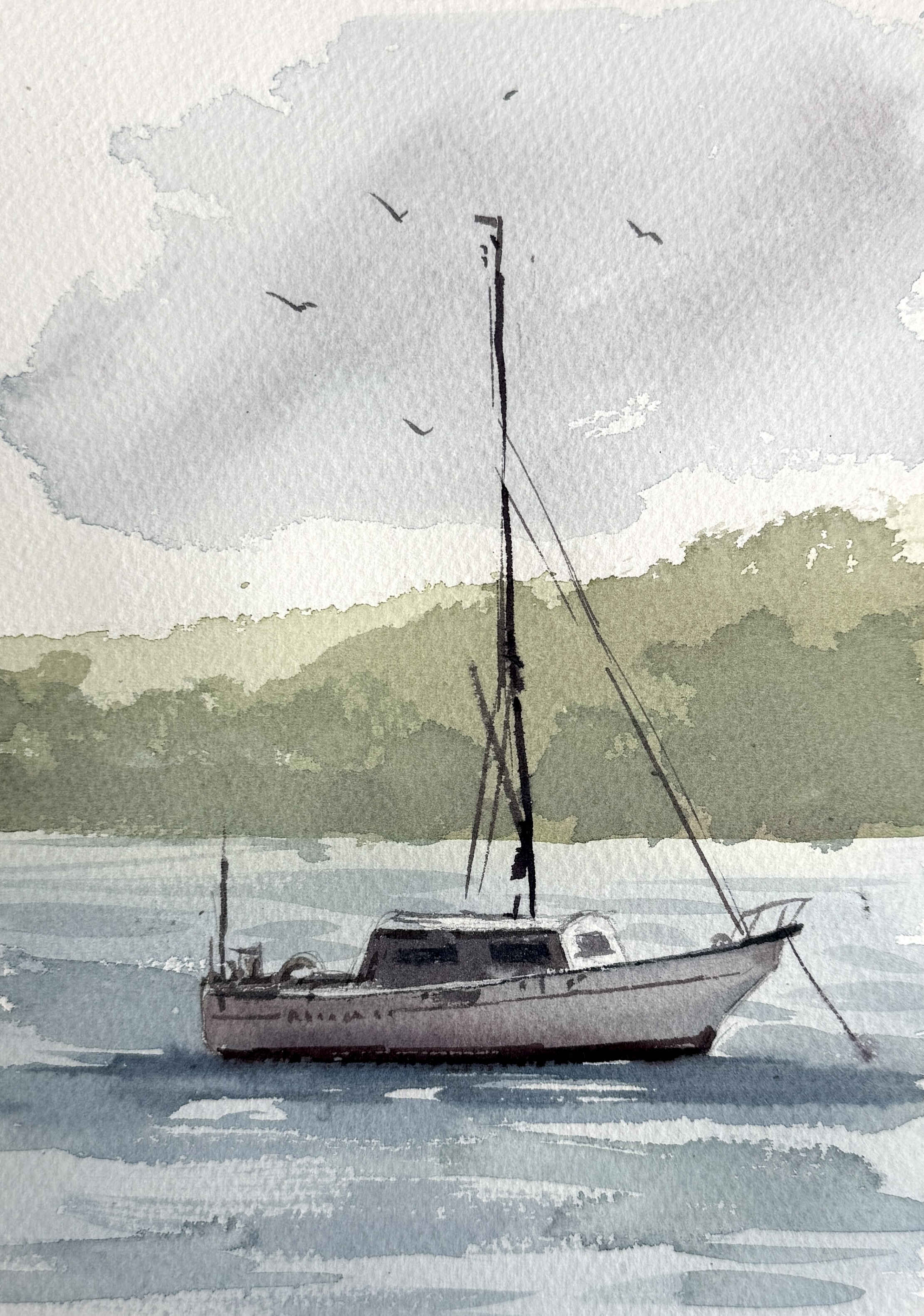
Boats in a Box

Boats in a Box

Use light construction lines to get boat proportions right before you paint, then paint a boat with gradation to build volume.

Exercise: Sketch several boats in pencil using the box method: fit each hull inside a shallow rectangle, place the stern in a top corner, connect it to the bow with a curve, then set the angles. Move to watercolour paper, draw a boat while only imagining the box, and paint it with a limited palette, adding gradation into the hull.

Why: Construction lines take the guesswork out of proportion, the main reason boats go wrong, and gradation inside a single shape is the fastest way to create volume.

SubjectsComposition & PlanningWashes & Gradients
Read full tutorial
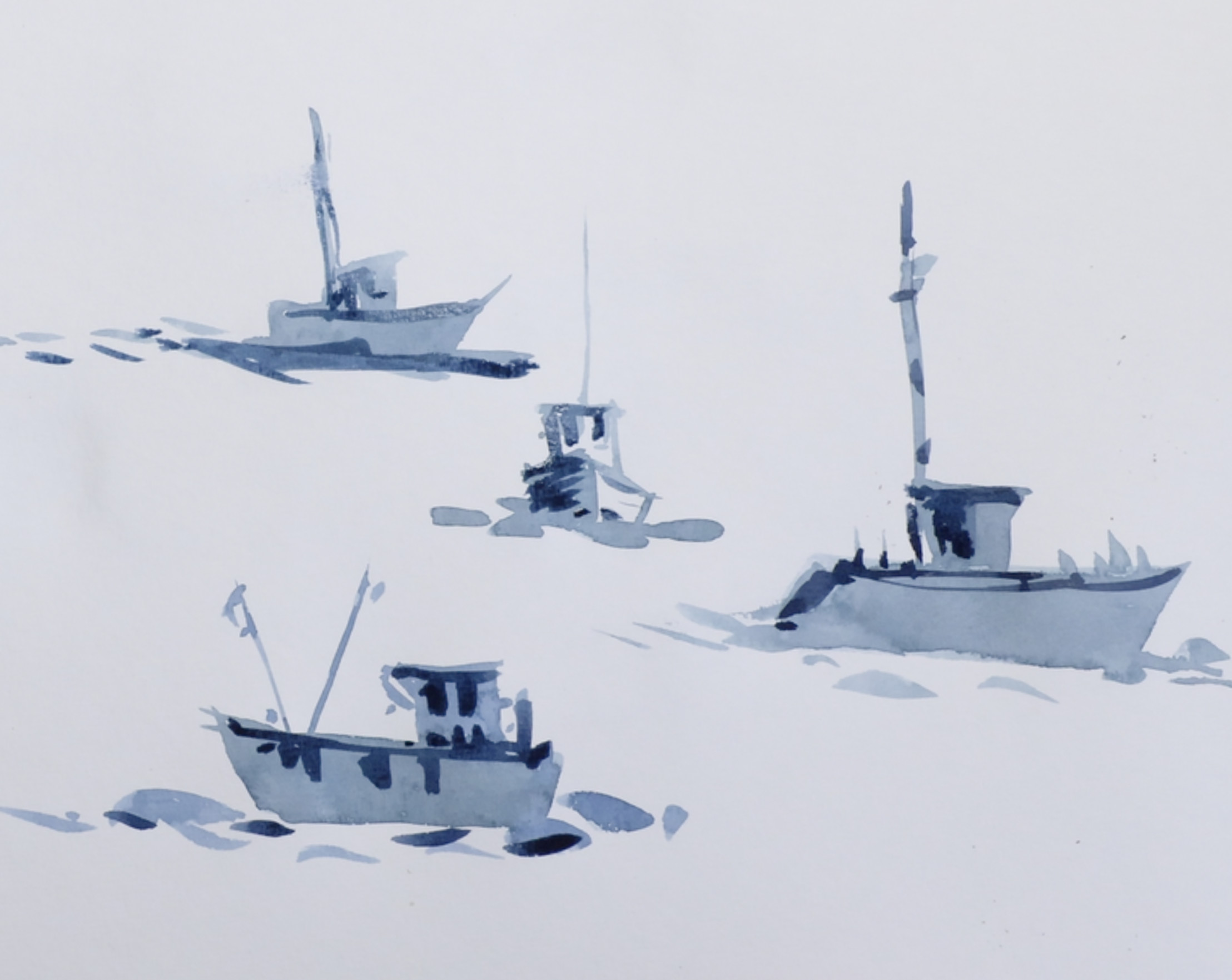
Boats Without Borders

Boats Without Borders

Paint boats directly with the brush, skipping the pencil entirely and building each one from a few simple shapes.

Exercise: Start with the hull as one broad stroke, then adjust the angles of the front and back. Add a small block on top for the cabin, a single line for the mast, and a sail if you want. Paint lots of boats quickly. Each takes under a minute, so mistakes cost nothing.

Why: Painting without a pencil trains you to see big shapes first and builds confident, committed strokes. Constructing subjects from a few simple shapes works for almost everything: boats, buildings, birds, people.

Brush ControlSubjects
Read full tutorial
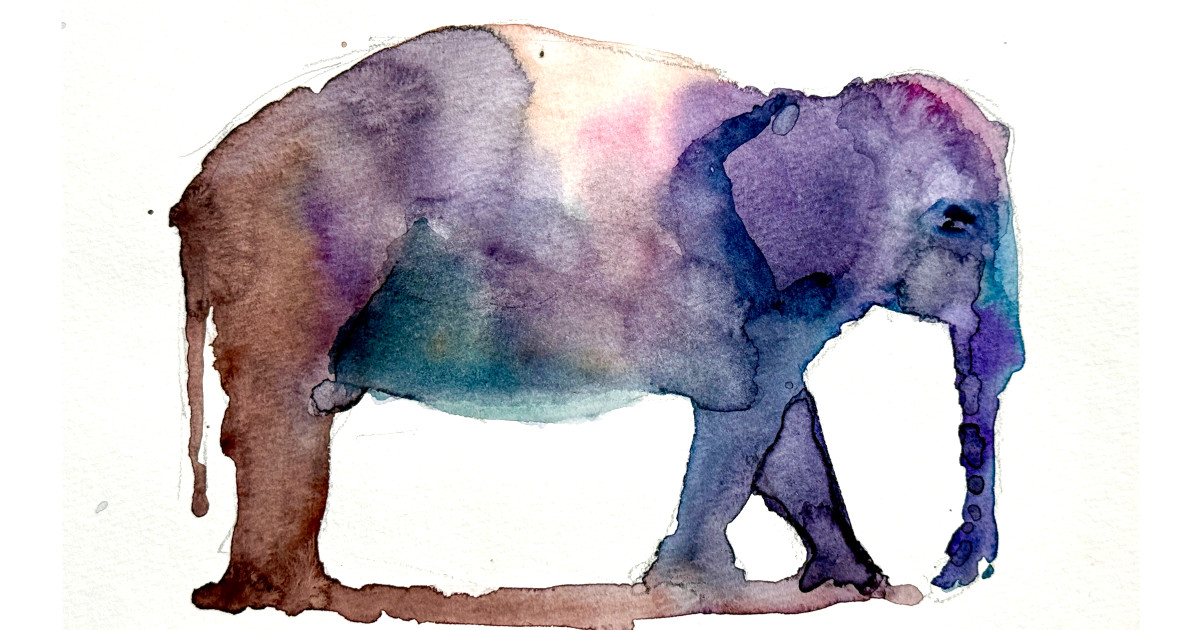
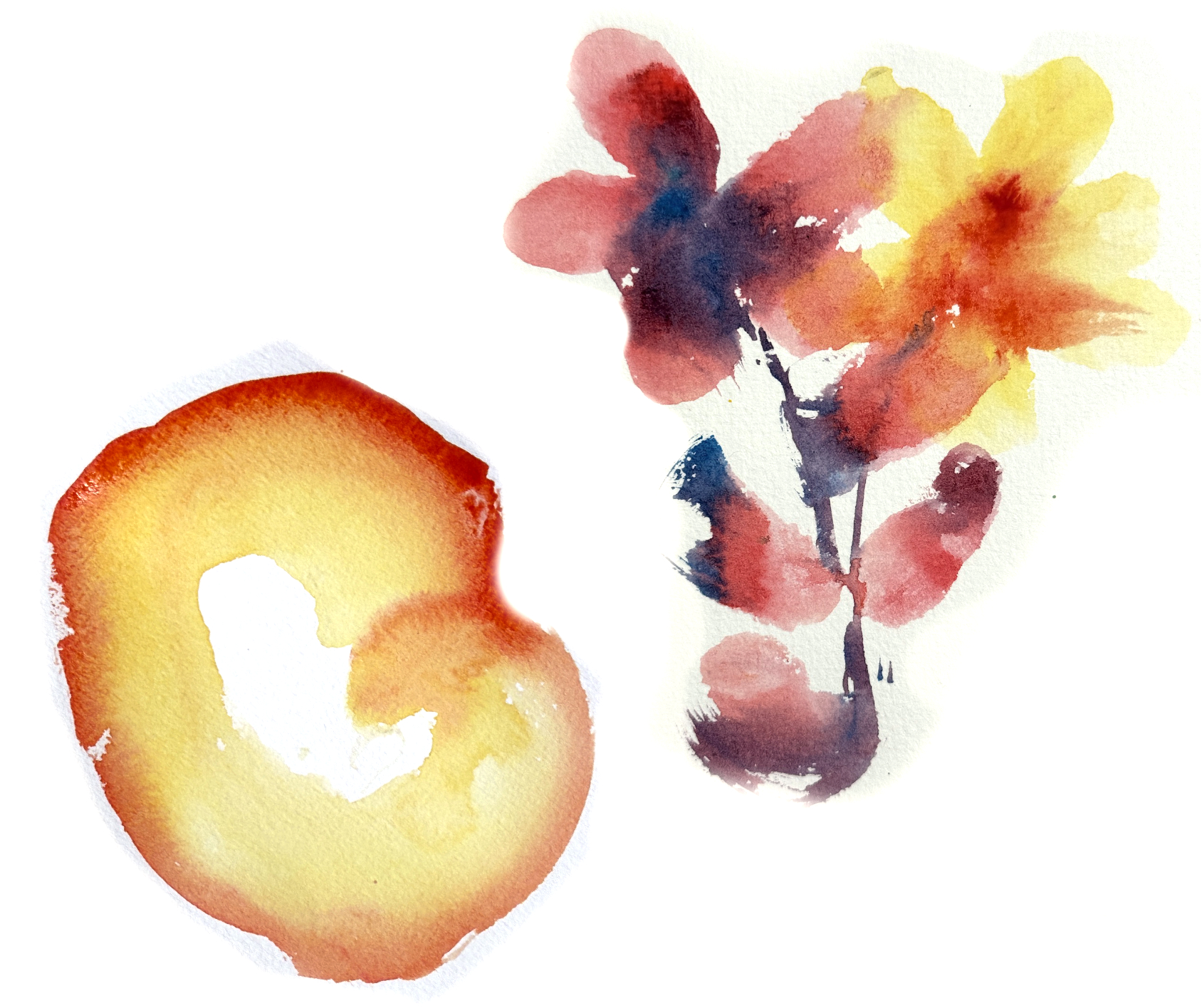
One Shape, Many Colours

One Shape, Many Colours

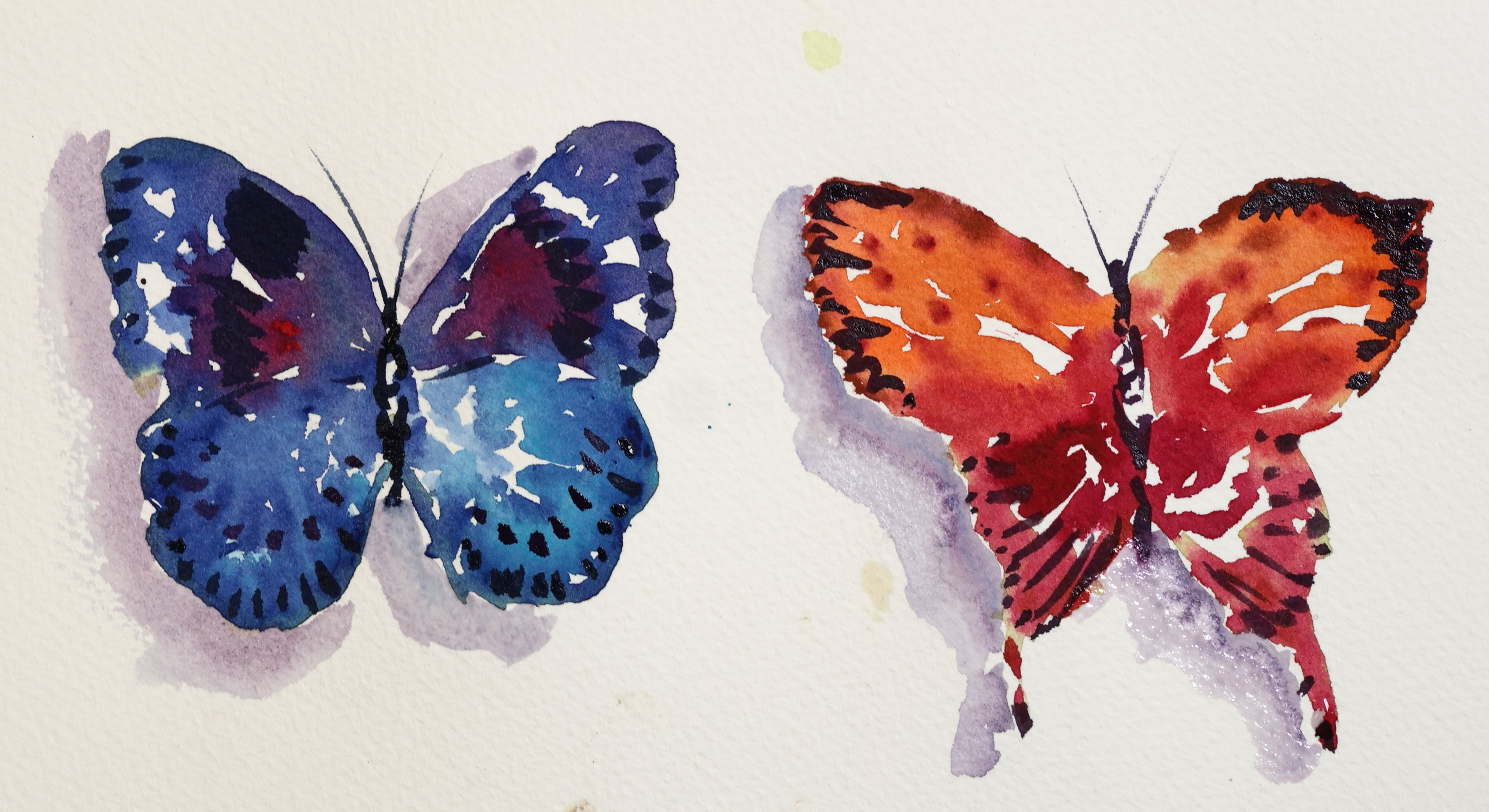
A wet-in-wet exercise in which a single bold silhouette holds a free blend of colours.

Exercise: Sketch a simple, strong-silhouetted shape in pencil, then wet the interior evenly with clean water right up to the line. Drop in several colours and tilt the paper to move them around, stopping before the paper starts drying unevenly so you avoid unwanted blooms.

Why: A clear outline lets you let go of control inside it, teaching you to place your colour and then leave it alone for the best wet-in-wet blends.

Water ControlColourWashes & Gradients
Read full tutorial
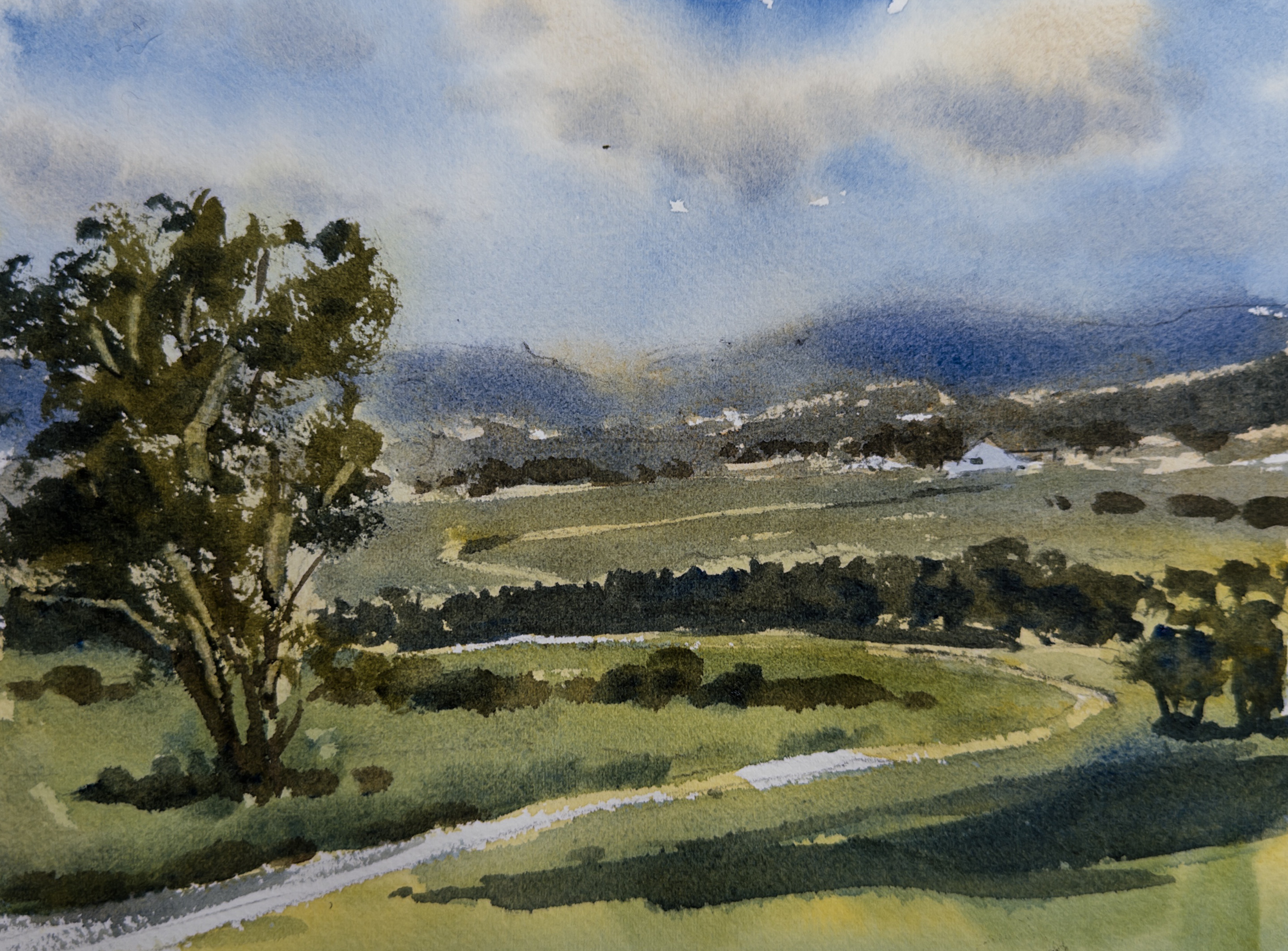
The Long and Winding Road

The Long and Winding Road

Use leading lines and the S-curve to guide the viewer's eye through a landscape composition.

Exercise: Find a landscape reference that feels directionless. Identify where a winding path, track or shadow line could be introduced, then paint a small study that adds this leading line as an S-curve, entering from the bottom of the page and drawing the eye toward your centre of interest.

Why: A leading line turns a collection of elements into a scene with a destination, and a curved line slows the eye down to build depth in a way a straight line cannot.

Composition & PlanningSubjectsPerspective
Read full tutorial
2 Colour Wet-in-Wet

2 Colour Wet-in-Wet

Practise water and pigment consistency by working wet-in-wet with just two colours, watching how they mingle and bloom on damp paper.

Exercise: Wet a small patch of paper and load your brush with two contrasting colours mixed to different consistencies. Drop one in, then the other, and watch how they spread and blend where they meet. Repeat the wash at varying paper dampness and pigment strengths to learn which consistency gives soft mingling and which gives hard blooms.

Why: Controlling the balance of water and pigment is the foundation of every wet-in-wet wash. Limiting yourself to two colours keeps your attention on consistency rather than colour mixing.

Water ControlColourWashes & Gradients
Read full tutorial
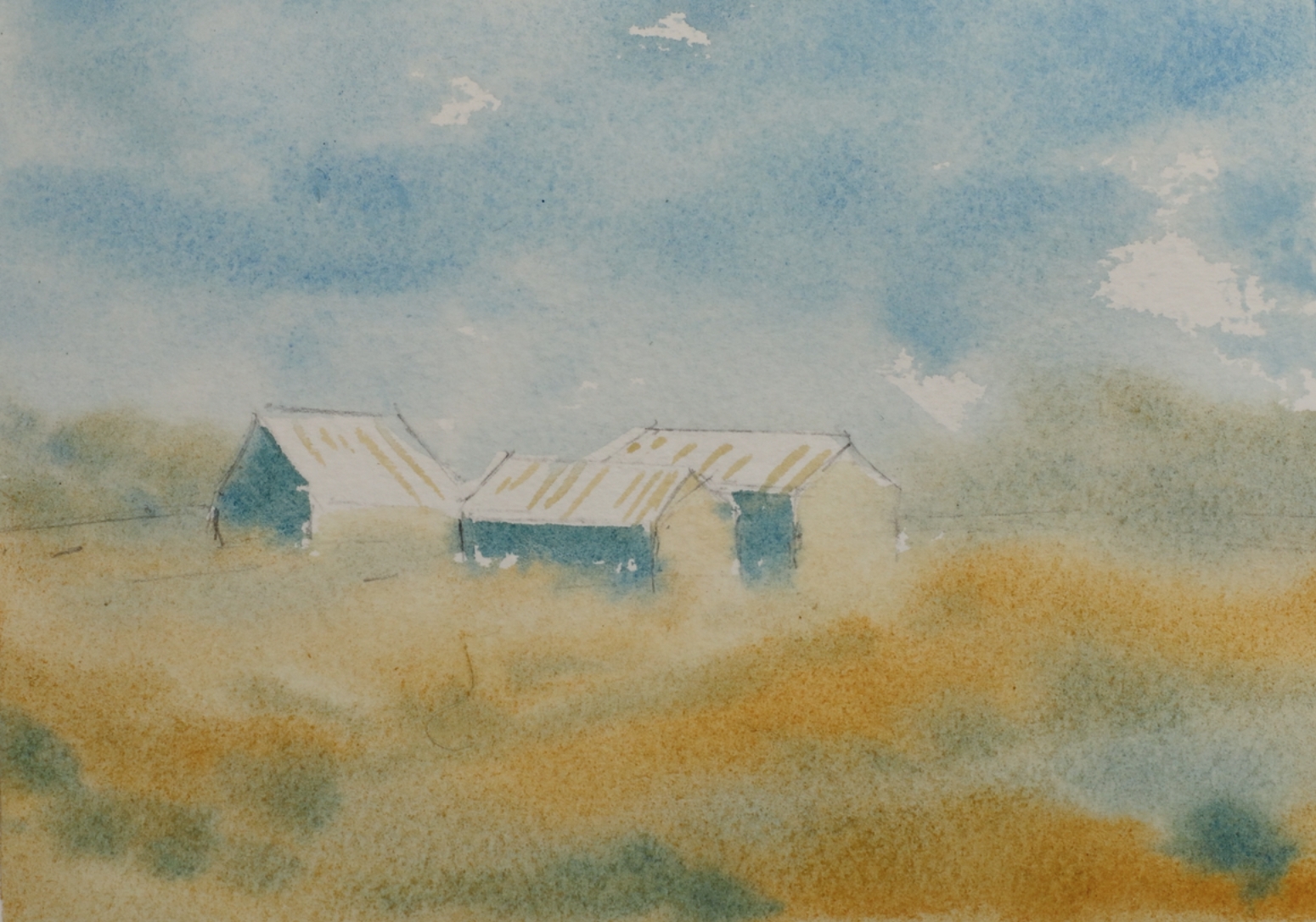
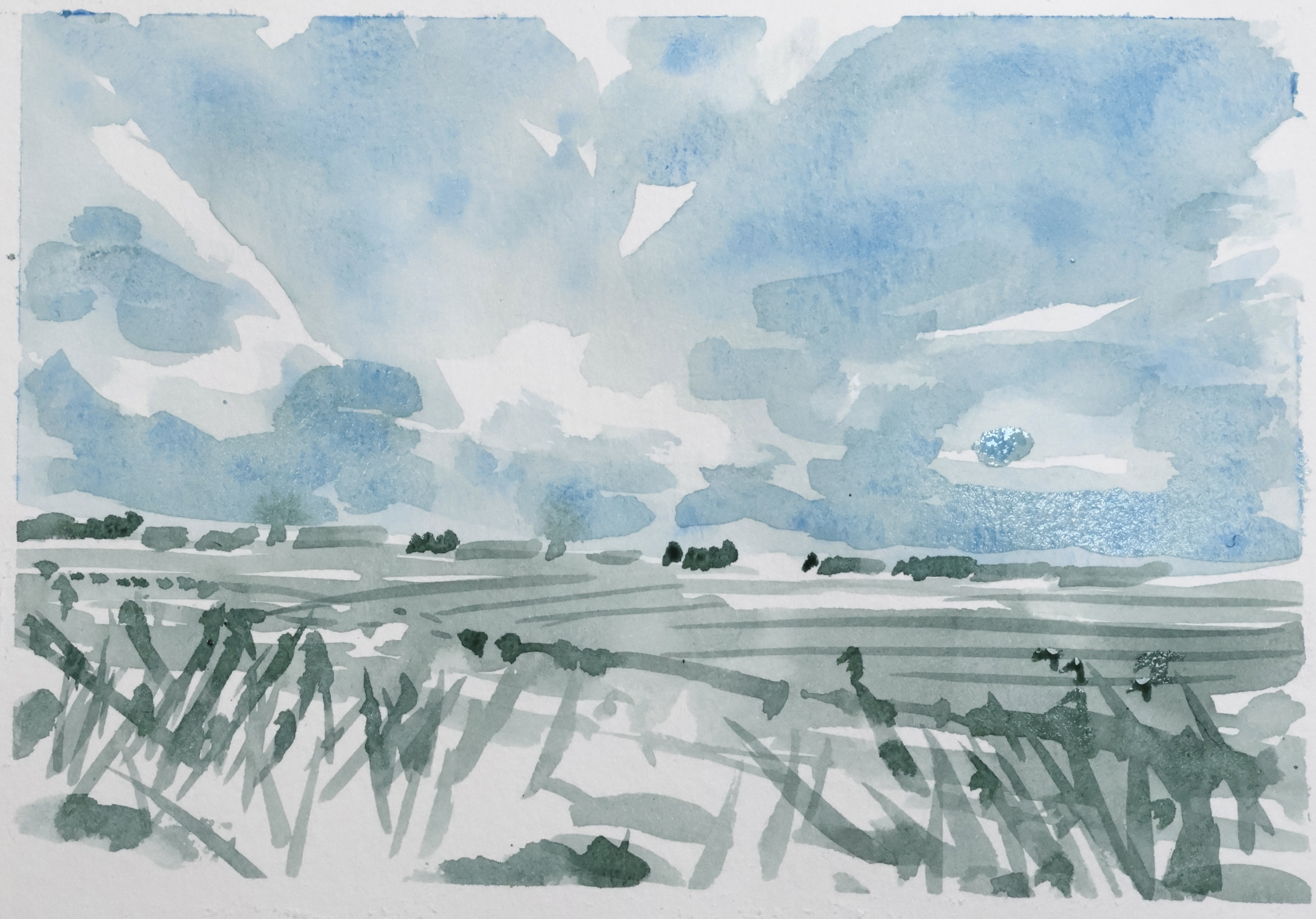
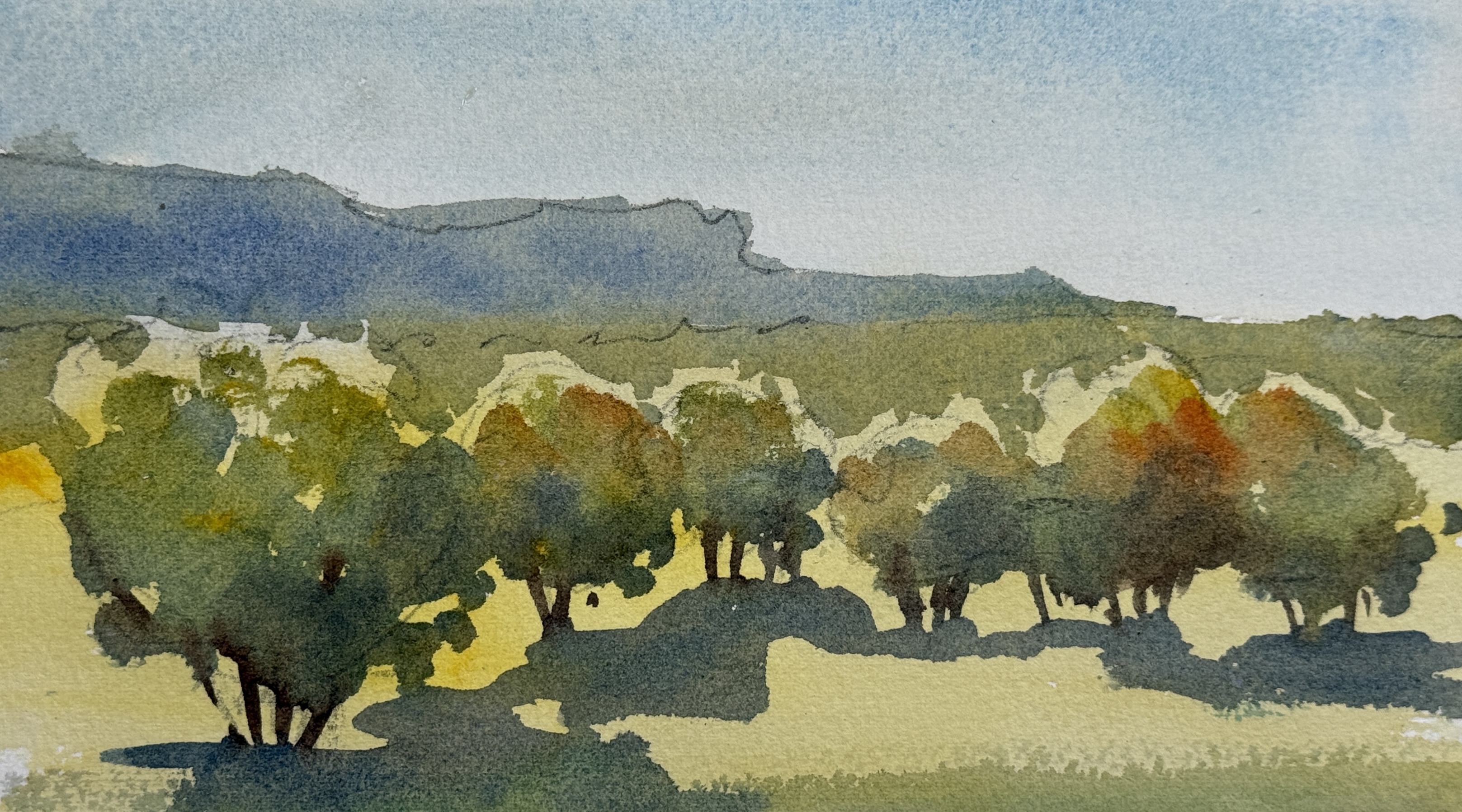
After Hockney: Sketching the Landscape

After Hockney: Sketching the Landscape

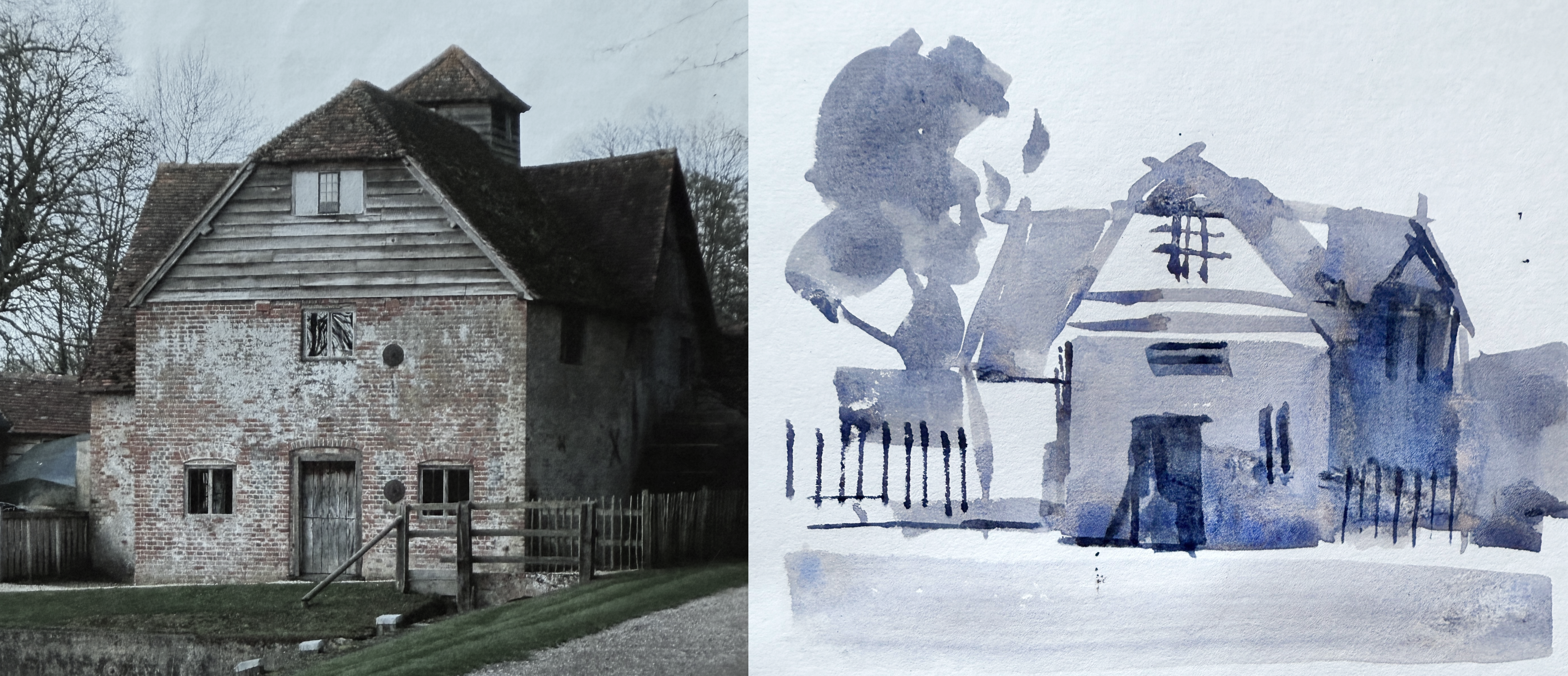
Paint simple landscapes the way Hockney did in his Yorkshire sketchbooks: premix your colours, then paint directly with no pencil drawing underneath.

Exercise: Find a simple landscape and make a two-minute thumbnail to settle the big shapes and where the lights and darks sit. Premix just two or three muted, natural colours, then paint straight in with the brush, starting with your largest shapes and dropping darker accents while everything is still wet. Once dry, glaze a few more details in a second layer and stop before you are tempted to tidy it up.

Why: Planning and premixing let you paint with confidence and stay in flow, while working without an underdrawing forces you to see the landscape as shapes and masses rather than outlines to fill.

Composition & PlanningColourSubjects
Read full tutorial
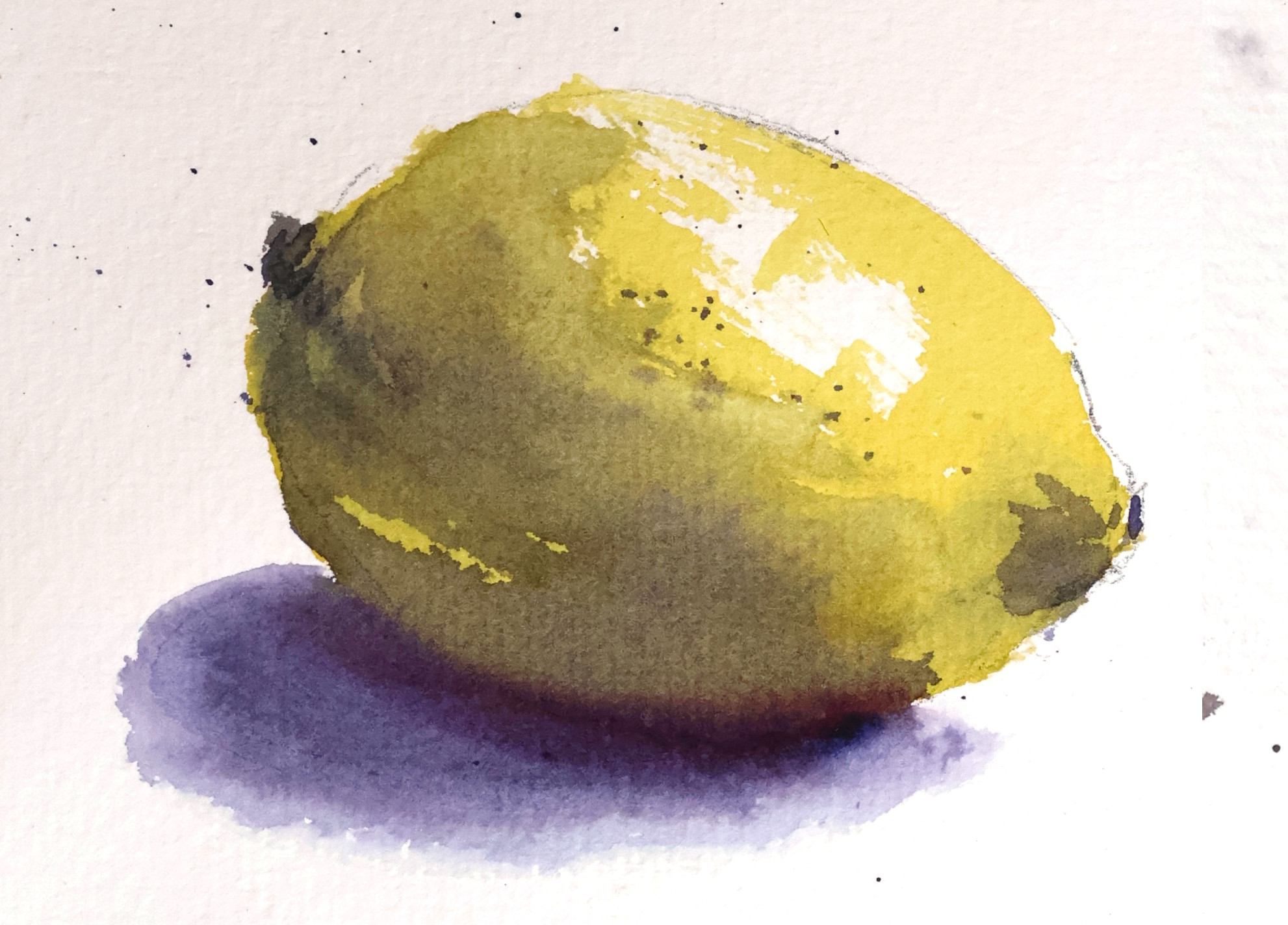
Lemon, Light and Shadow

Lemon, Light and Shadow

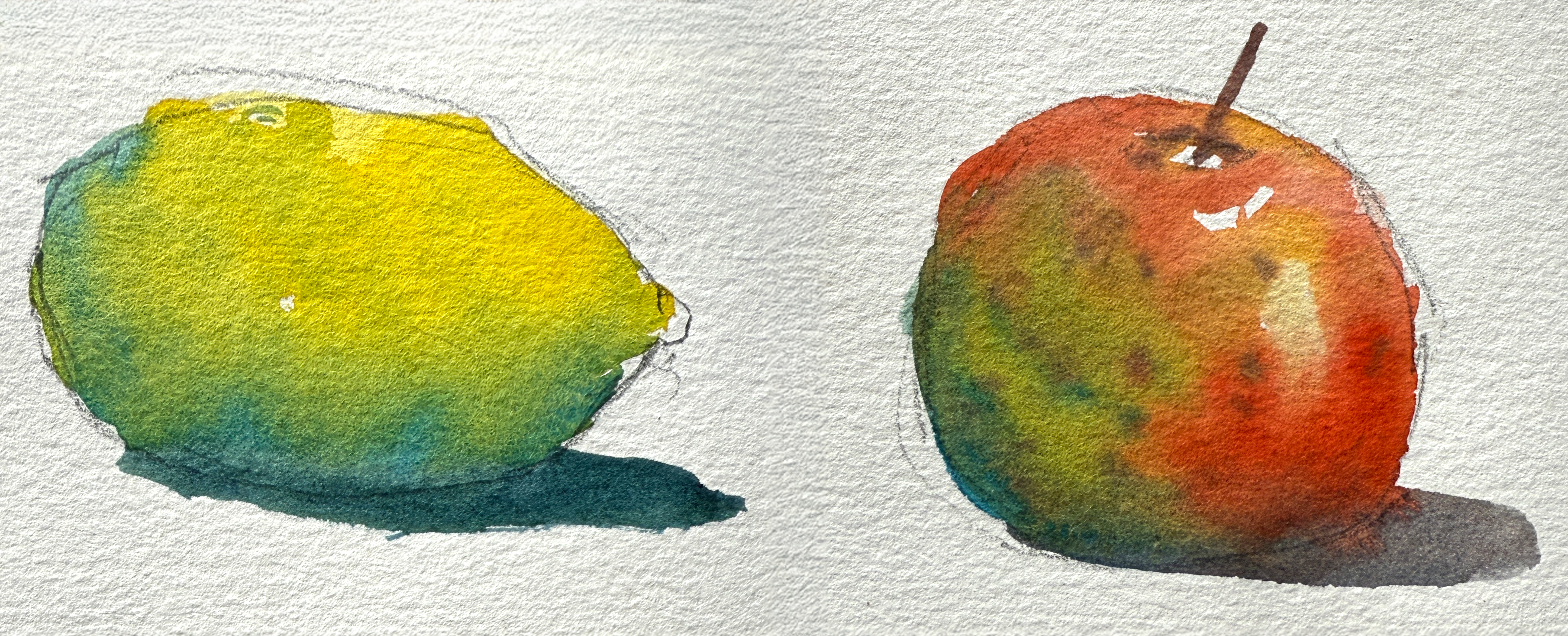
Use complementary colours to paint luminous shadows in watercolour. Yellow and violet are paired to explore how mixing and glazing complements produce different shadow effects.

Exercise: First, mix swatches to explore how complementary colours cancel into natural greys when combined in the palette. Then paint a lemon: apply a light yellow wash, let it dry, and glaze a transparent violet shadow over it. Notice how the yellow glows through the violet instead of going flat.

Why: Mixing complements gives you natural shadow colours without reaching for dead-looking black. Glazing complements produces luminous shadows that palette mixing alone cannot match, building instincts that transfer to any complementary pairing.

ColourLayering & Glazing
Read full tutorial
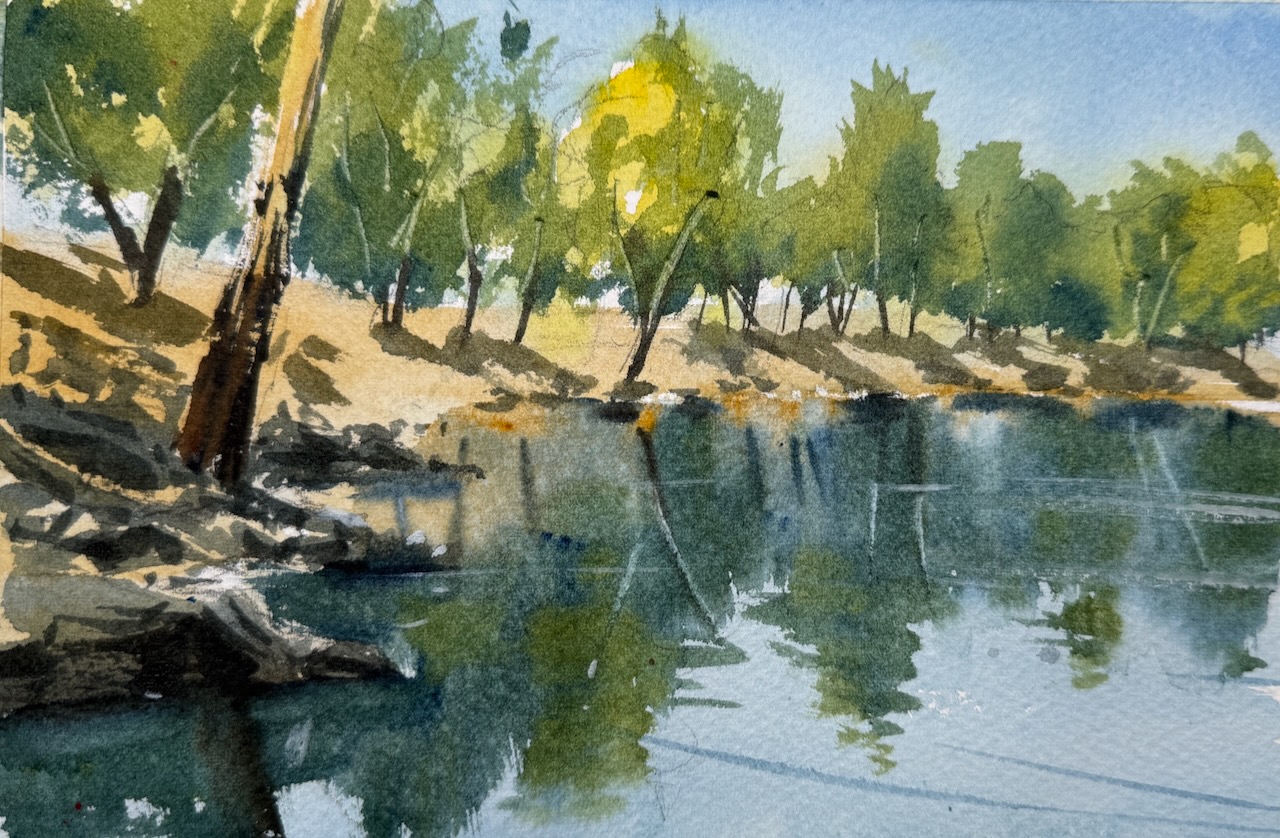
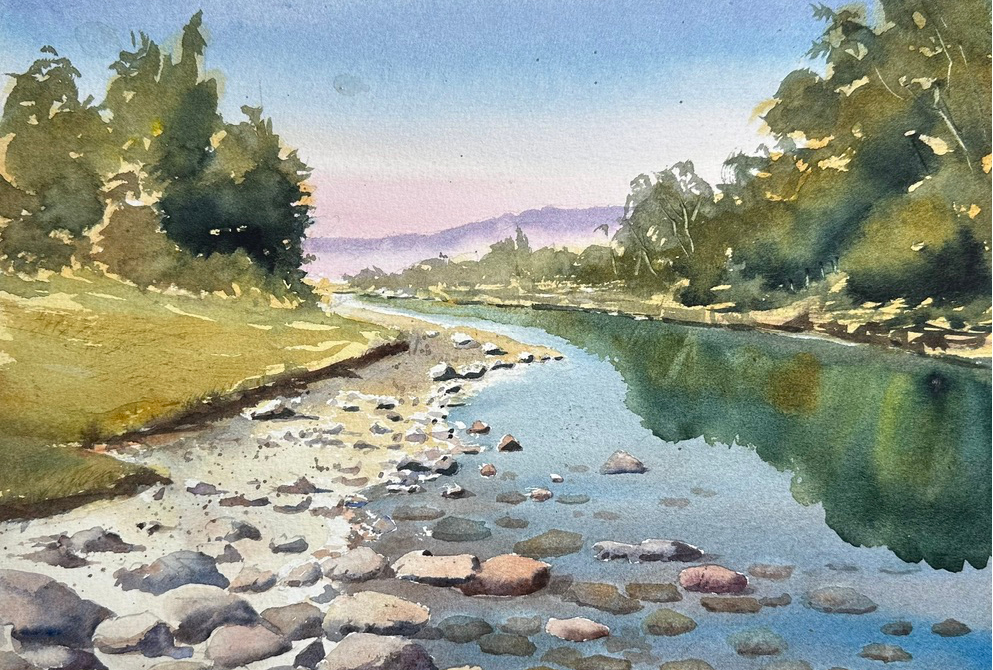
Two for One

Two for One

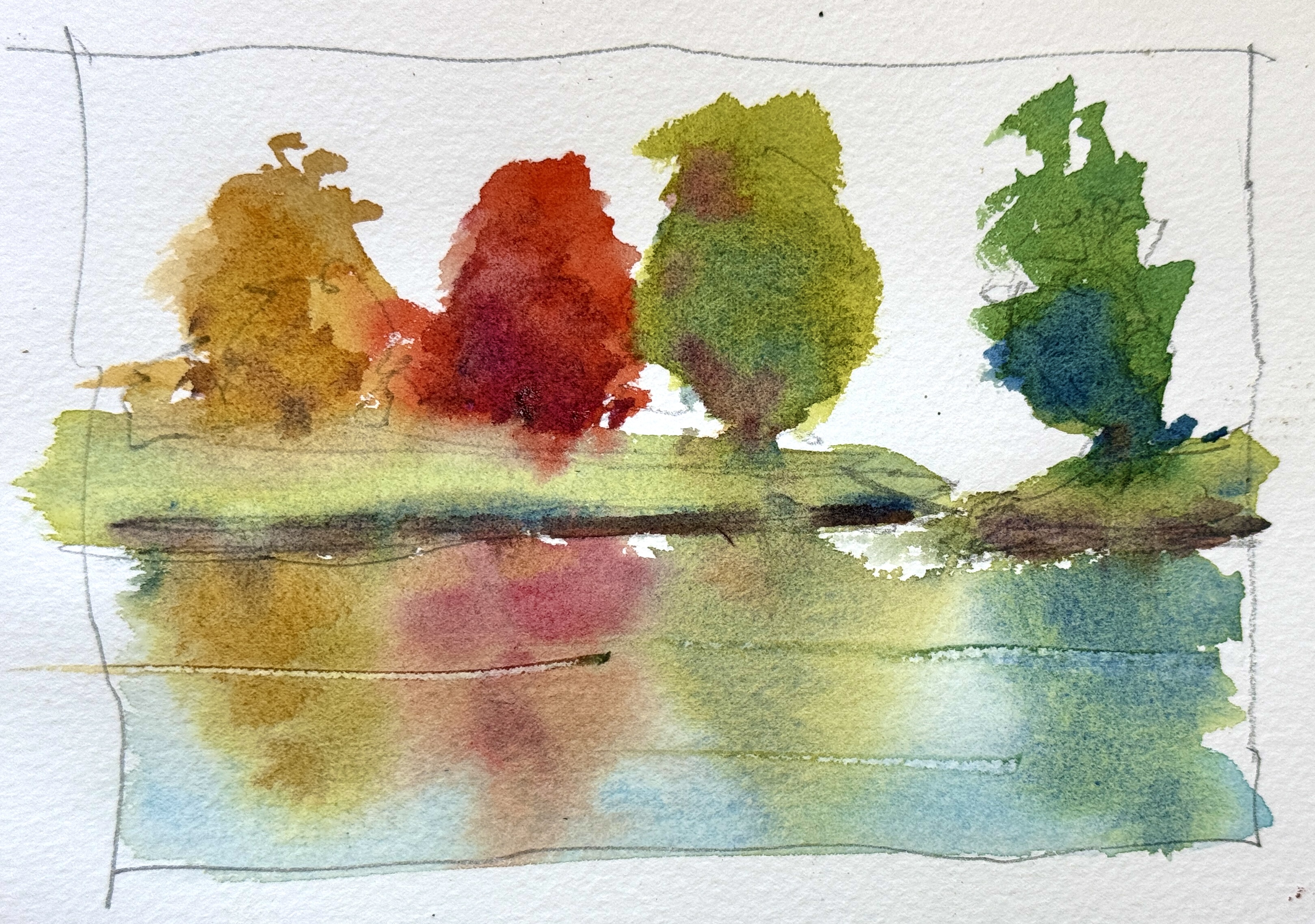
Paint watercolour reflections loose and suggestive on still water. Two simple rules — the mirror rule and the value rule — cover most of what you need to know.

Exercise: Sketch the scene and lay a light first wash for sky and riverbank. Paint everything above the waterline wet-into-wet, dropping darker shadow colours into damp paint and scratching out tree trunks while still damp. Once completely dry, rewet the river, mirror the tree shapes with a darker, cooler mix, then finish with shadows on rocks and opaque white ripples to make the surface read as water.

Why: Reflections force you to look harder at values and build compositional symmetry instincts. The mirror rule transfers to any reflective surface, from glass to wet streets to puddles.

Water ControlValuesSubjectsWashes & Gradients
Read full tutorial
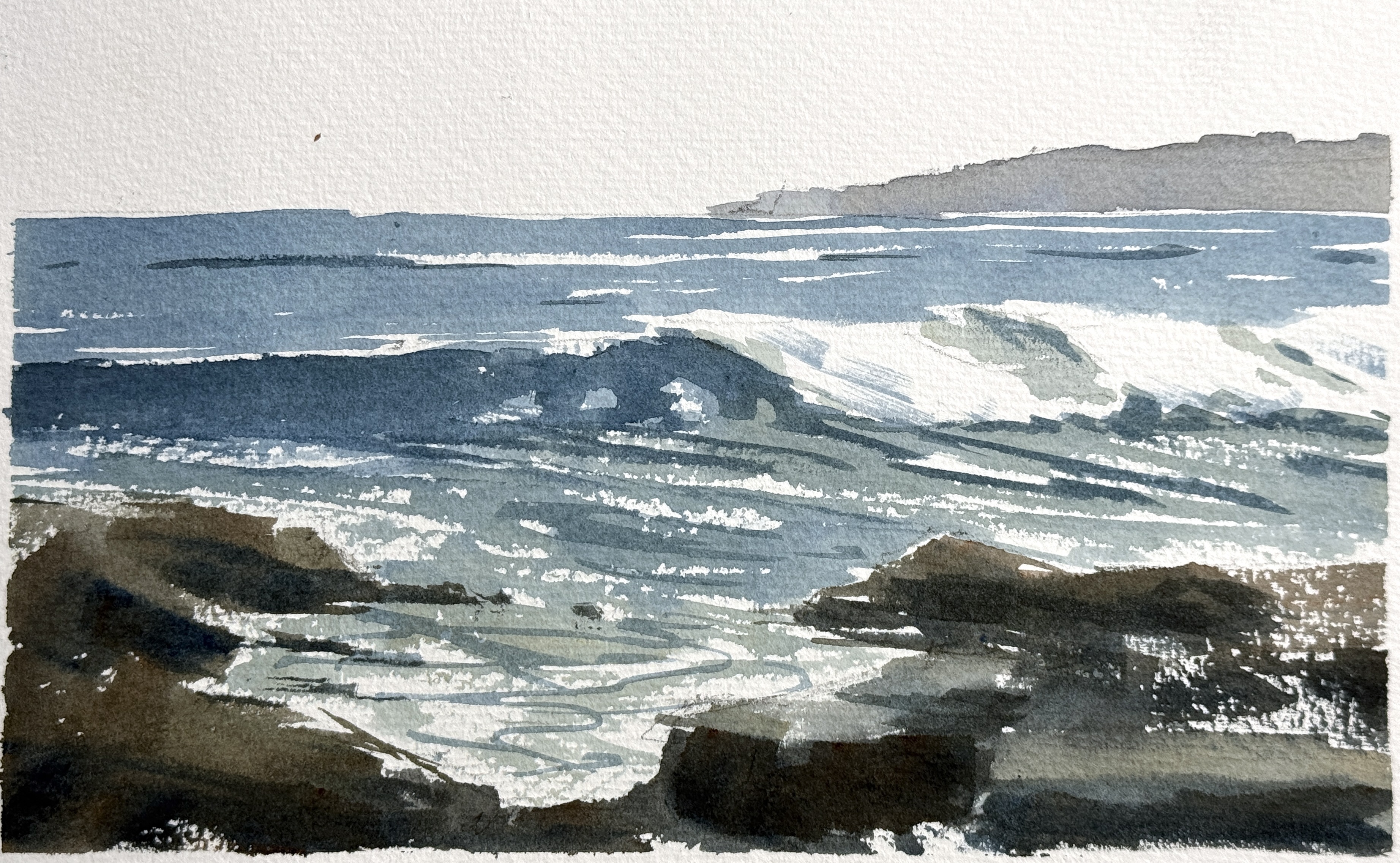
Making Waves

Making Waves

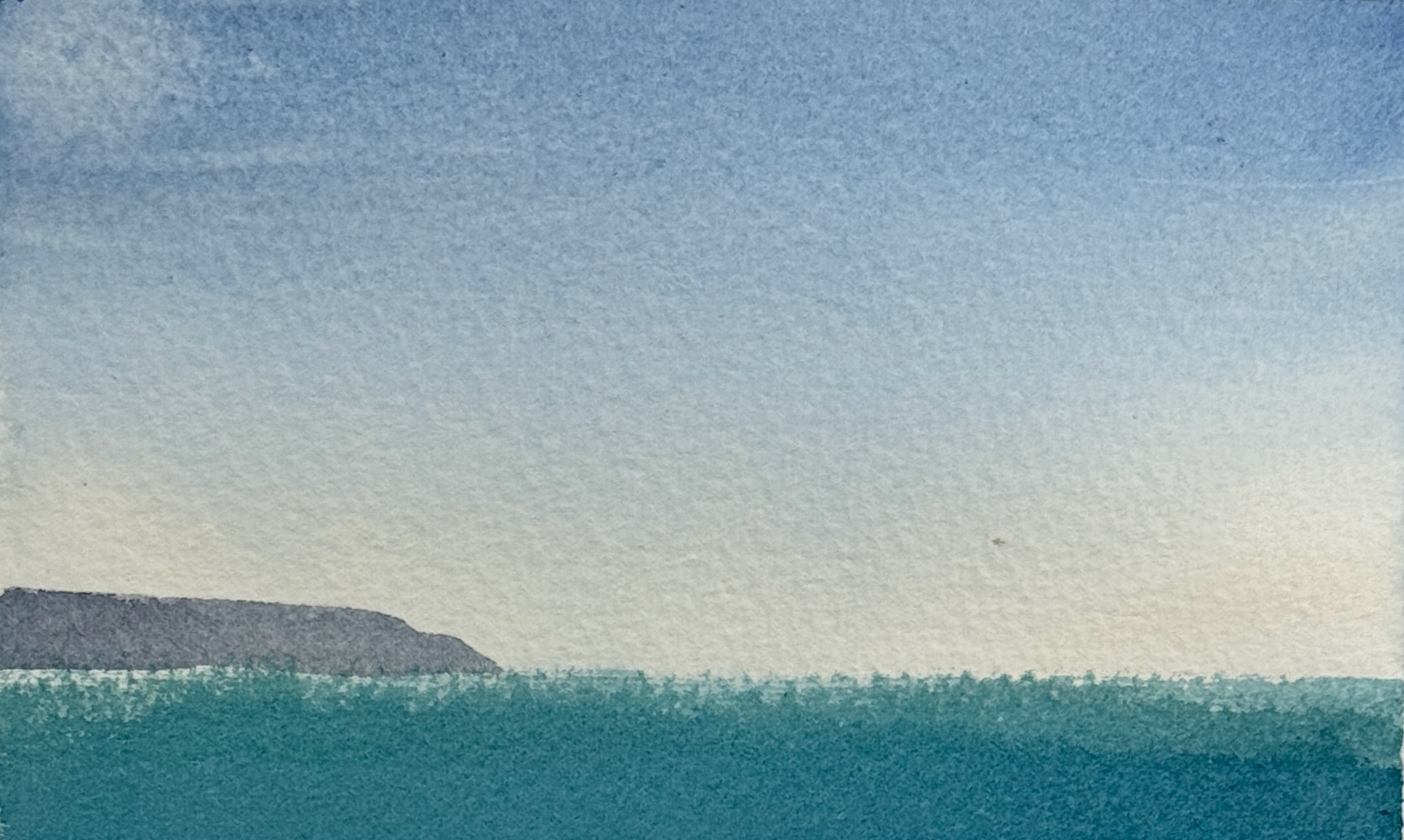
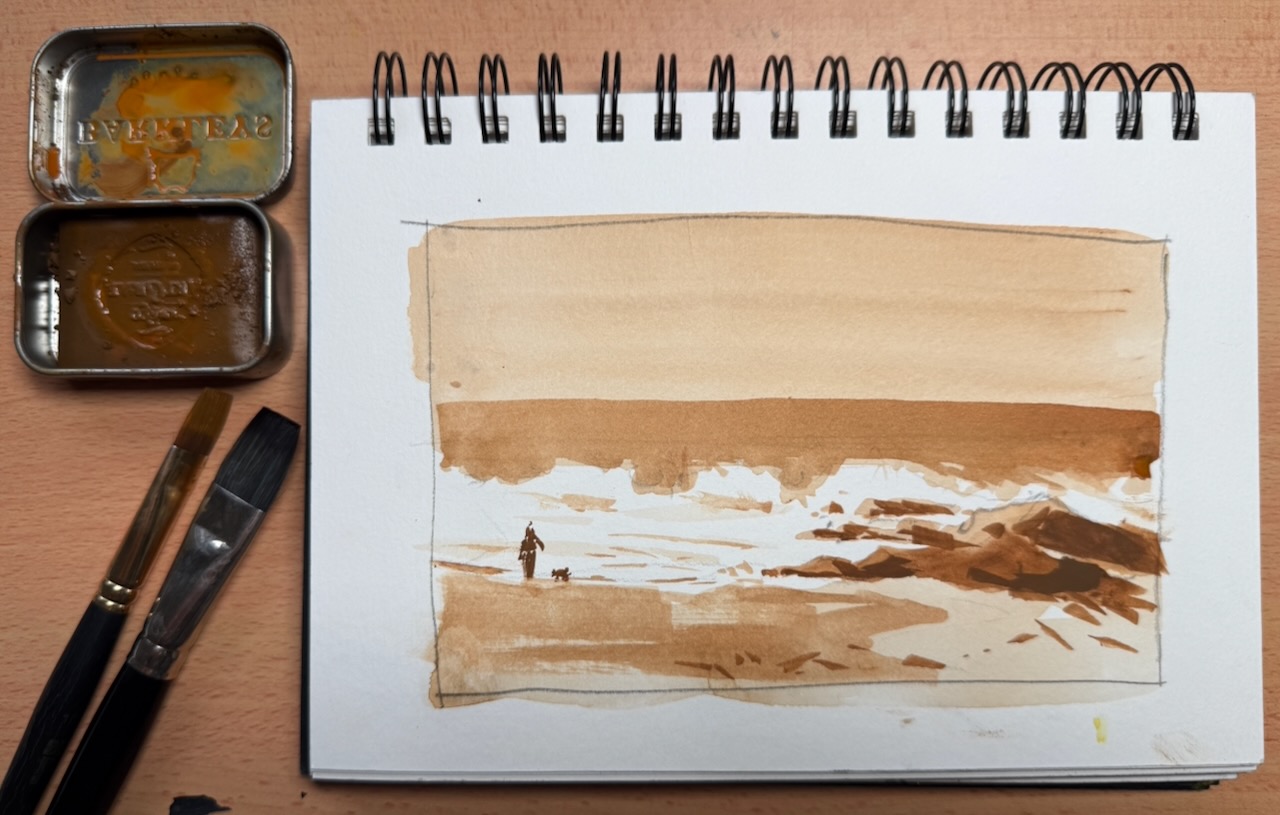
Paint convincing ocean waves using preserved white paper and dry brushing for movement and foam.

Exercise: Start with a high horizon line. Drag a medium blue wash across the paper with a flat brush using a dry brush technique to leave white caps. Increase wave height toward the foreground, vary spacing, and lighten the wash near shore for sea foam. Once dry, add shadows beneath each wave lip with a darker blue.

Why: Waves follow the same three-value logic as most watercolour subjects: preserved white, a mid-tone wash, and a dark shadow. This exercise builds brush control and teaches how a confident, continuous stroke conveys movement.

Brush ControlSubjectsWashes & GradientsTexture
Read full tutorial
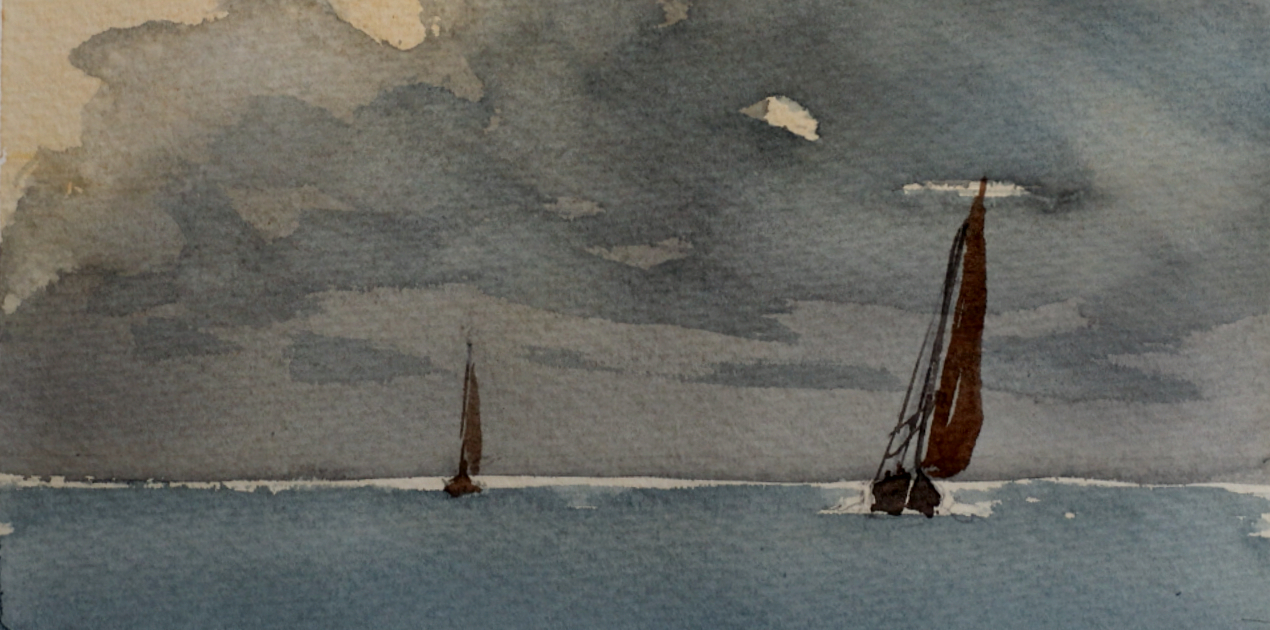
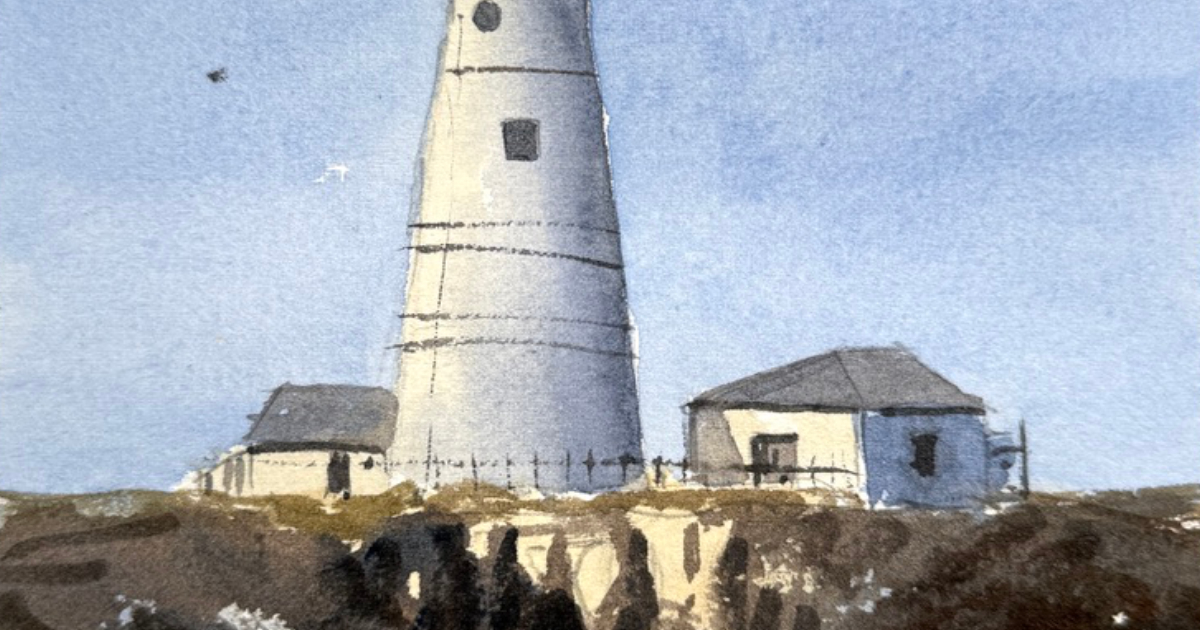
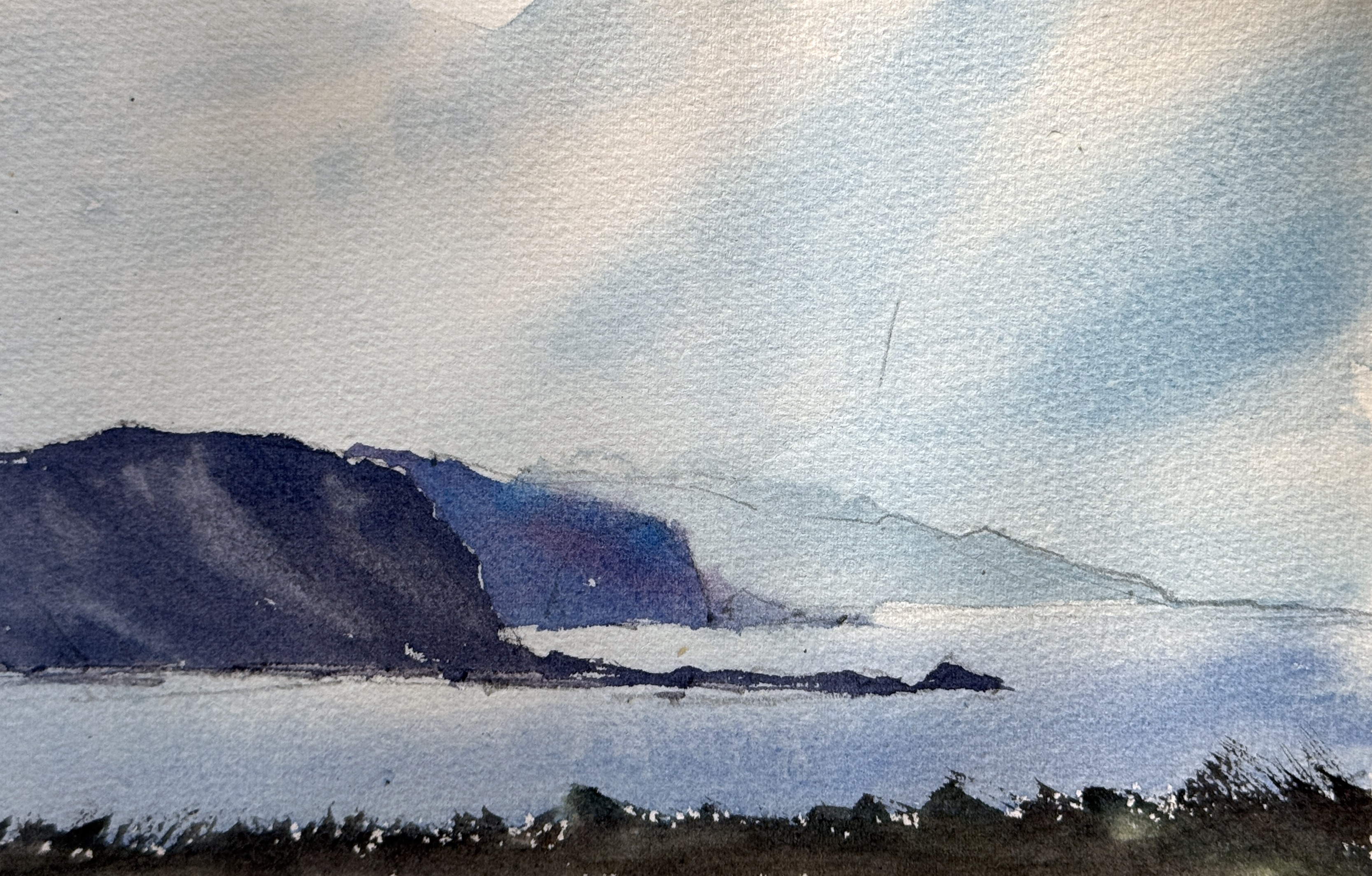
Master Class: Rowland Hilder

Master Class: Rowland Hilder

Learn Hilder's glazing technique for atmospheric skies using earthy and neutral tones layered over a warm underwash.

Exercise: Start with a graduated wash of Raw Sienna, let it dry completely. Paint clouds with light Neutral Tint, then add blue sky with Cerulean or Cobalt. Glaze blue into the clouds for interest. Add the ocean with blue and Neutral Tint, then finish with dark details using Neutral Tint and Burnt Sienna.

Why: Building the sky in layers gives full control over edges and value instead of relying on one wet wash. The warm underwash carries through and gives the sky a unifying glow.

Layering & GlazingWashes & GradientsSubjects
Read full tutorial
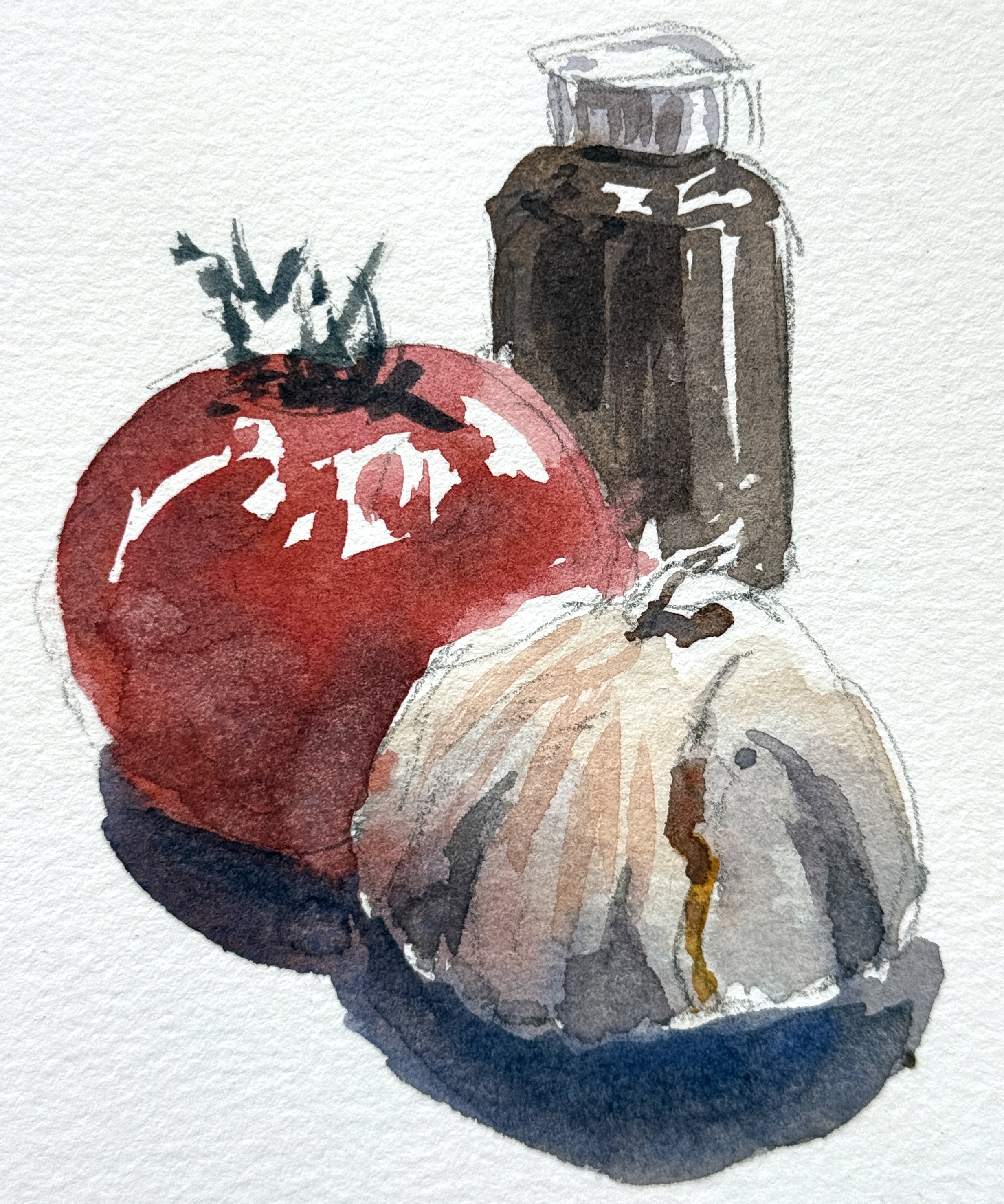
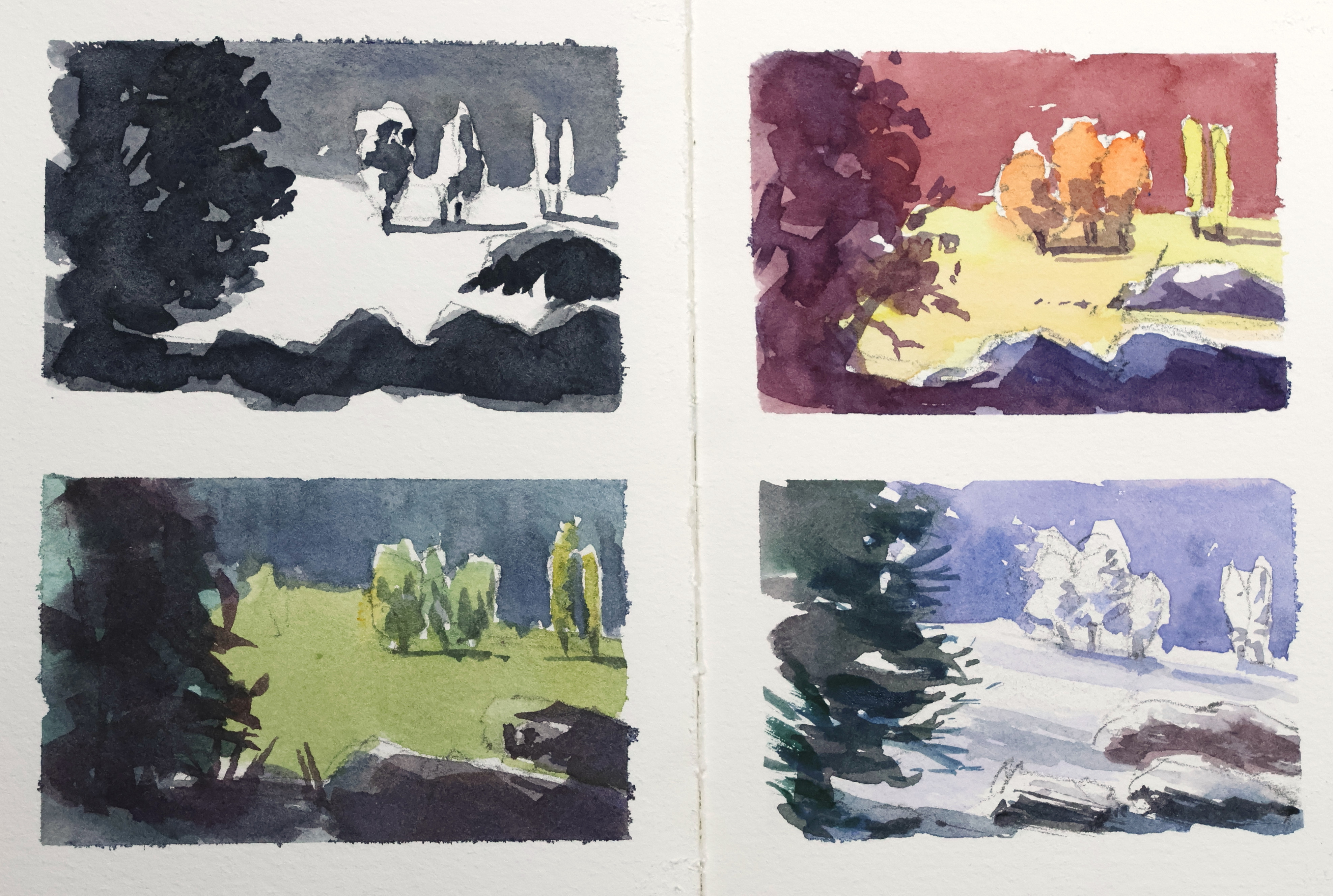
Colour Choices

Colour Choices

Run the same composition through a series of small colour studies to find the right palette before committing to a full painting.

Exercise: Divide a sketchbook page into quarters (about 6 x 10 cm each). Paint a three-value study first using Payne's Grey, then a local colour version, then two mood variations pushing the temperature warmer or cooler than feels natural.

Why: Separates colour decisions from painting decisions. Running the same composition through different temperatures reveals which mood suits the subject, and a failed colour study costs five minutes instead of an afternoon.

ColourComposition & Planning
Read full tutorial
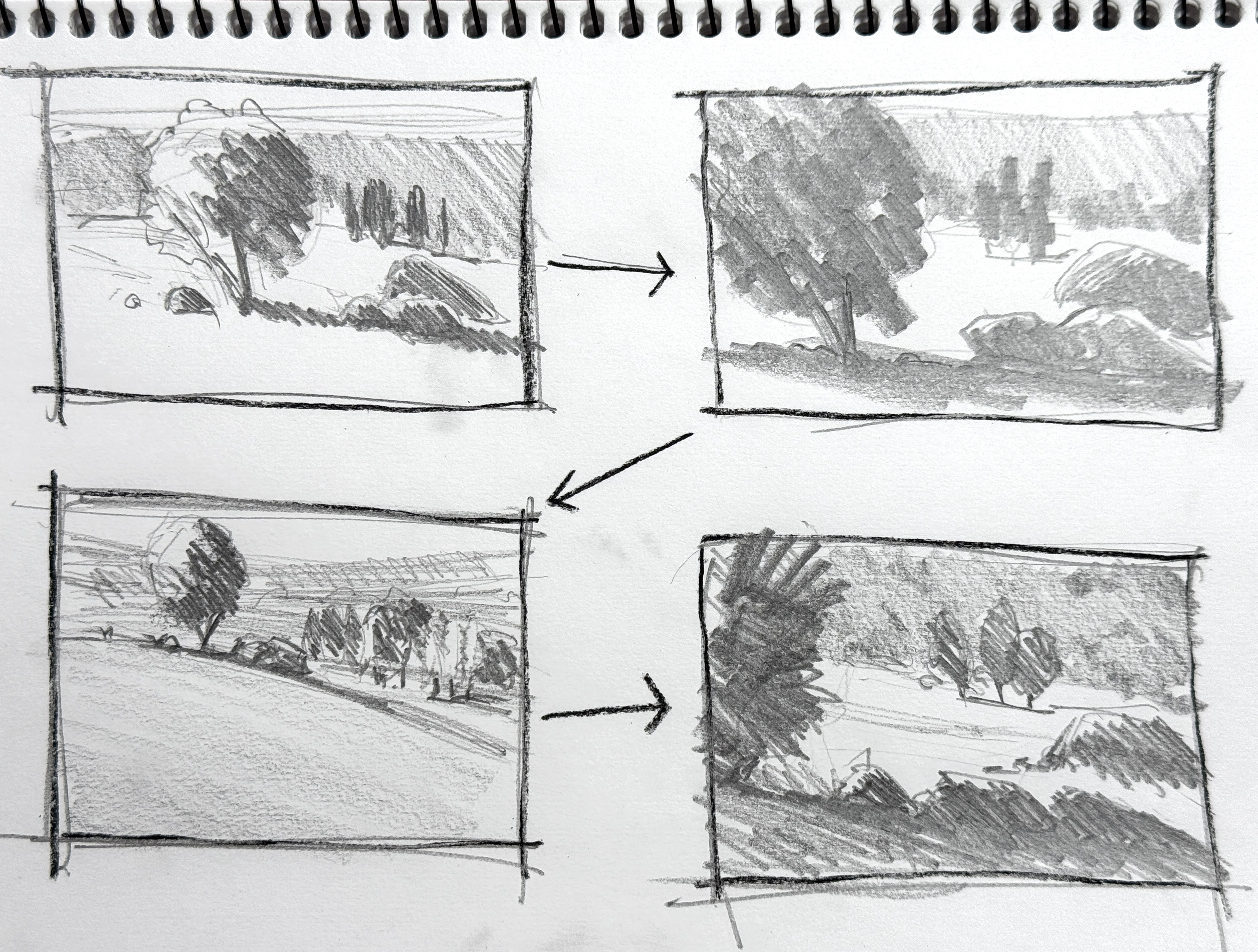
Before the First Wash

Before the First Wash

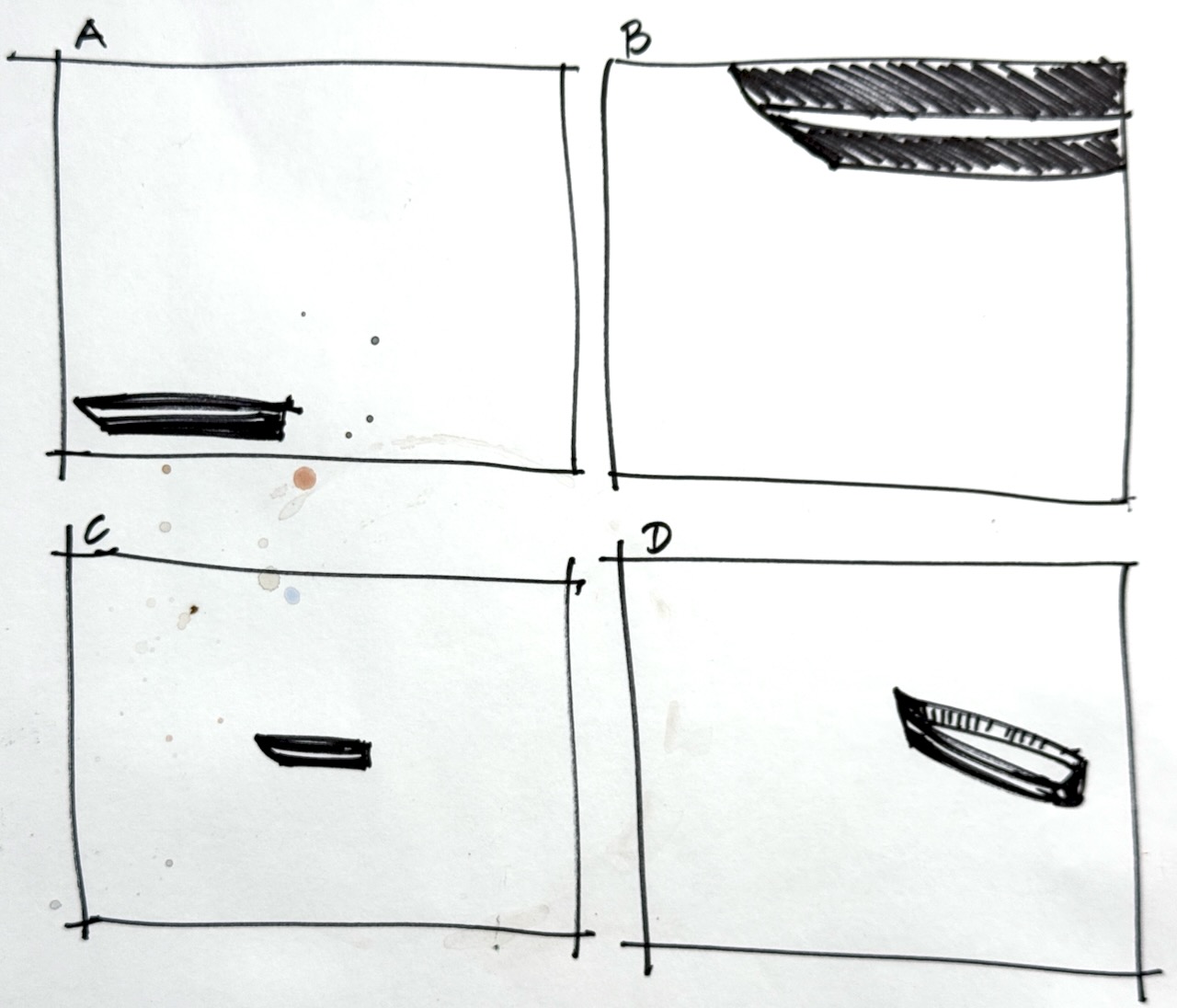
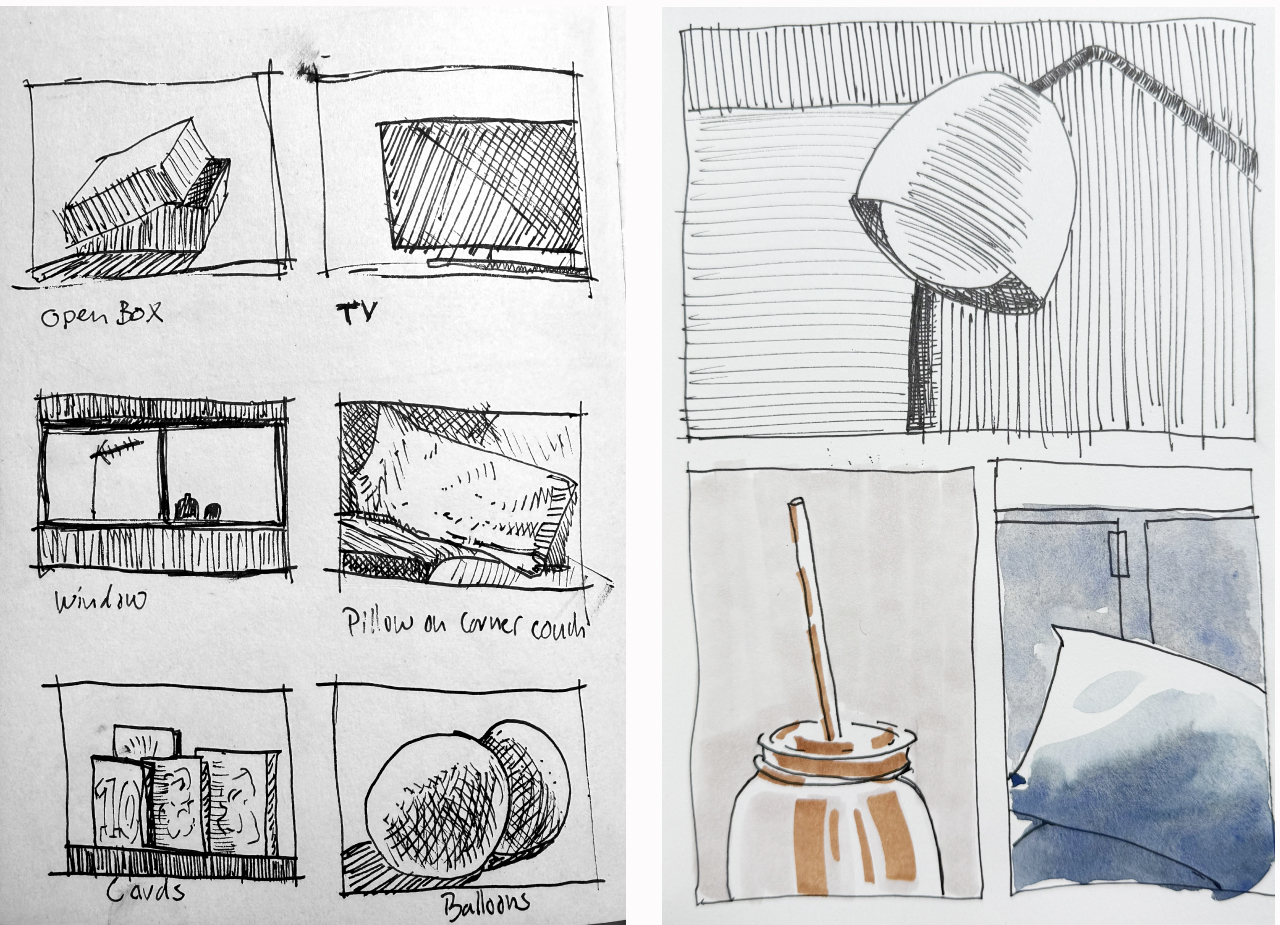
Design your painting before you touch the paper. Sketch four thumbnail compositions from the same reference to explore cropping, value structure and focal point.

Exercise: On an A4 page, draw four frames in the same proportion as your paper. Sketch the obvious idea first, then zoom in, zoom out and shift the focal point for the next two. For the fourth, refine your favourite. Use shading to separate lights, mid-values and darks.

Why: Separates design decisions from painting decisions so you are not solving both at once. Four variations force you past the first obvious idea, which is rarely the strongest.

Composition & Planning
Read full tutorial
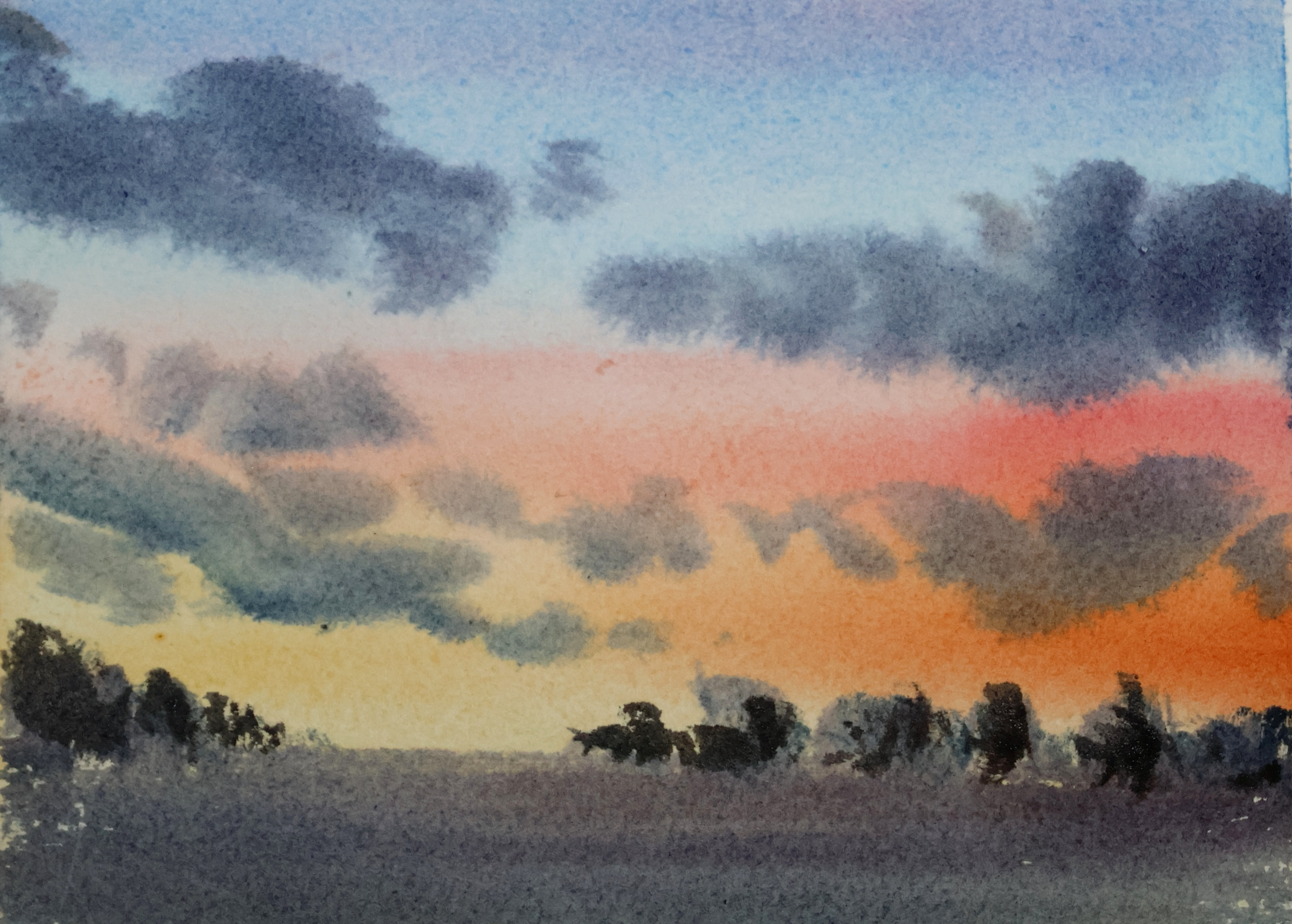
Two Skies

Two Skies

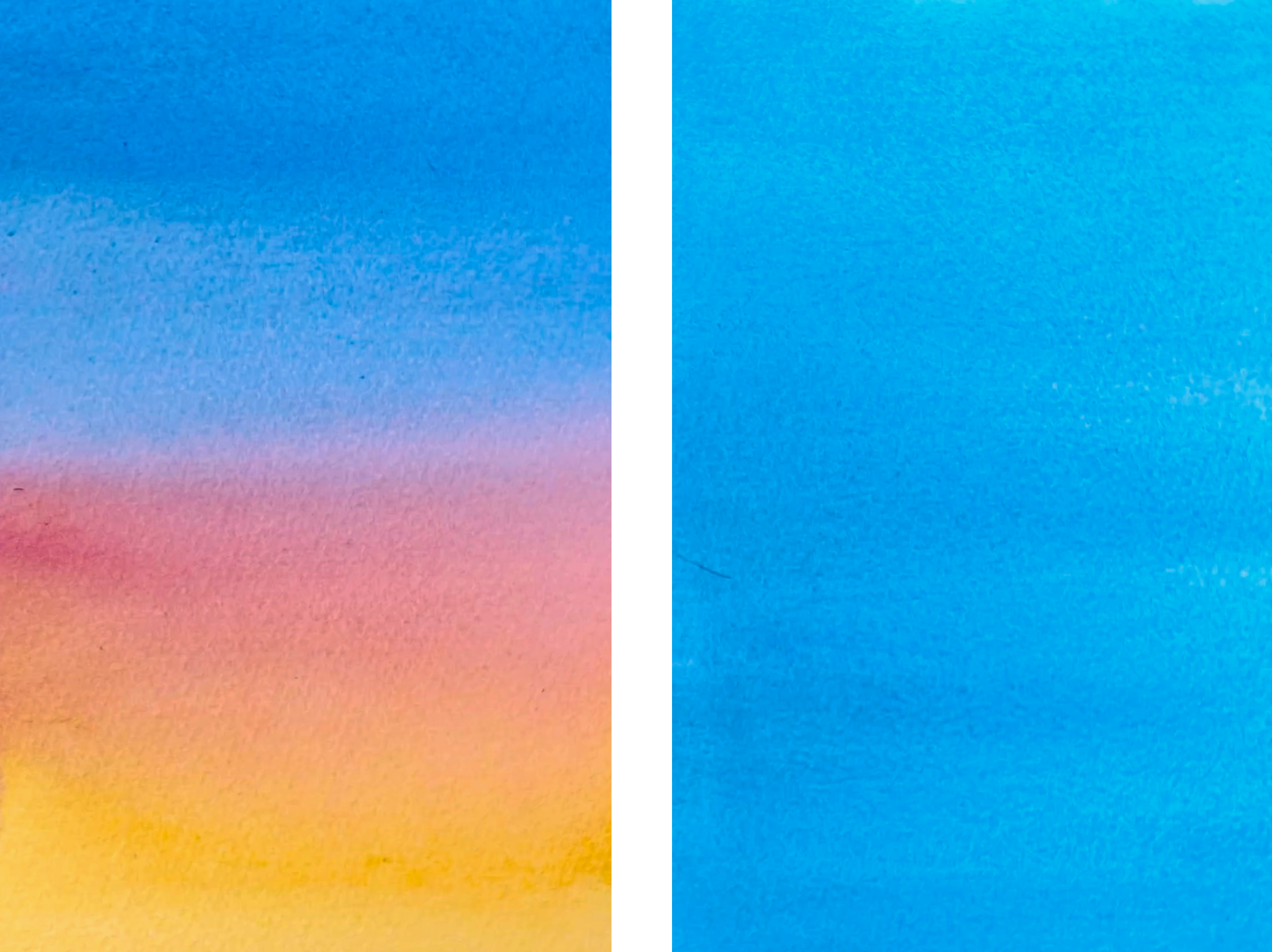
Paint two skies that sit at opposite ends of the same skill: a smooth sunset and a dramatic storm cloud.

Exercise: Sunset: wet the paper evenly, angle it slightly, and lay a variegated wash from the bottom up with Raw Sienna, then warm orange, then a cool red. Storm cloud: wet the paper, lay a light grey wash mixed from Indigo, Burnt Sienna and Magenta, wait a couple of minutes, then charge in a much stronger version of the same mix.

Why: Skies are the backbone of most landscapes and demand proficiency in gradients, wet-in-wet timing, and water control. Practising both ends of the spectrum builds versatility.

Washes & GradientsWater ControlSubjects
Read full tutorial
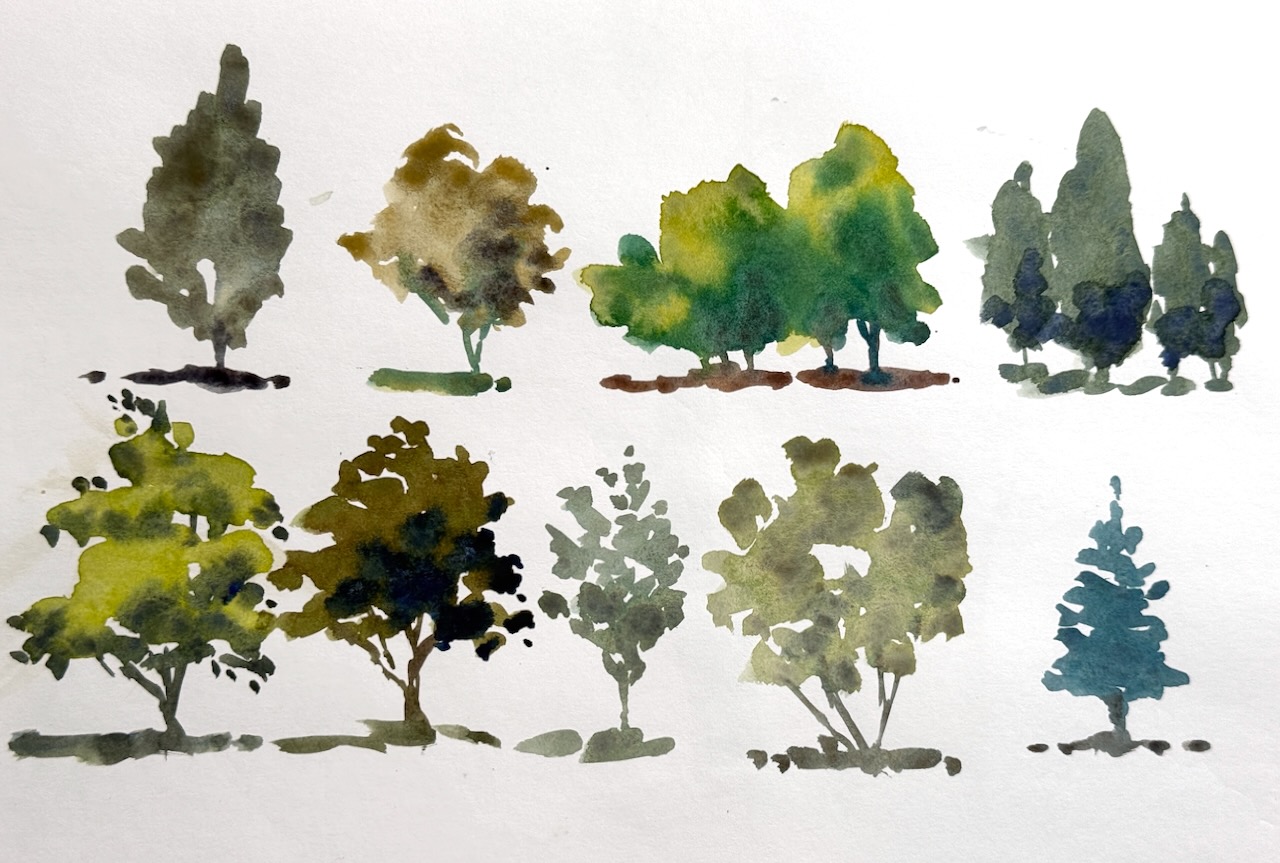
Making Connections

Making Connections

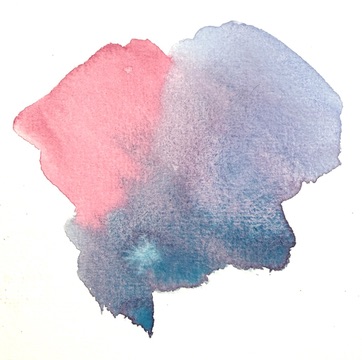
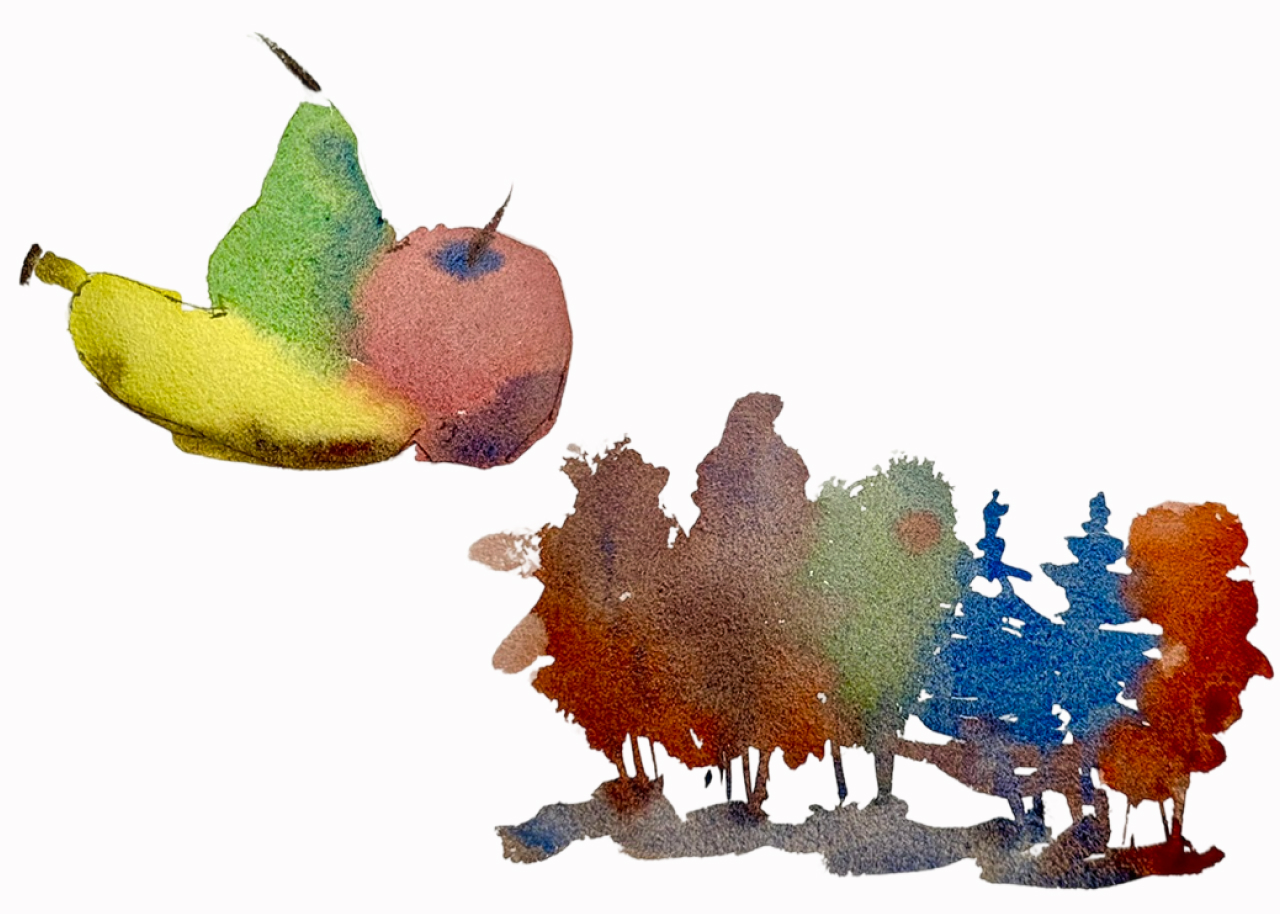
See groups of trees as one connected shape and paint them with a single unified wash.

Exercise: Find a group of trees and draw only the outer silhouette of the entire group. Fill the silhouette with a single wash, dropping in different greens and letting them blend. Paint trunks while still wet so they connect into the shape.

Why: Connecting shapes gives you more atmosphere and unity than painting each tree individually. The viewer fills in detail — your job is shape, value, and colour.

Composition & PlanningWashes & GradientsSubjectsEdges
Read full tutorial
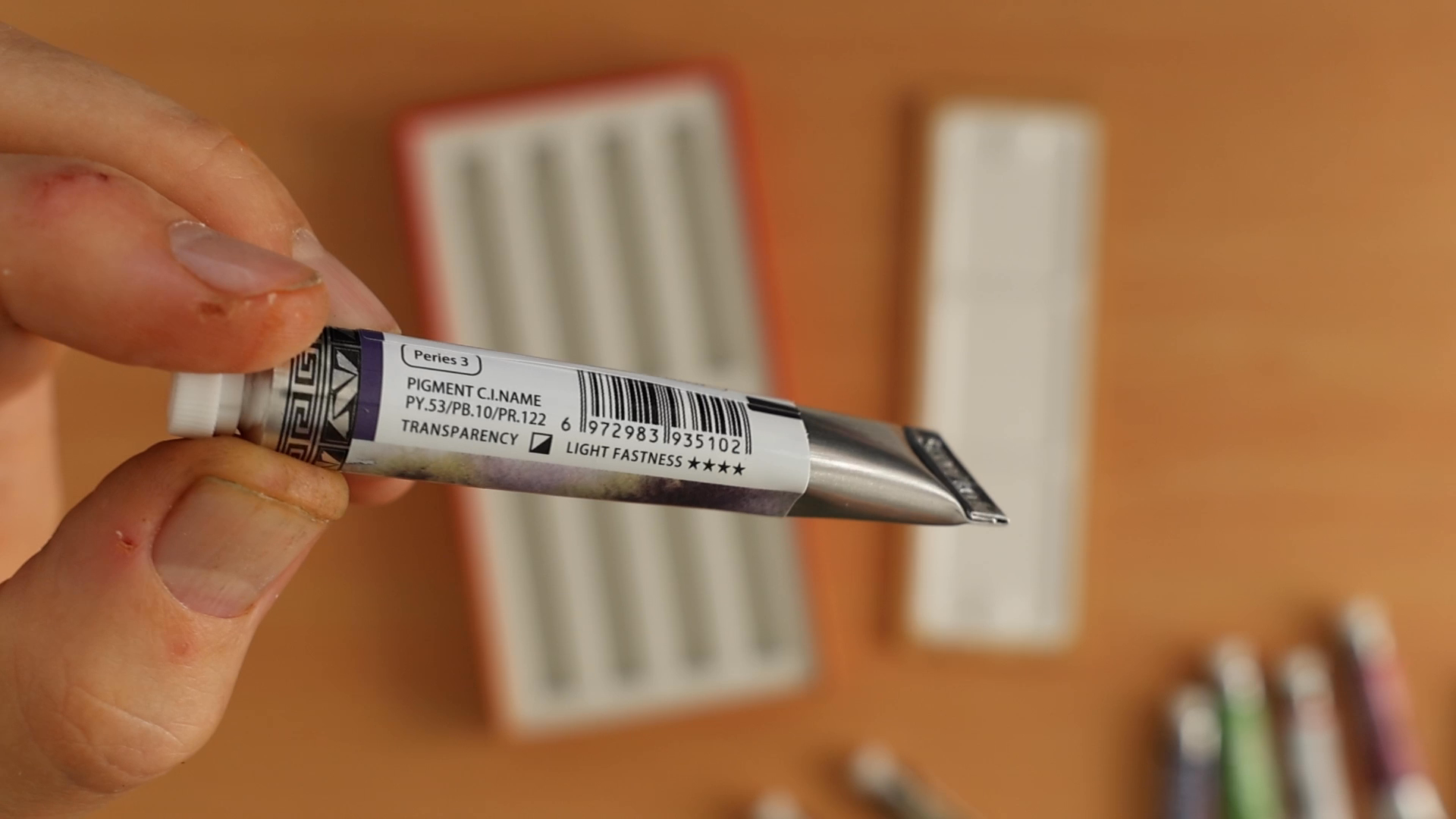
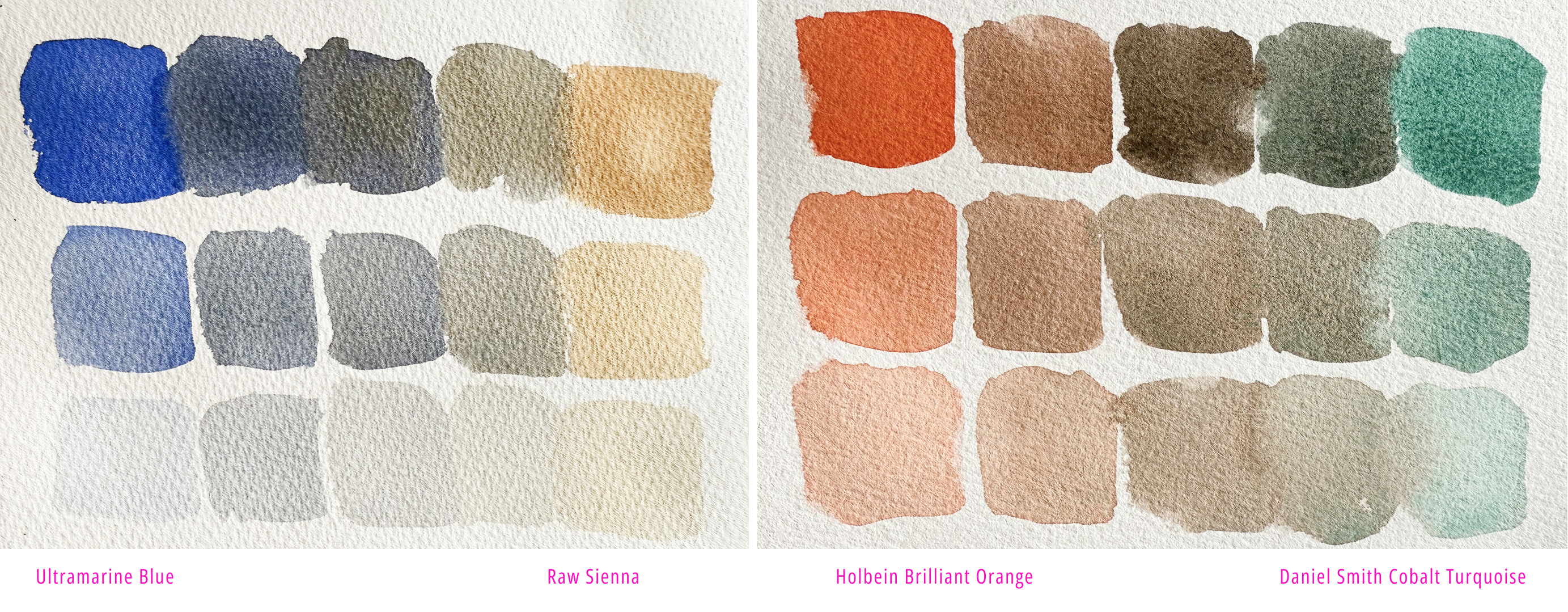
Trying New Pigments

Trying New Pigments

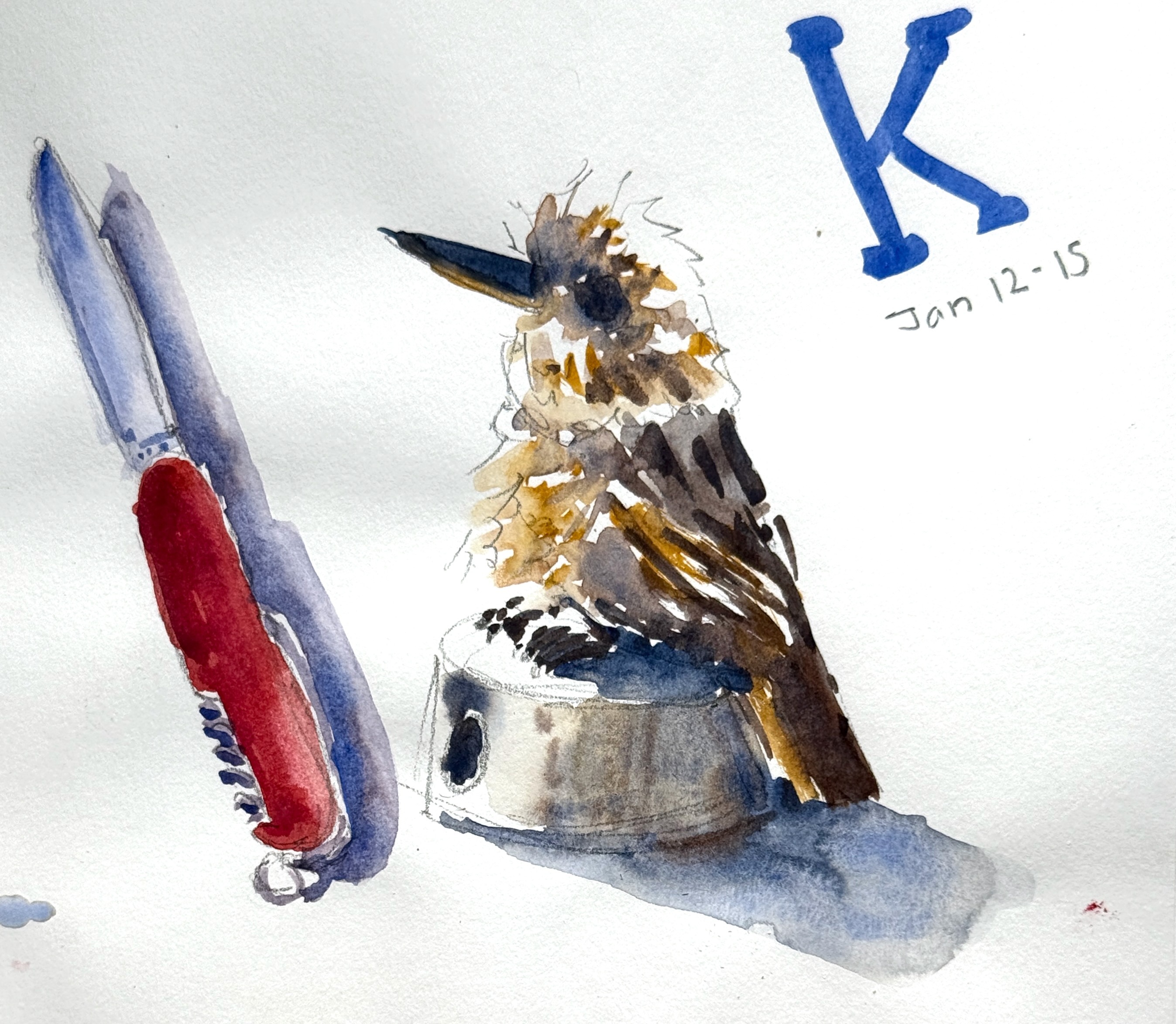
A loose, experimental wet-in-wet painting to test unfamiliar colours and discover how new pigments behave on paper.

Exercise: Pick two or three pigments you have not used before. Wet your paper thoroughly and drop in your new colours, letting them mingle freely. Paint a simple subject — a landscape or still life — without lifting the brush to correct.

Why: New pigments expand your palette vocabulary. Working wet-in-wet removes the pressure to be precise and lets you focus on how each colour granulates, spreads, and mixes.

ColourWater ControlWashes & Gradients
Read full tutorial
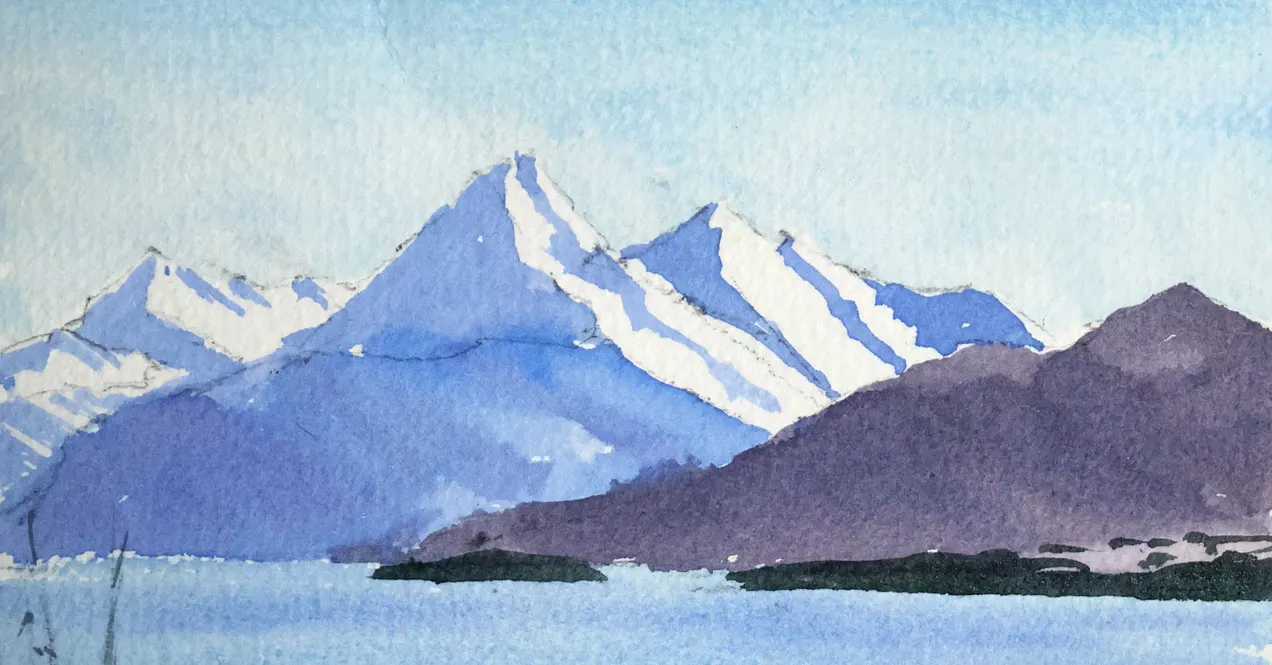
Peak Performance

Peak Performance

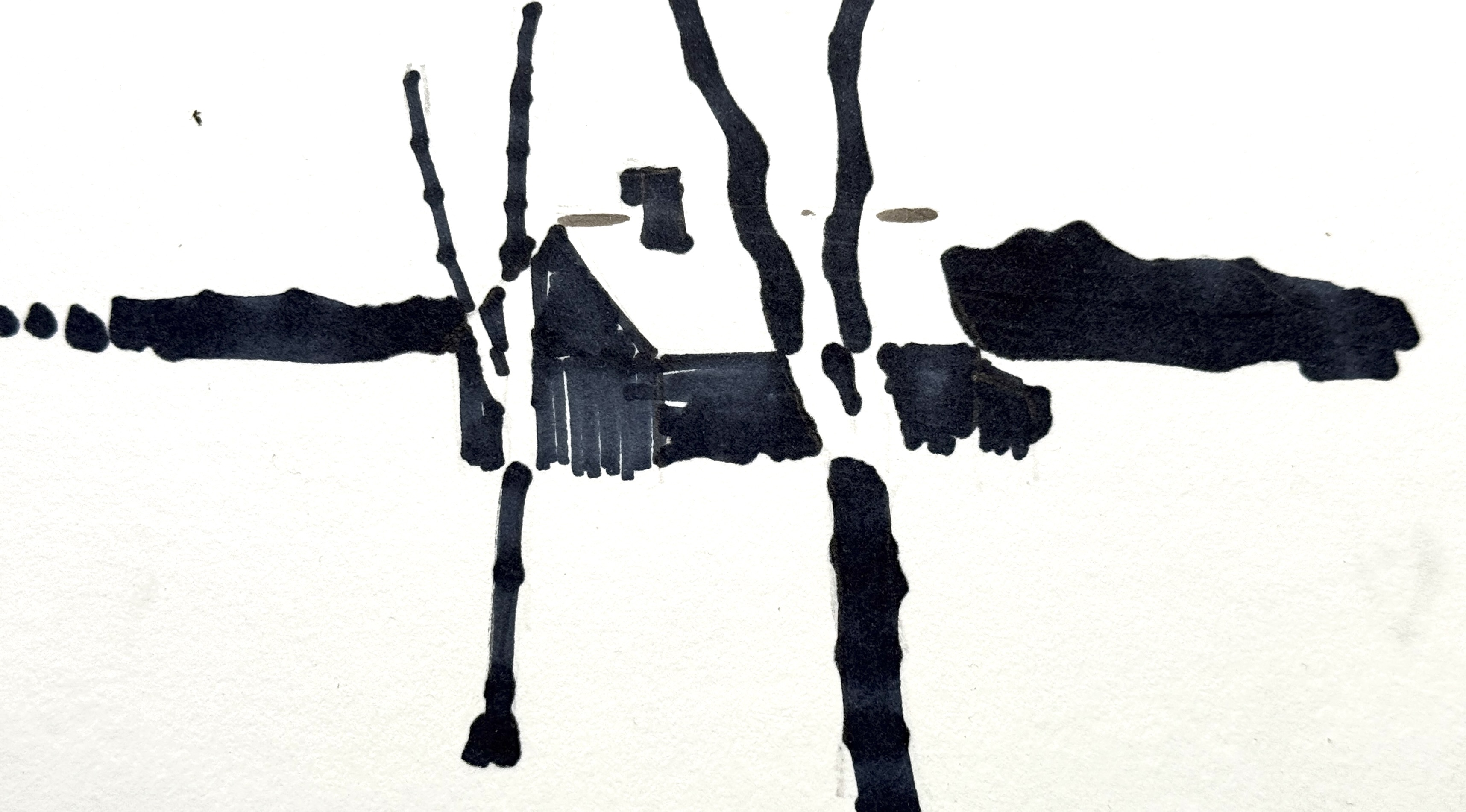
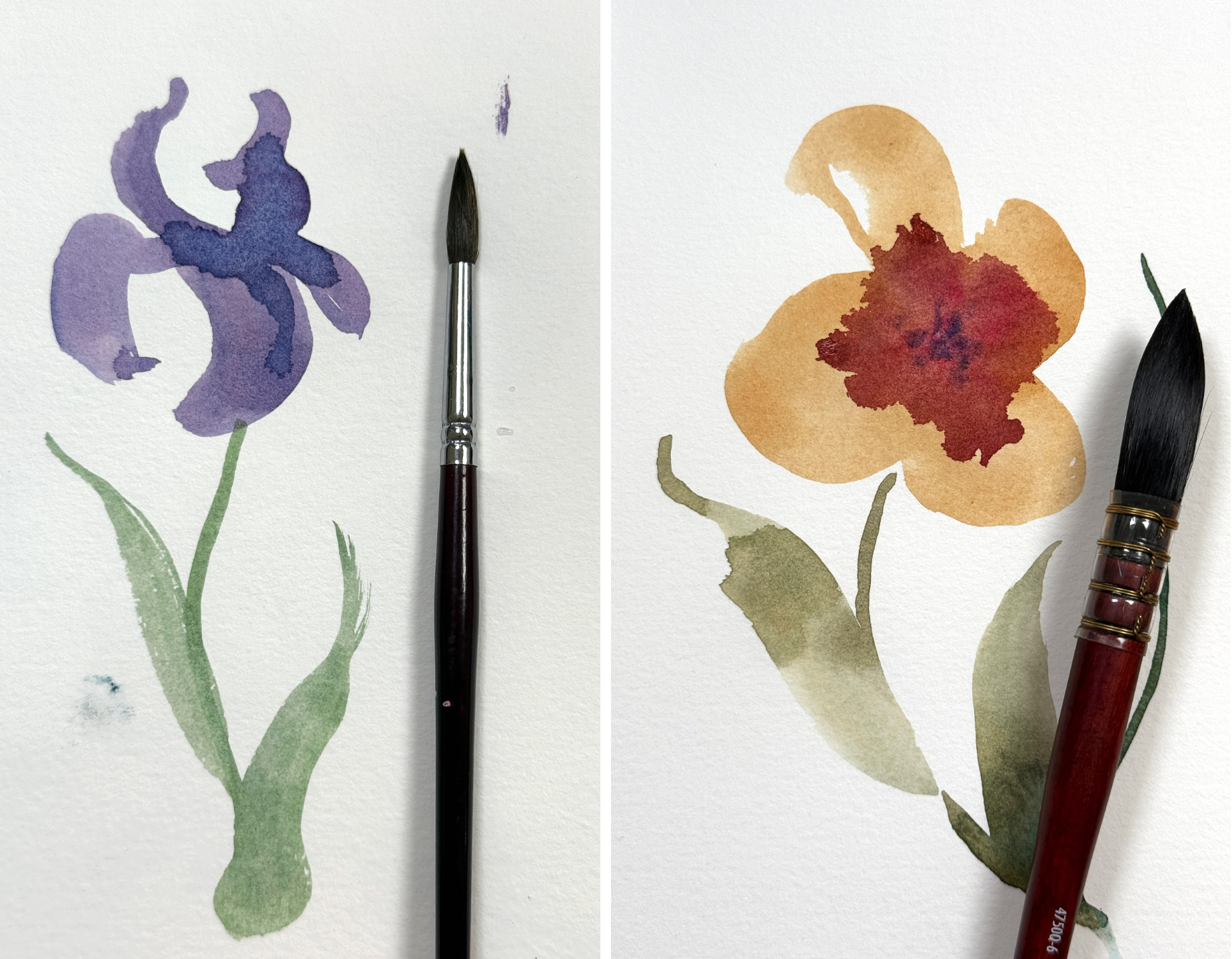
Paint mountains by simplifying their forms into flat, faceted planes lit from a single direction.

Exercise: Pencil a few mountain peaks and simplify them into flat planes. Paint lit planes and shadow planes as separate flat washes with hard edges.

Why: Faceting forces you to commit to a light direction, which is half the battle in any landscape.

ValuesSubjectsComposition & Planning
Read full tutorial
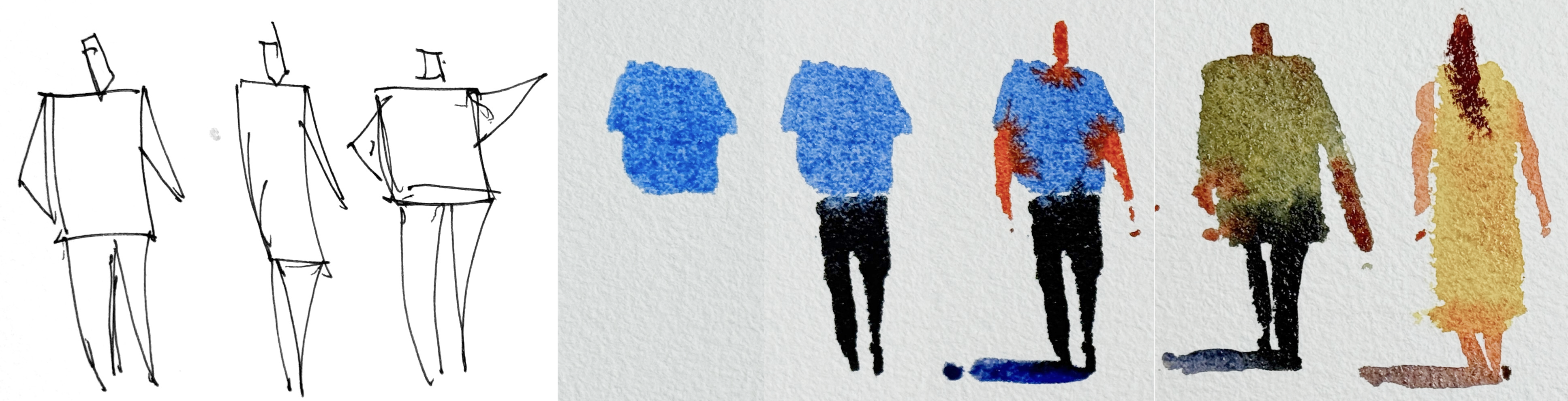
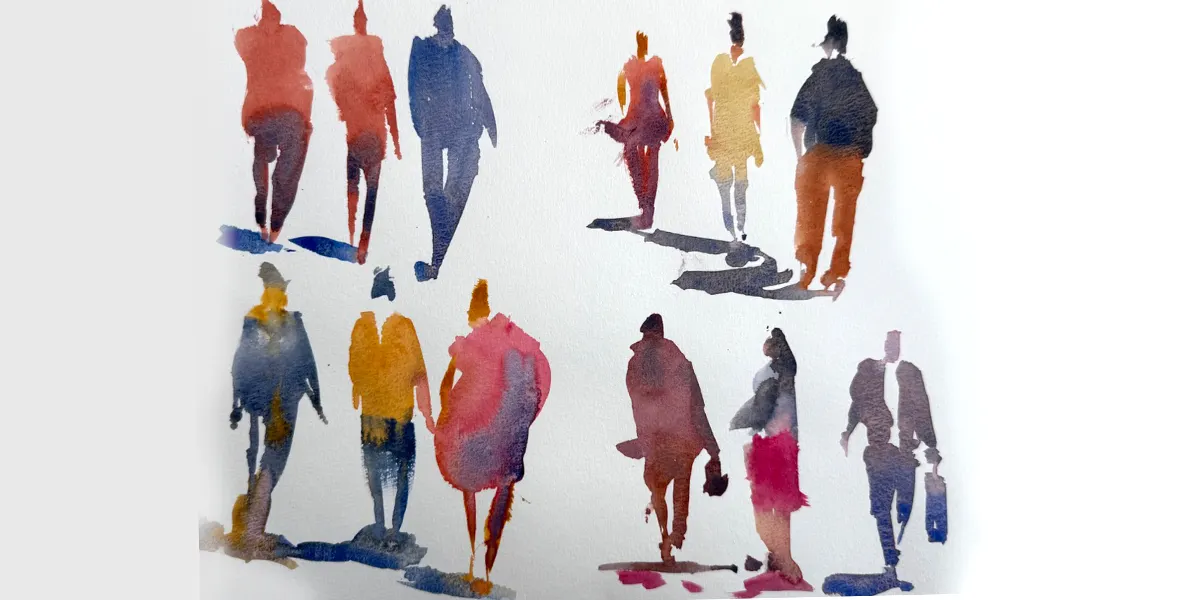
People Watching

People Watching

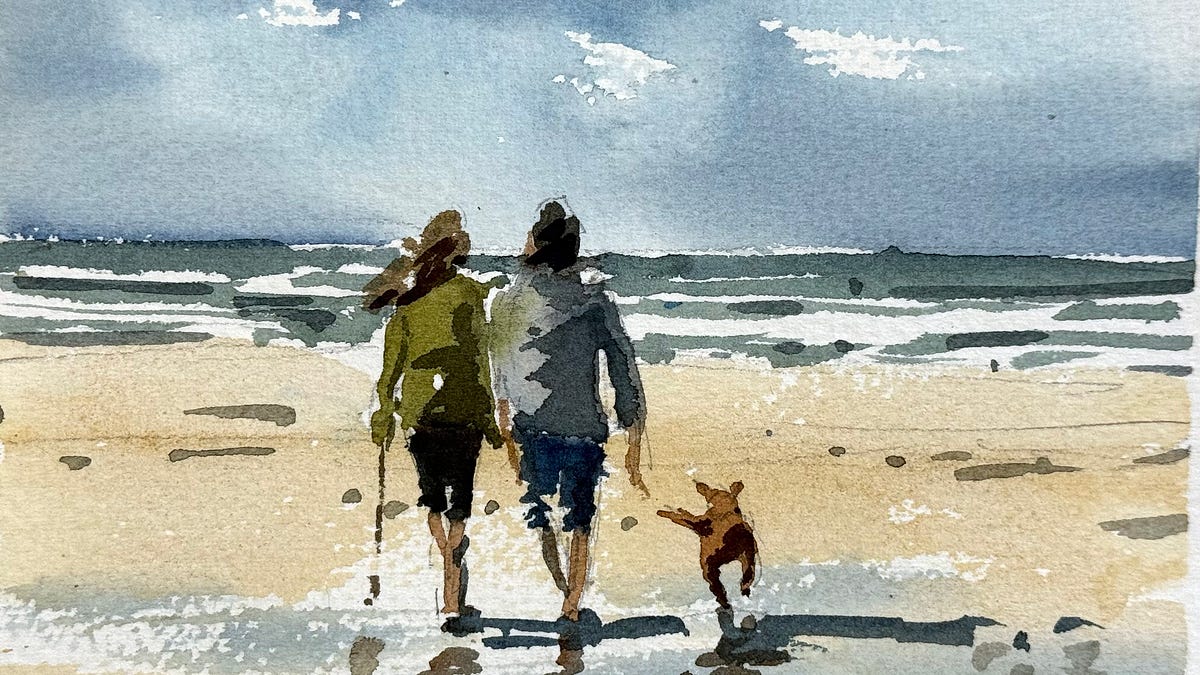
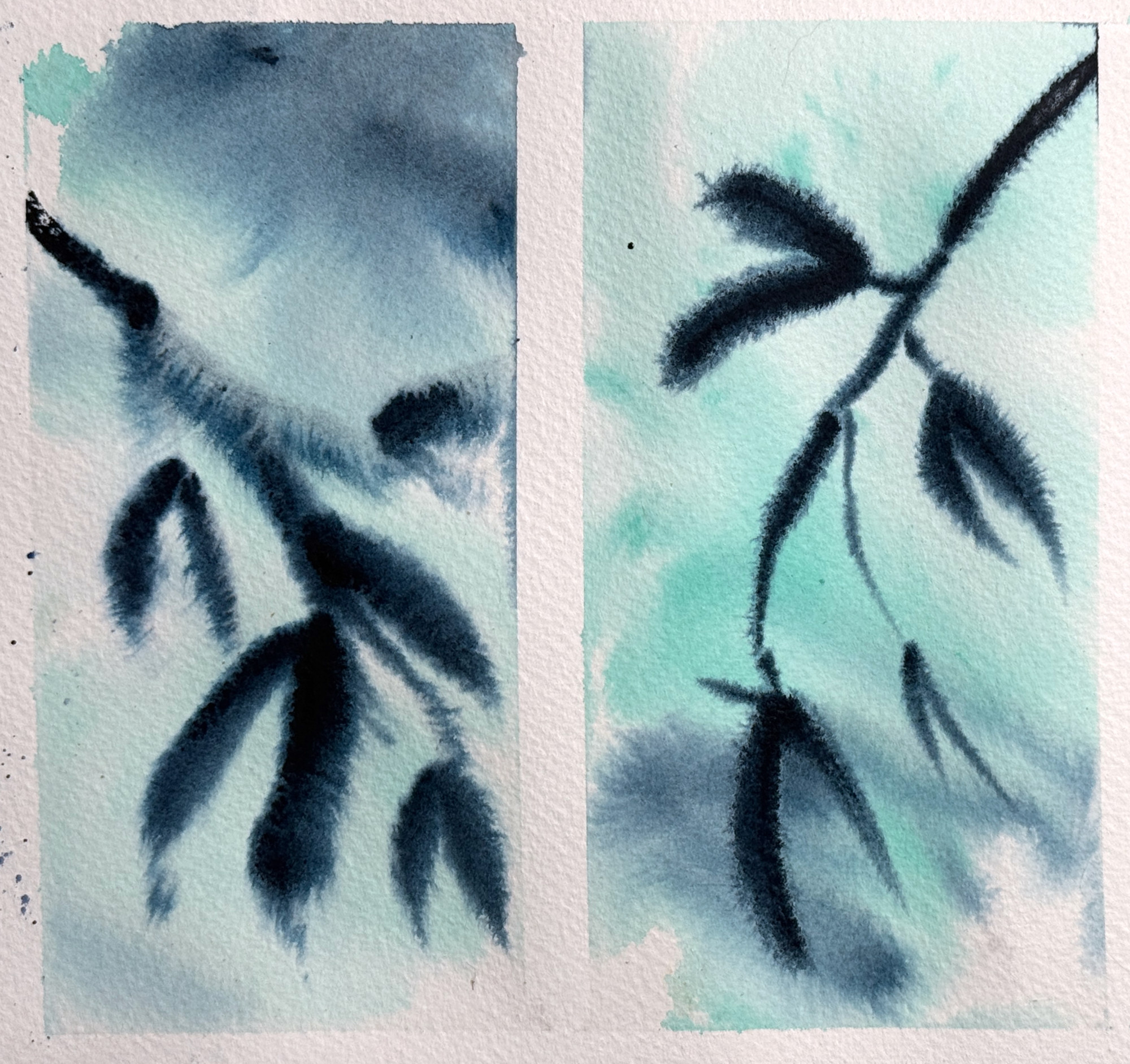
Suggest convincing figures using only confident brush marks — without ever trying to draw a person.

Exercise: Explore each brush's personality on scrap paper. Then build figures from simple marks: a stroke for a torso, flicks for legs, a dot for a head.

Why: The less you try to draw a person, the more alive they look. Populate a painting with scale and life in just a few strokes.

Brush ControlSubjects
Read full tutorial
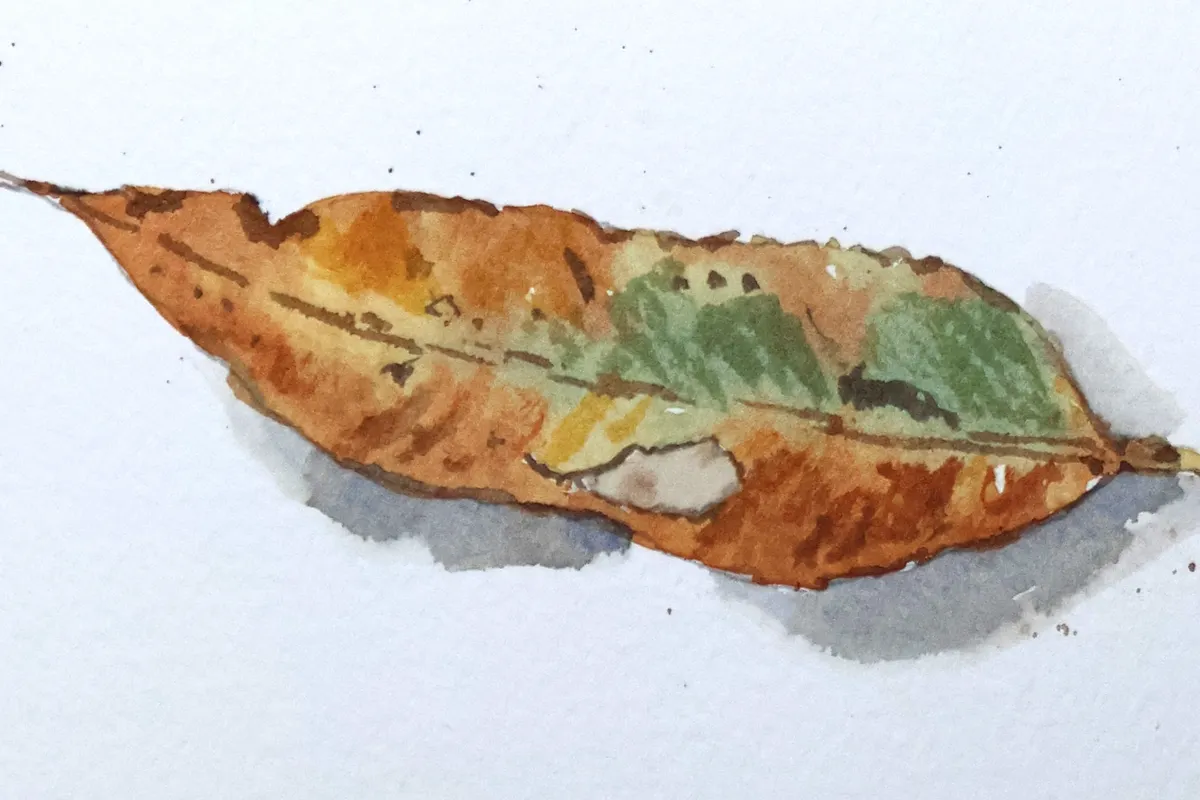
Reading the Leaves

Reading the Leaves

Pick up a fallen leaf and use it as a low-pressure subject to practise edge control, layering, and close observation.

Exercise: Start with a light pencil drawing. Paint the leaf with a light wash, dropping in colour wet-in-wet. Add shadow once dry. Add veins sparingly.

Why: A single leaf is the perfect small subject for building edge control without the pressure of complex composition.

EdgesLayering & GlazingSubjectsWater Control
Read full tutorial
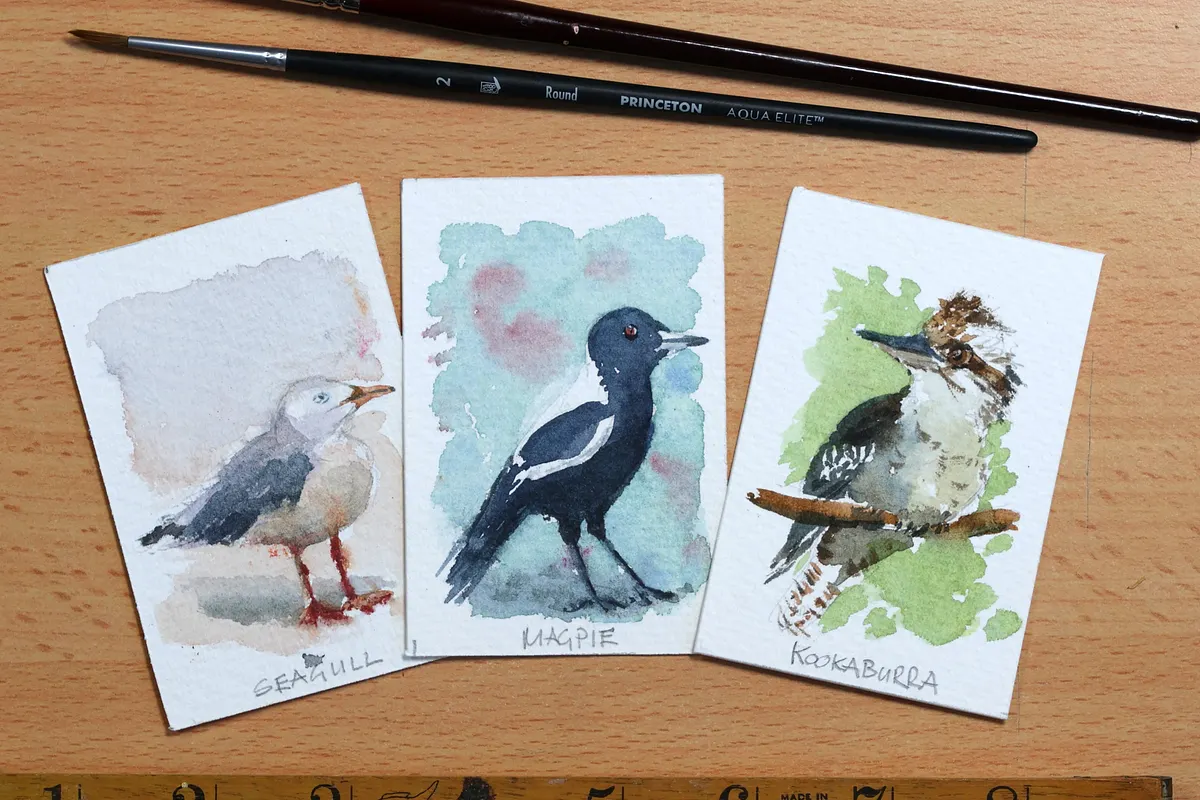
Paintings You'll Want to Keep
Paintings You'll Want to Keep

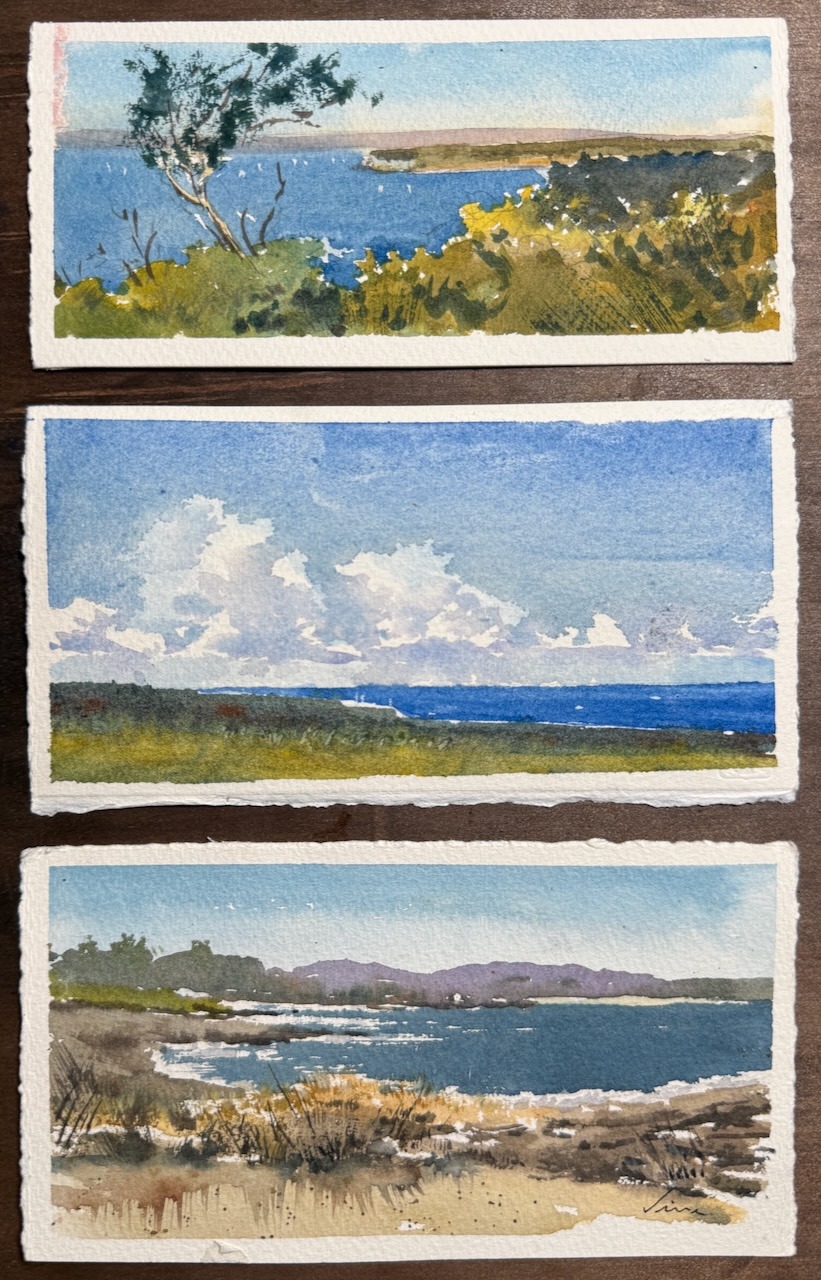
Paint five miniature ACEO cards — each just 2.5×3.5 inches — on a single theme across one week.

Exercise: Cut watercolour paper into trading-card-sized pieces. Choose a theme and paint one card per day for five days. 15 minutes max, keep marks loose.

Why: Small formats lower the stakes and encourage experimentation. Progress between card one and five is always instructive.

SubjectsBrush ControlComposition & Planning
Read full tutorial
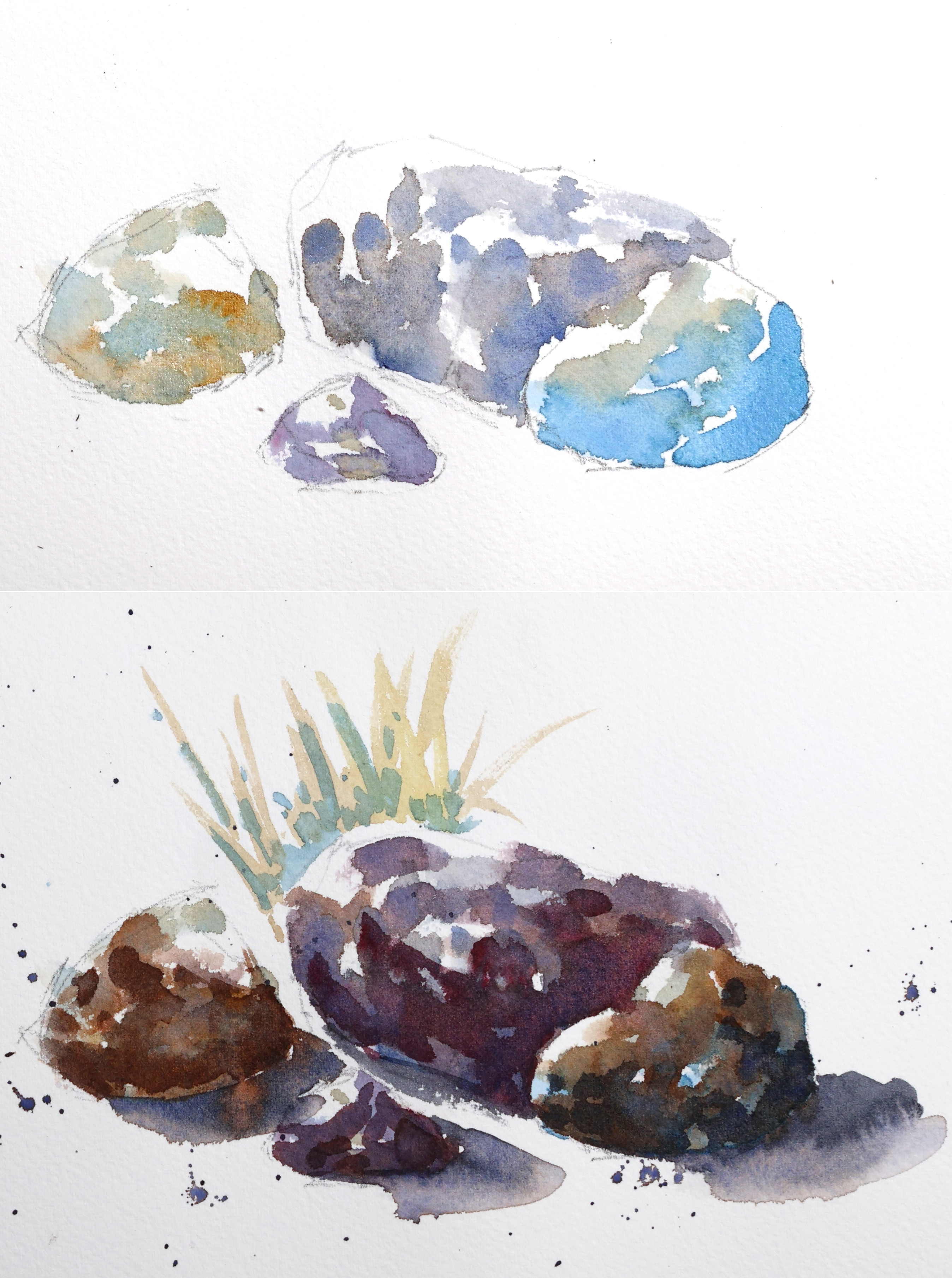
Rocks and Driftwood

Rocks and Driftwood

Build texture and depth in rocks and driftwood using layered transparent glazing strokes.

Exercise: Paint shadow areas first with cool brushstrokes. Glaze a warm colour over the dry first layer. Add a third dark layer in the deepest shadows.

Why: Texture comes from the edges between strokes. The transparency creates colour shifts and tonal depth.

TextureLayering & GlazingSubjects
Read full tutorial
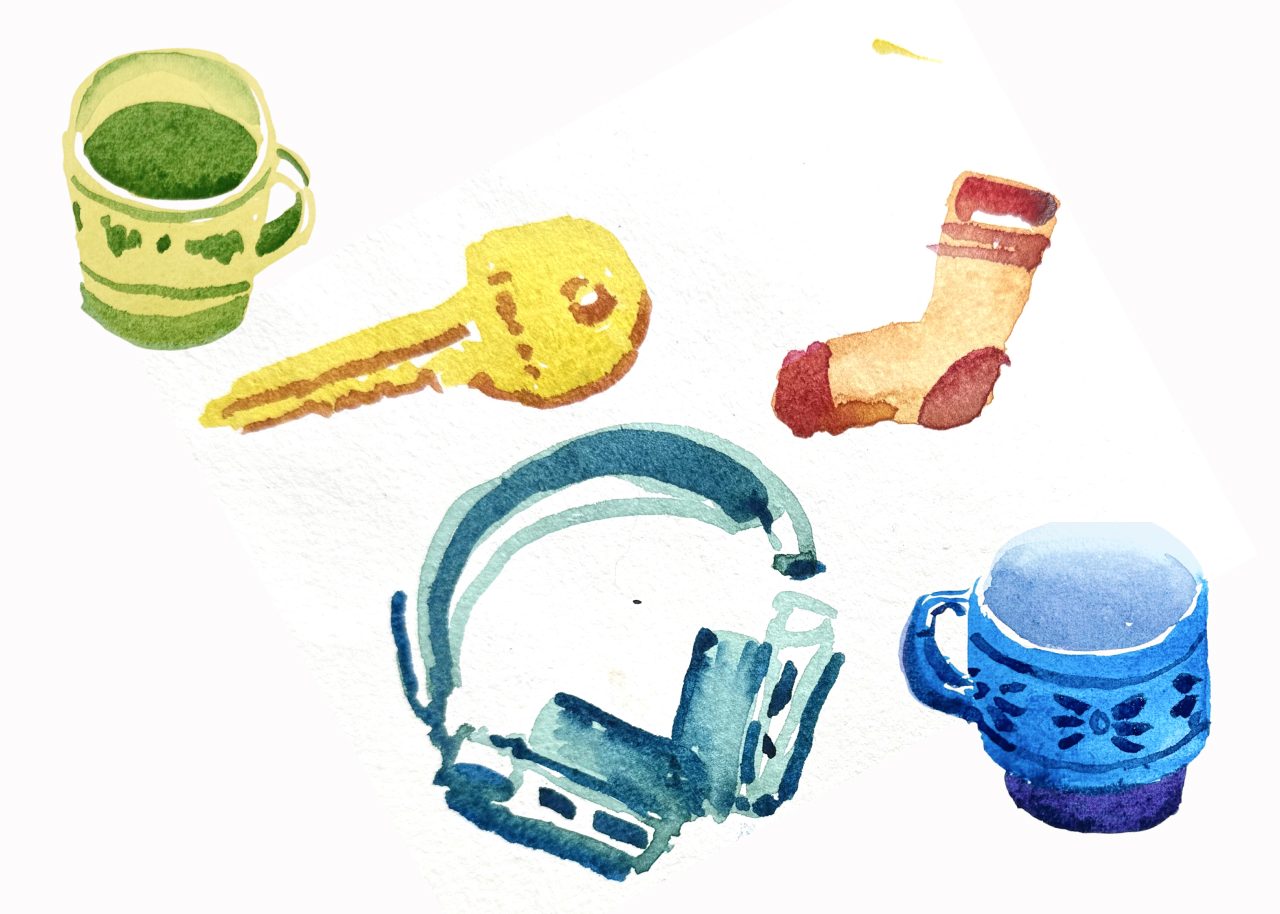
Everything Round

Everything Round

Paint cylindrical and round objects by learning to see and render gradual value transitions across curved surfaces.

Exercise: Set up a cylindrical object like a mug or vase. Paint the curved shadow as a smooth gradation from light to dark, avoiding hard edges.

Why: Training your eye to see gradual transitions makes everything you paint feel more three-dimensional.

ValuesSubjects
Read full tutorial
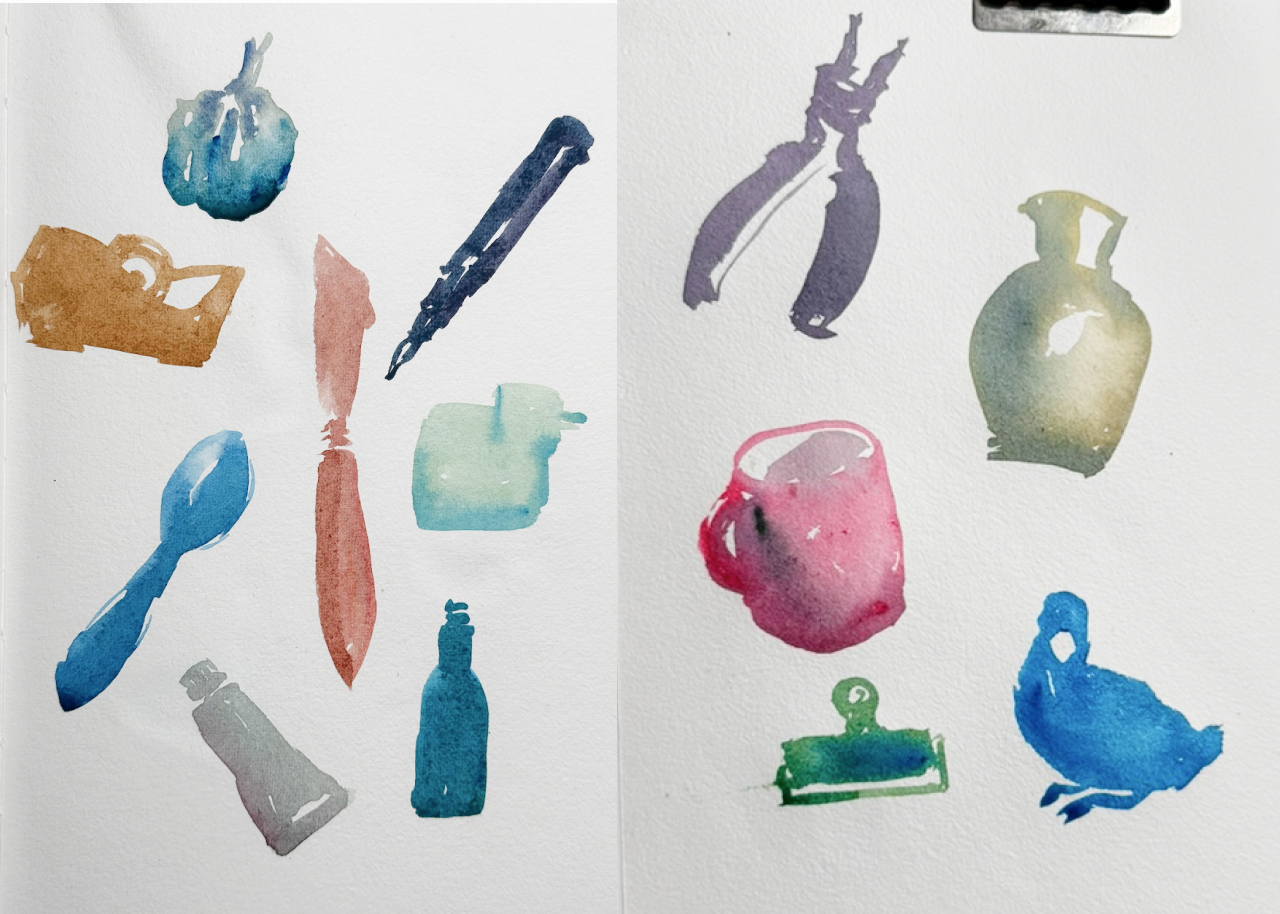
Add Depth to Landscapes

Add Depth to Landscapes

Use value and colour temperature to mimic aerial perspective and create convincing depth.

Exercise: Value study: paint overlapping hills, glazing progressively darker layers forward. Colour temperature study: warm mixes in the foreground, cool blues in the distance.

Why: Aerial perspective is one of the most powerful tools for avoiding flat, lifeless landscapes.

ValuesColourSubjects
Read full tutorial
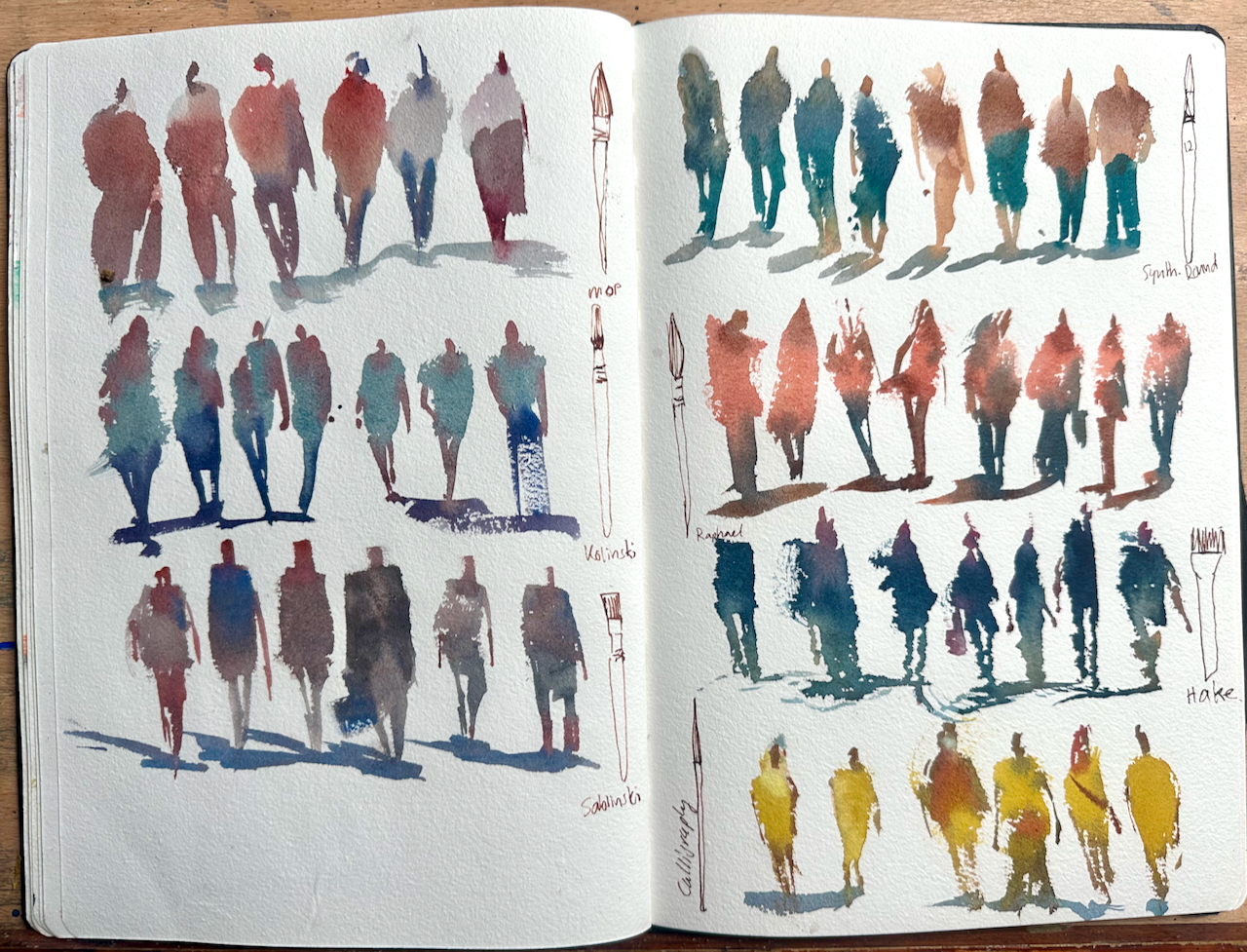
In All Transparency

In All Transparency

Build depth by overlapping the same shape repeatedly with progressively darker or differently coloured washes.

Exercise: Choose a simple shape and sketch it overlapping on watercolour paper. Paint light to dark in layers, letting each dry fully.

Why: Teaches you to use layers deliberately rather than reactively. Develops patience and control.

Layering & GlazingColourComposition & Planning
Read full tutorial
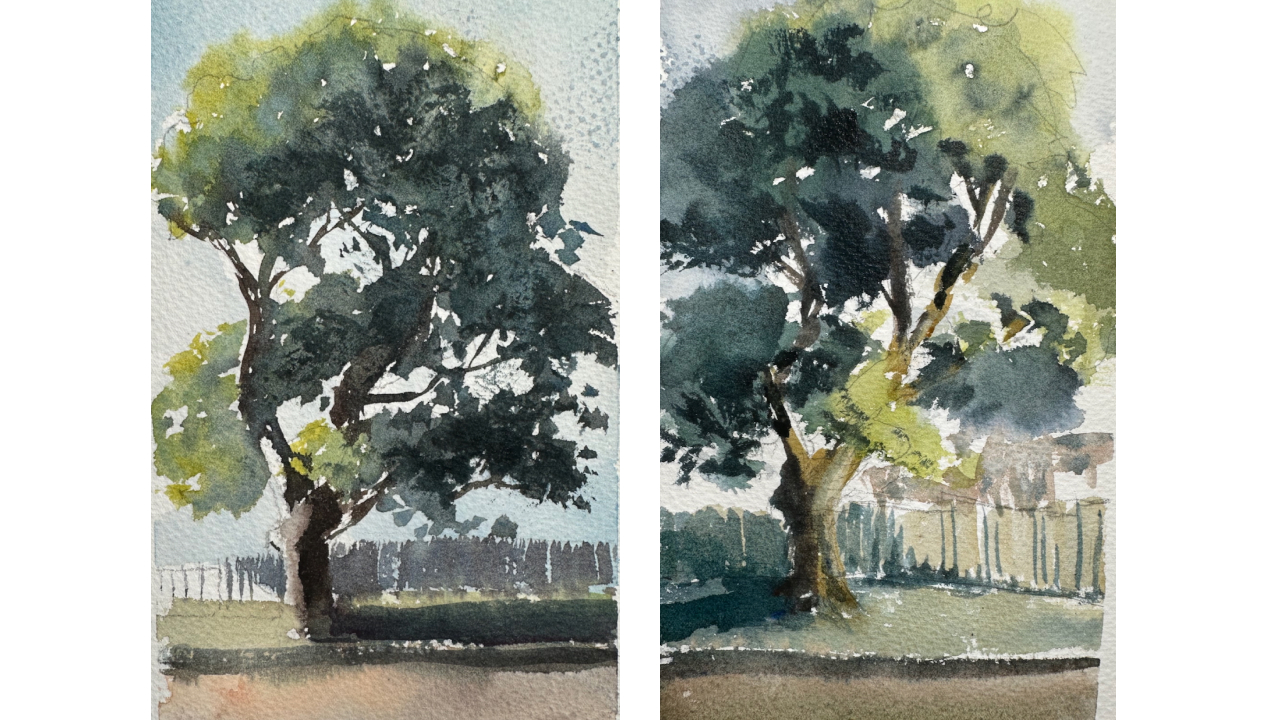
Double-Dipping

Double-Dipping

Load your brush with two colours at once and create expressive marks where the colours blend naturally in a single stroke.

Exercise: Load brush fully with a light colour, then dip just the tip into a darker one. Experiment with pressing, dragging, lifting, and rolling.

Why: Trains you to think about colour placement on the brush. Opens the door to one of the oldest traditions in the medium.

Brush ControlColourSubjects
Read full tutorial
Add Depth to Your Life

Add Depth to Your Life

Create depth and dimension in still life paintings using overlap and scale.

Exercise: Overlap study: arrange three objects so each partially hides another. Scale study: paint background objects small and loosely, foreground larger.

Why: Overlap and scale create an instant sense of three-dimensionality without complex technique.

Composition & PlanningSubjects
Read full tutorial
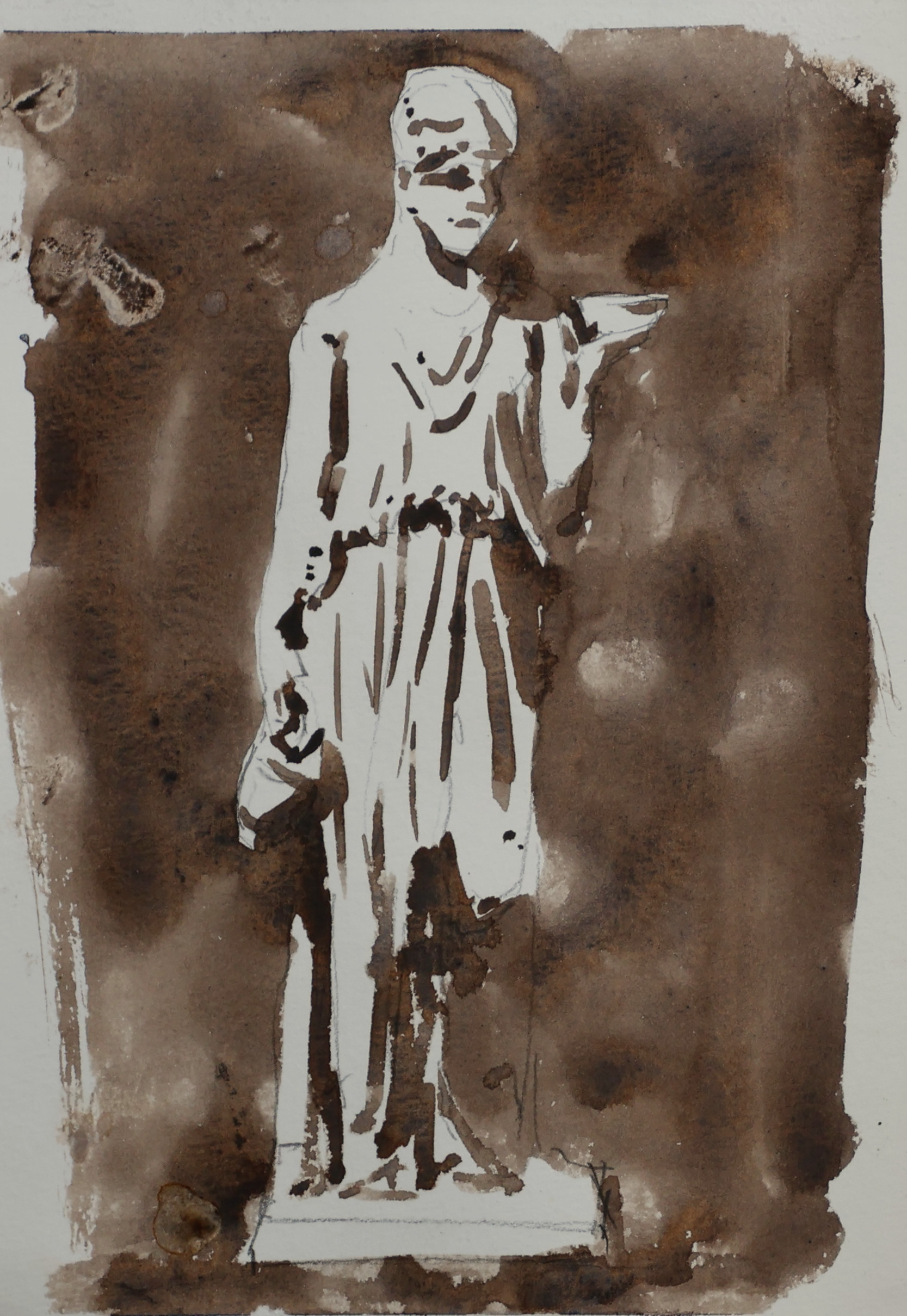
Stone Cold Values

Stone Cold Values

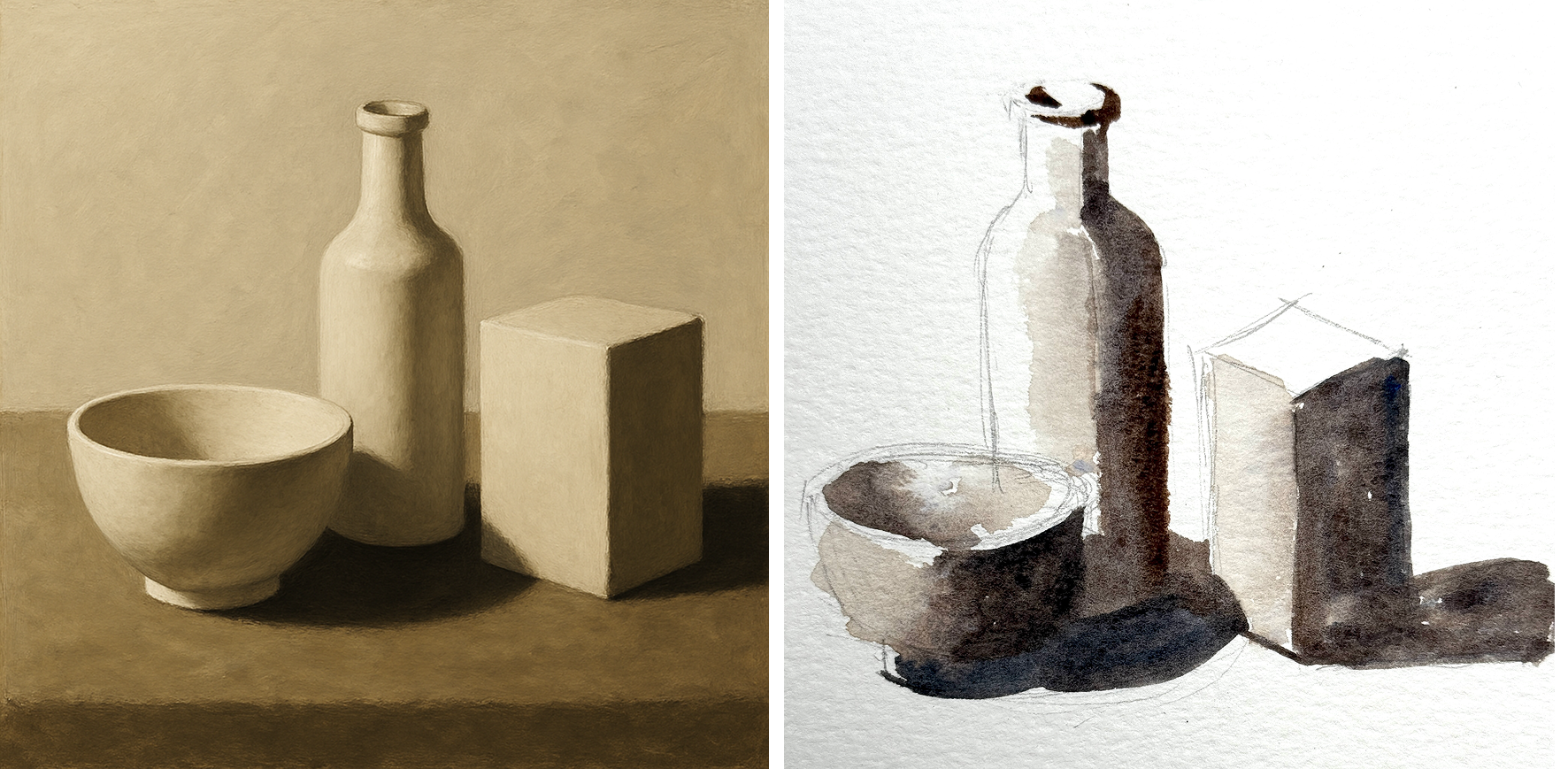
Practice seeing and painting values using statues and busts as subjects, working in near-monochrome.

Exercise: Two-value study: reduce forms to just light (white paper) and dark. Three-value study: add mid-tones first, then darkest values.

Why: Statues are ideal subjects — static with colours removed. Value is the foundation of everything.

ValuesSubjects
Read full tutorial
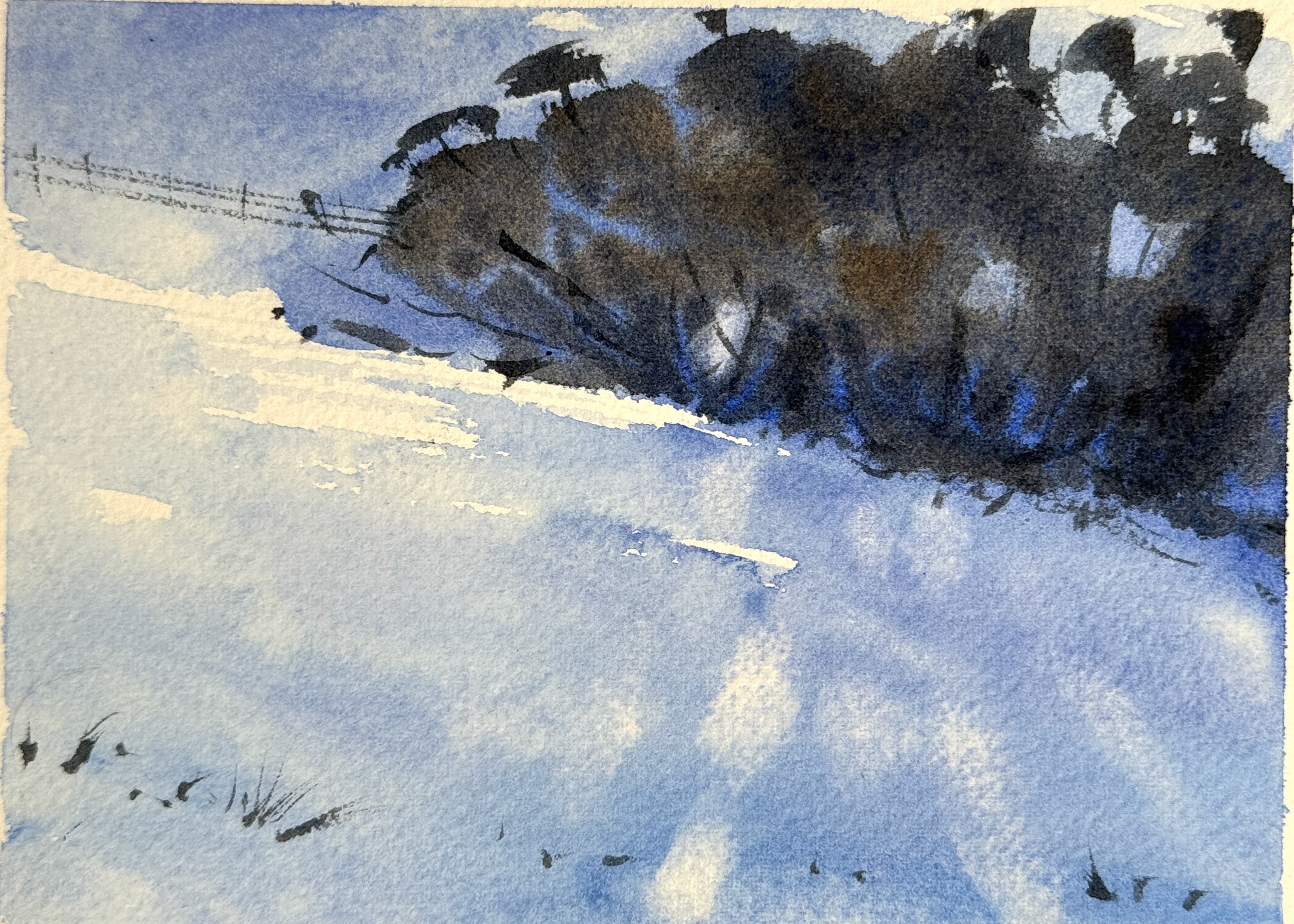
Lifting Light

Lifting Light

Learn the lifting technique to create soft, natural light effects after laying down colour.

Exercise: Test which colours lift well. Paint snow scenes with varied blue washes, add dark tree shapes, then lift out pigment with a damp synthetic brush.

Why: Creates natural, soft light that masking fluid can't replicate. Lets you adjust as you go.

Brush ControlWater ControlValues
Read full tutorial
Colour Swap

Colour Swap

Experiment with unusual 3-colour combinations by swapping familiar primaries for unexpected alternatives.

Exercise: Pick a simple subject. Paint it twice using two different colour triads. Allow wet-in-wet blending.

Why: Breaks habitual colour choices. Develops mixing confidence with unusual interactions.

ColourWater Control
Read full tutorial
Building A Sketchbook Habit

Building A Sketchbook Habit

Focus on building a consistent painting habit using a 5-day challenge with mundane subjects.

Exercise: Paint 5 days out of 7. Daily subjects: fruit, favourite object, leaf, junk drawer item, kitchen item. 10 minutes max, no fixing.

Why: Small wins compound into confidence. A cheap sketchbook with time limit removes pressure.

Composition & PlanningSubjects
Read full tutorial
More Is Less

More Is Less

Practice limited stroke painting to build brush control and learn to say more with less.

Exercise: Complete images in as few strokes as possible. 5-stroke flowers, trees, fish. 10-stroke landscape challenge.

Why: Builds confidence with brush marks. Reduces the urge to overwork. Forces you to consider what is essential.

Brush ControlComposition & Planning
Read full tutorial
Wet In Wet Experiments

Wet In Wet Experiments

Build intuition for wet-in-wet technique through timing experiments.

Exercise: Basic Bloom: wet paper, drop colours. Timing Variations: paint at 1 min, 5 min, nearly dry. Layered Shapes: build at different dampness.

Why: Develop timing intuition. Learn how pigments spread and granulate. Build confidence with water.

Water ControlWashes & GradientsEdges
Read full tutorial
Winter Whites

Winter Whites

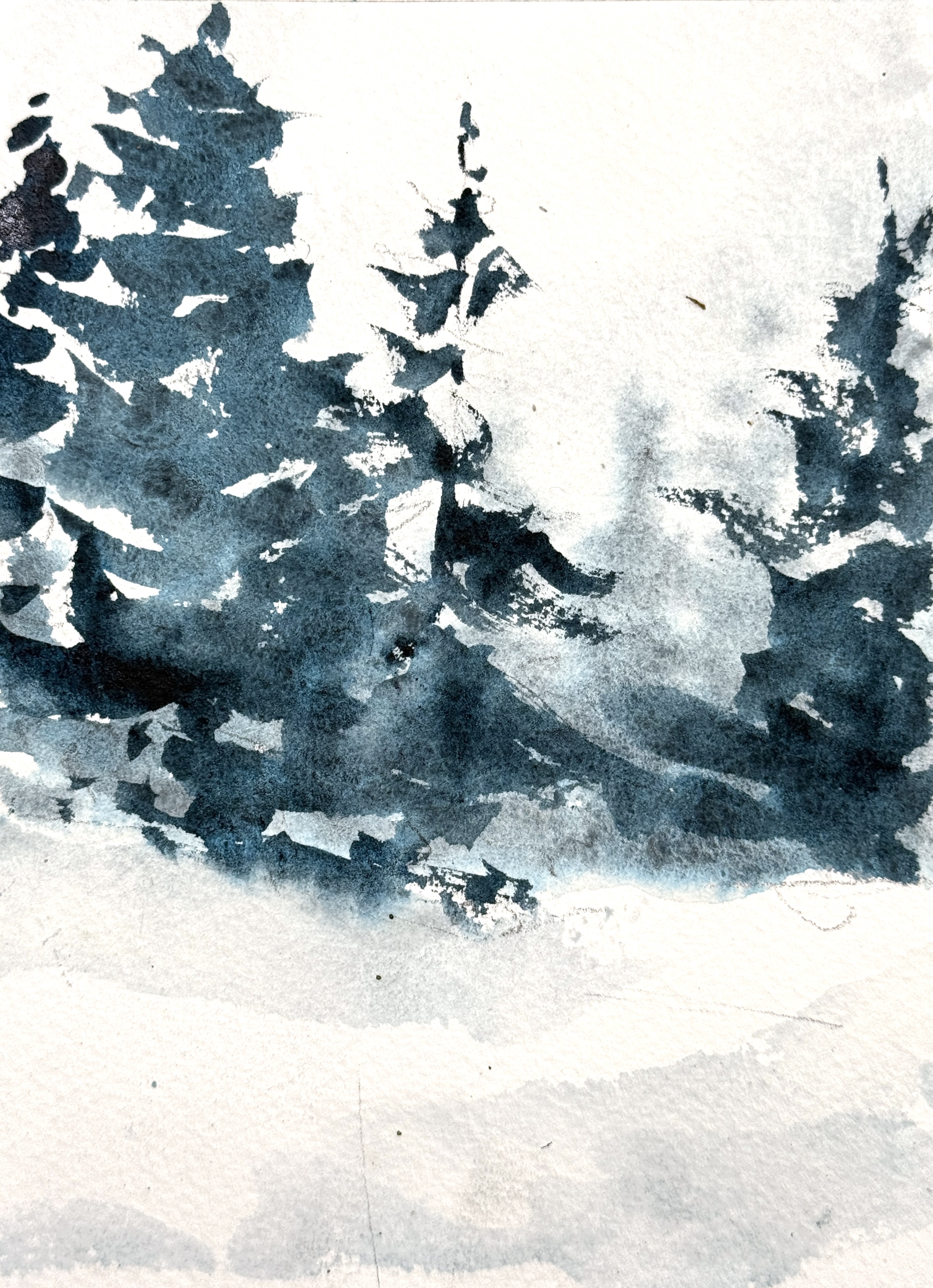
Combine monochrome painting with negative space to paint snow scenes by painting everything but the snow.

Exercise: Choose one colour (blues/purples work well). Paint around the snow areas, building from light background to darker foreground.

Why: Develops ability to see and preserve negative shapes. Working with one colour lets you focus on values.

ValuesComposition & PlanningSubjects
Read full tutorial
Master Class: David L Millard

Master Class: David L Millard

Explore David Millard's approach to loose, rapid sketching with tonal washes and bold shadows.

Exercise: Capture scenes with simple tonal washes over rough sketches. Paint only mid and dark values, using white paper for sunlight.

Why: Reinforces sketch-to-paint workflow. Develops ability to simplify scenes and see values first.

ValuesWashes & GradientsComposition & Planning
Read full tutorial
Colour On Trial

Colour On Trial

A systematic approach to testing new pigments through colour mixing and simple paintings.

Exercise: Test a new colour three ways: mix with staples, paint a subject using it dominantly, create an analogous scheme.

Why: Discover if a new colour earns a place in your palette. Find unexpected combinations.

ColourComposition & Planning
Read full tutorial
Trees With Texture

Trees With Texture

Master the dry brush technique to paint convincing tree foliage with natural, leafy edges.

Exercise: Start with loose overlapping circles. Use dry brush, dragging from outside edges toward centre. Add darker branches while wet.

Why: The dry brush technique gives organic edges that look natural. Trees want to be suggested, not painted too carefully.

TextureBrush ControlSubjects
Read full tutorial
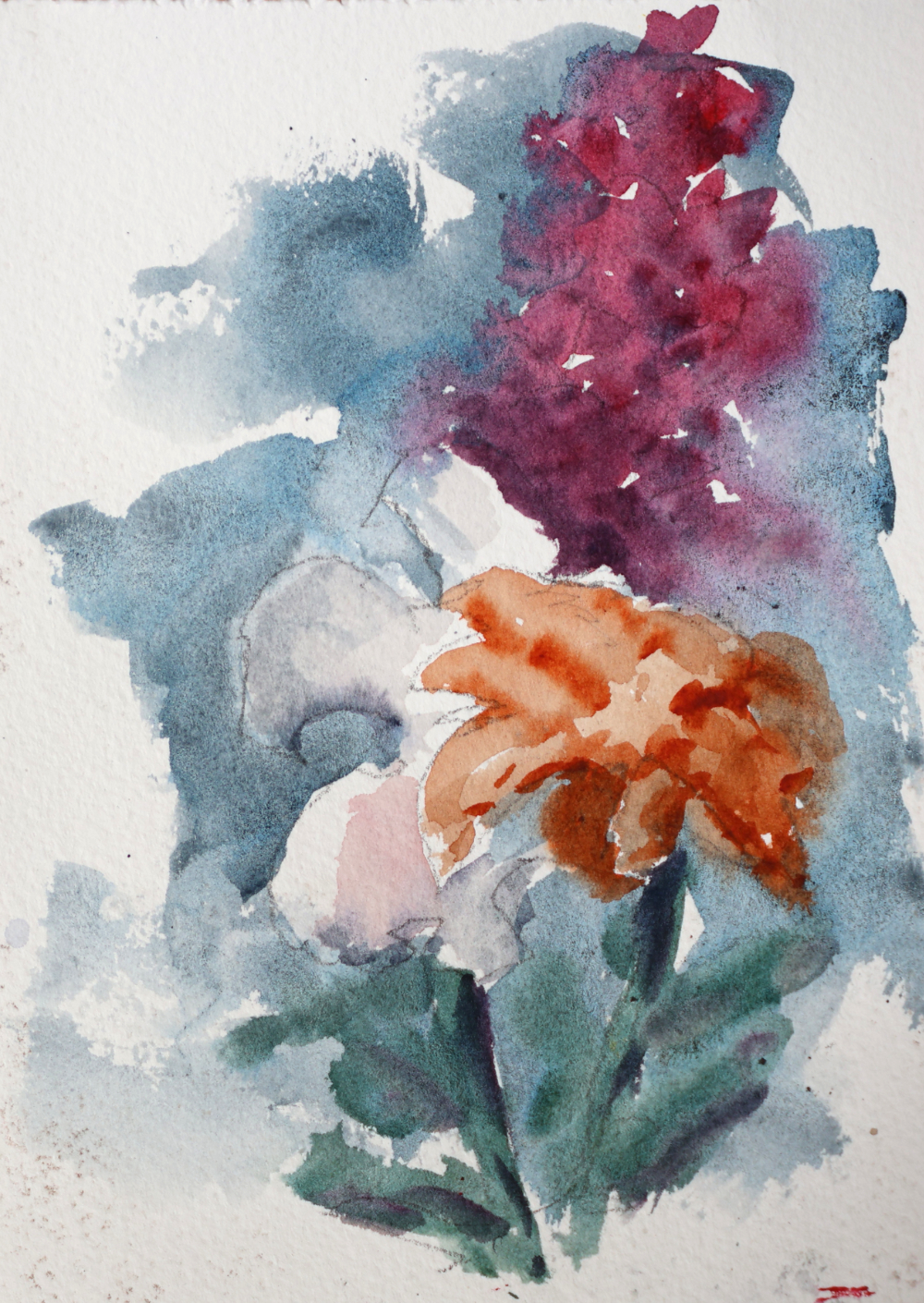
Where To Look

Where To Look

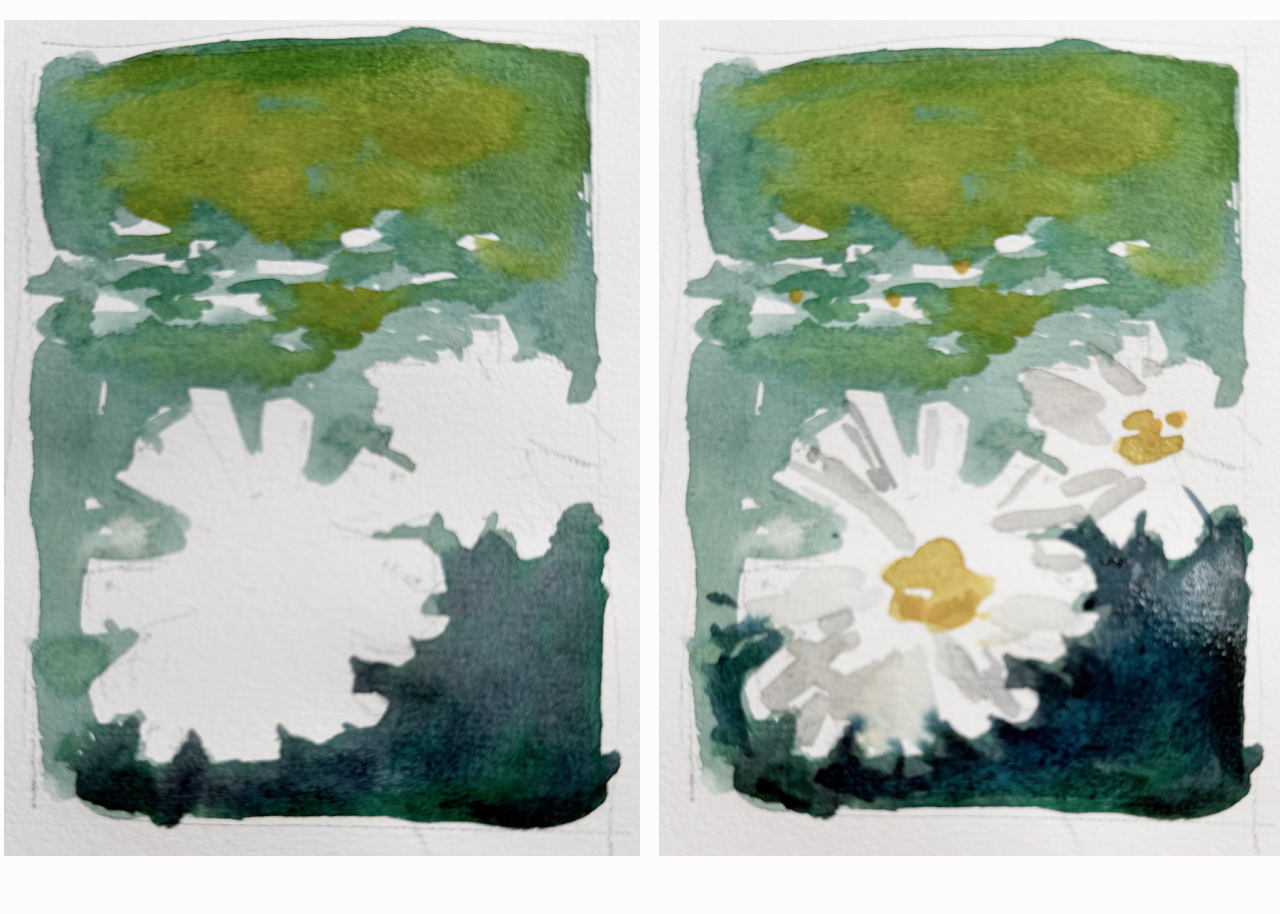
Learn to use soft and hard edges to guide the viewer's attention in your paintings.

Exercise: Paint a floral arrangement in layers. Start with loose wet-in-wet background, then add hard-edged details in the focal area.

Why: Soft edges teach restraint. Learning to leave things half-suggested creates mood and professionalism.

EdgesComposition & PlanningWater Control
Read full tutorial
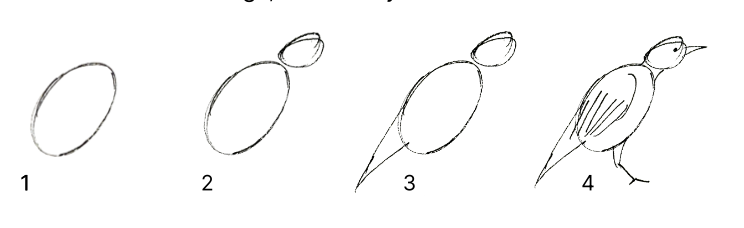
Flight Lesson

Flight Lesson

Paint birds by observing gesture and painting the essence with quick strokes.

Exercise: Observe gesture—line of back, curve of neck. Simplify to oval + triangle.

Why: It's FUN! And trains your eye to see gesture and hand to react quickly.

SubjectsBrush Control
Read full tutorial
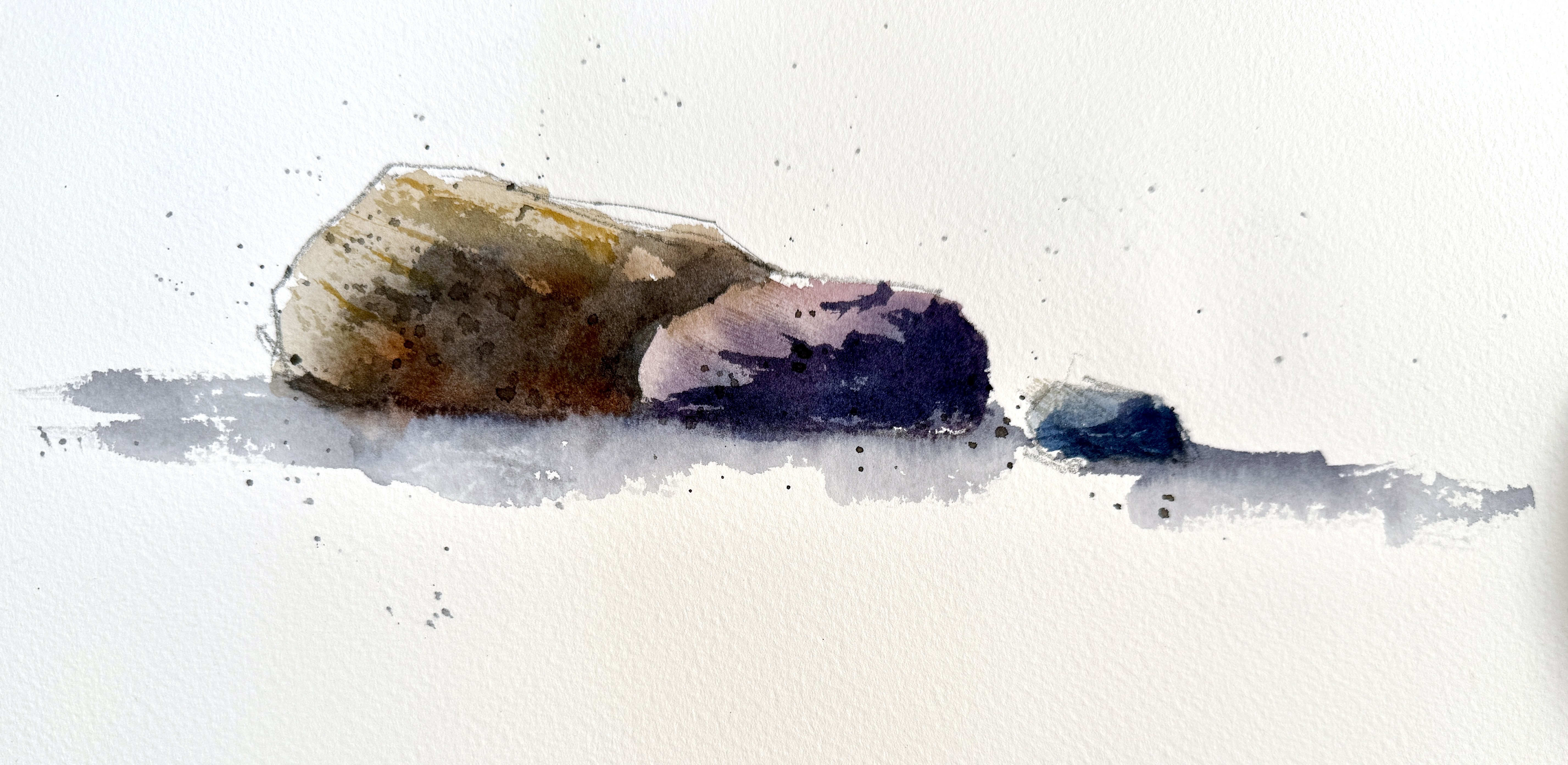
Let's Rock

Let's Rock

Paint rocks with simple value transitions and connected shapes.

Exercise: Sketch rocks lightly. Start light at top, drop in darker values moving down.

Why: Learn to simplify complex natural textures into paintable forms.

SubjectsTexture
Read full tutorial
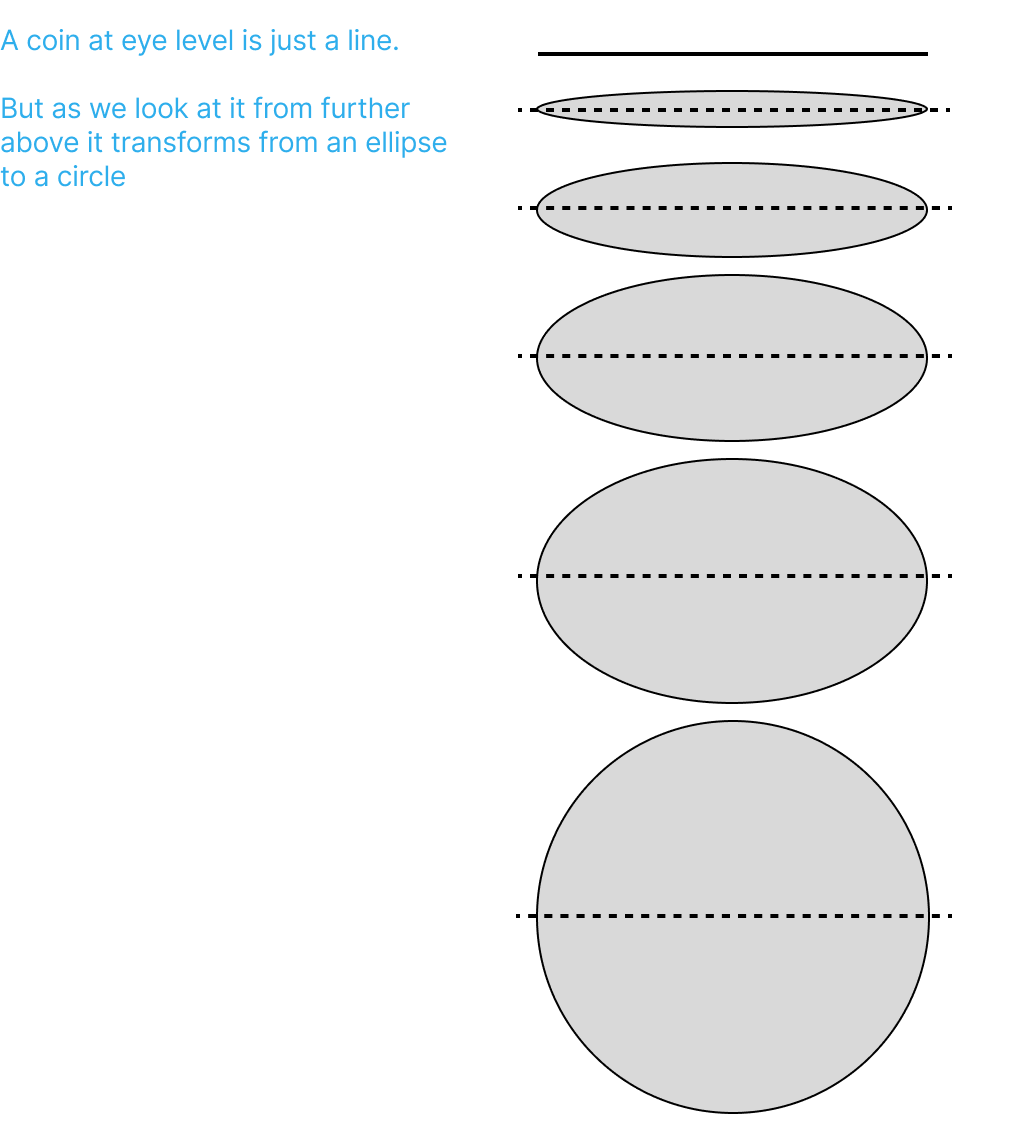
Full Circle

Full Circle

Master painting ellipses and cylindrical forms like cups and bottles.

Exercise: Practice drawing and painting circles in perspective (ellipses).

Why: Essential skill for still life; ellipses are one of the most common shapes.

SubjectsValues
Read full tutorial
Glow In The Dark

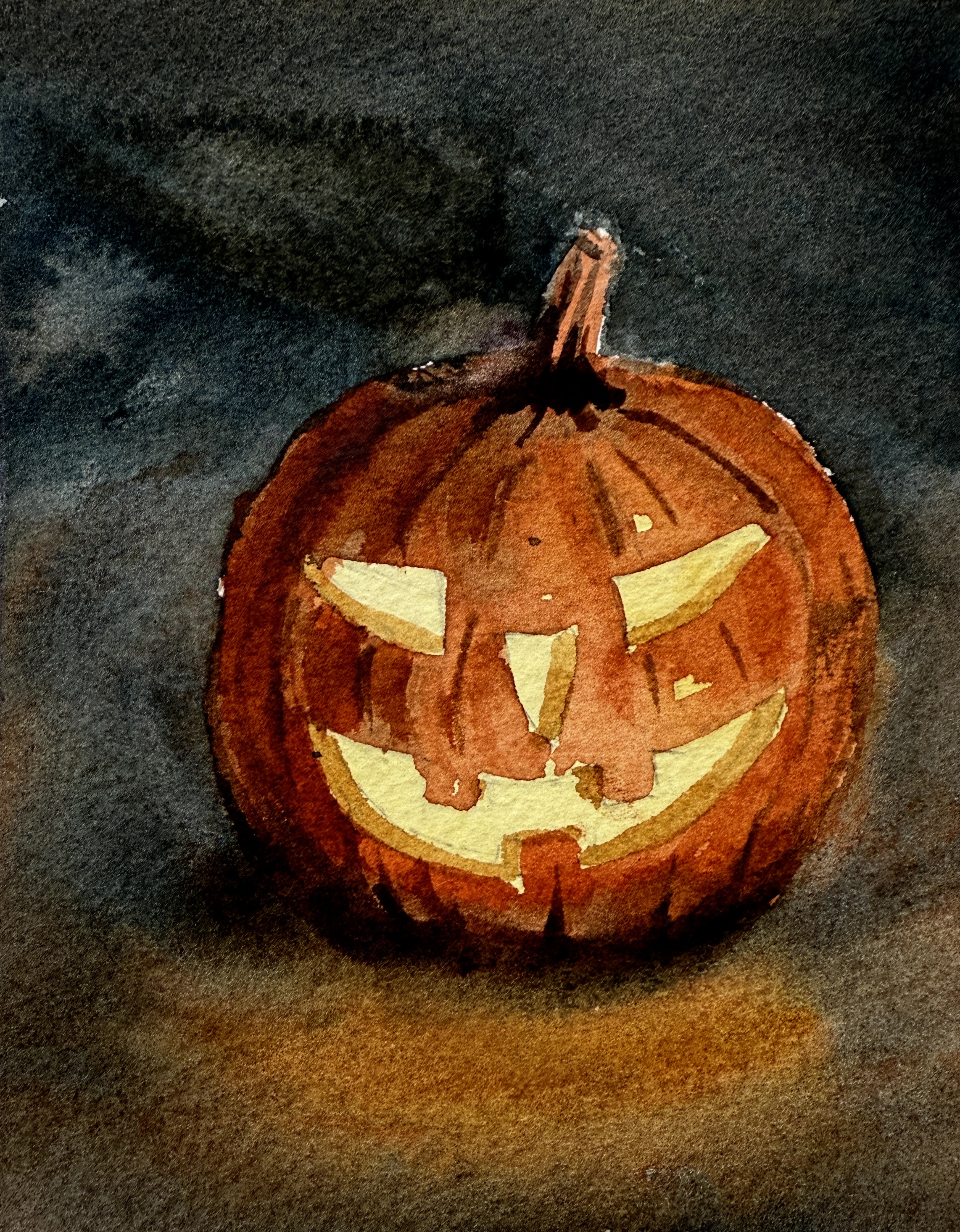
Glow In The Dark

Paint glowing objects against dark backgrounds—trickier than it looks.

Exercise: Start with the glow—brightest yellows and oranges first. Build darks around.

Why: Get out of your comfort zone; deepen understanding of value design.

ValuesLayering & Glazing
Read full tutorial
Size Matters

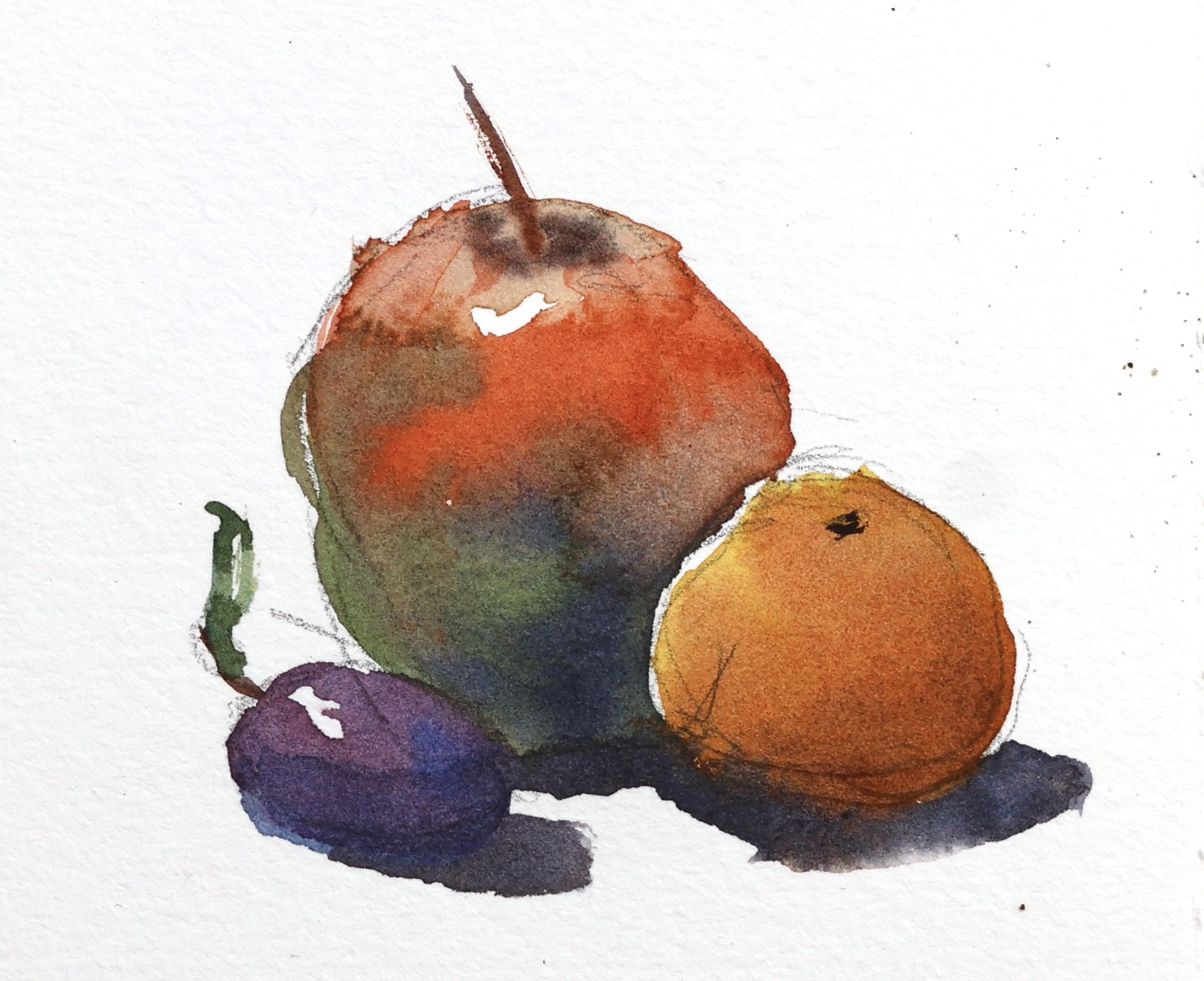
Size Matters

Use the rule of three with varied sizes for more dynamic compositions.

Exercise: Arrange three objects of different sizes: one dominates, one supports, one accents.

Why: Understand why arrangements in threes create natural visual harmony.

Composition & PlanningSubjects
Read full tutorial
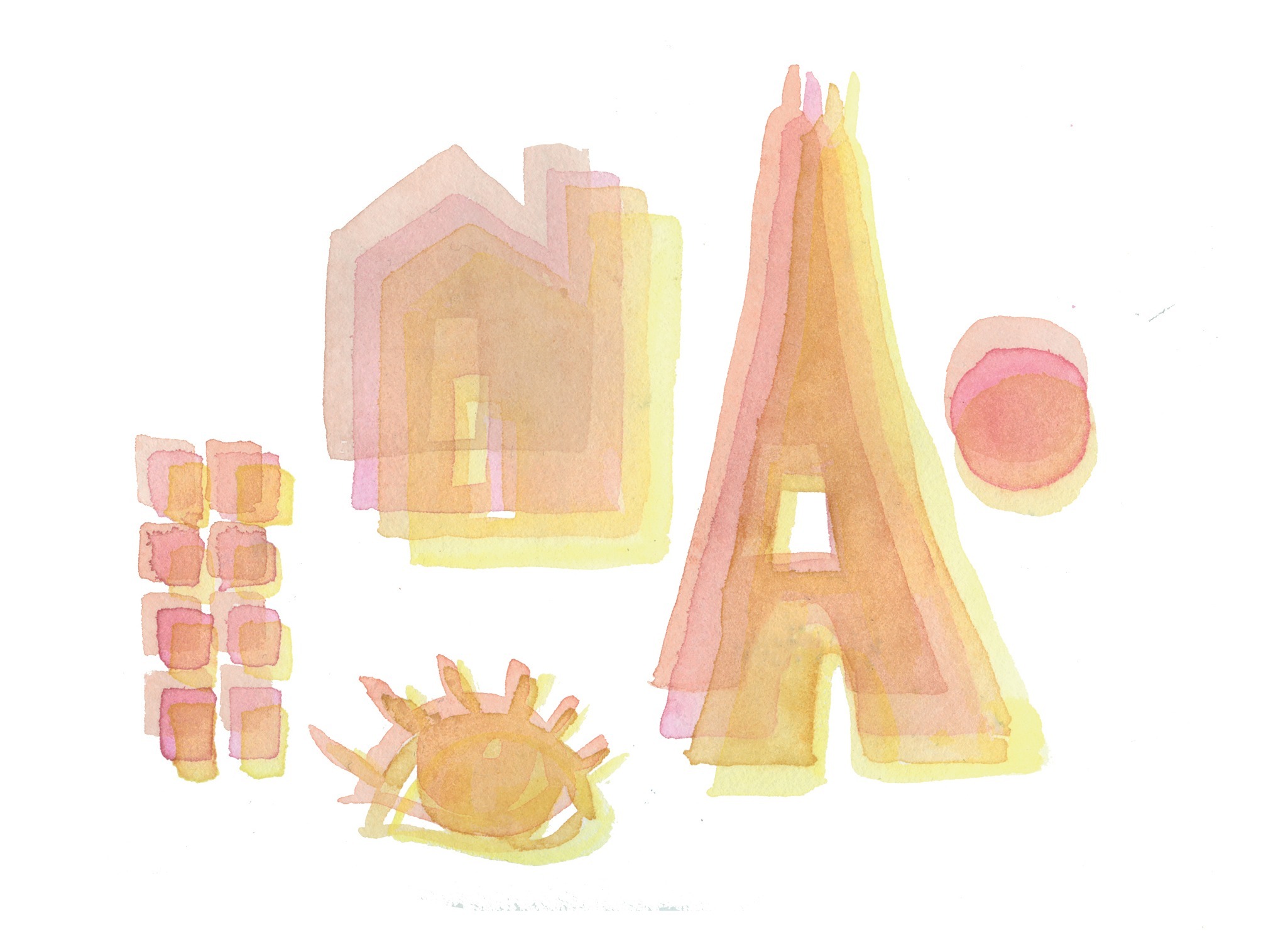
Perfect Pairs

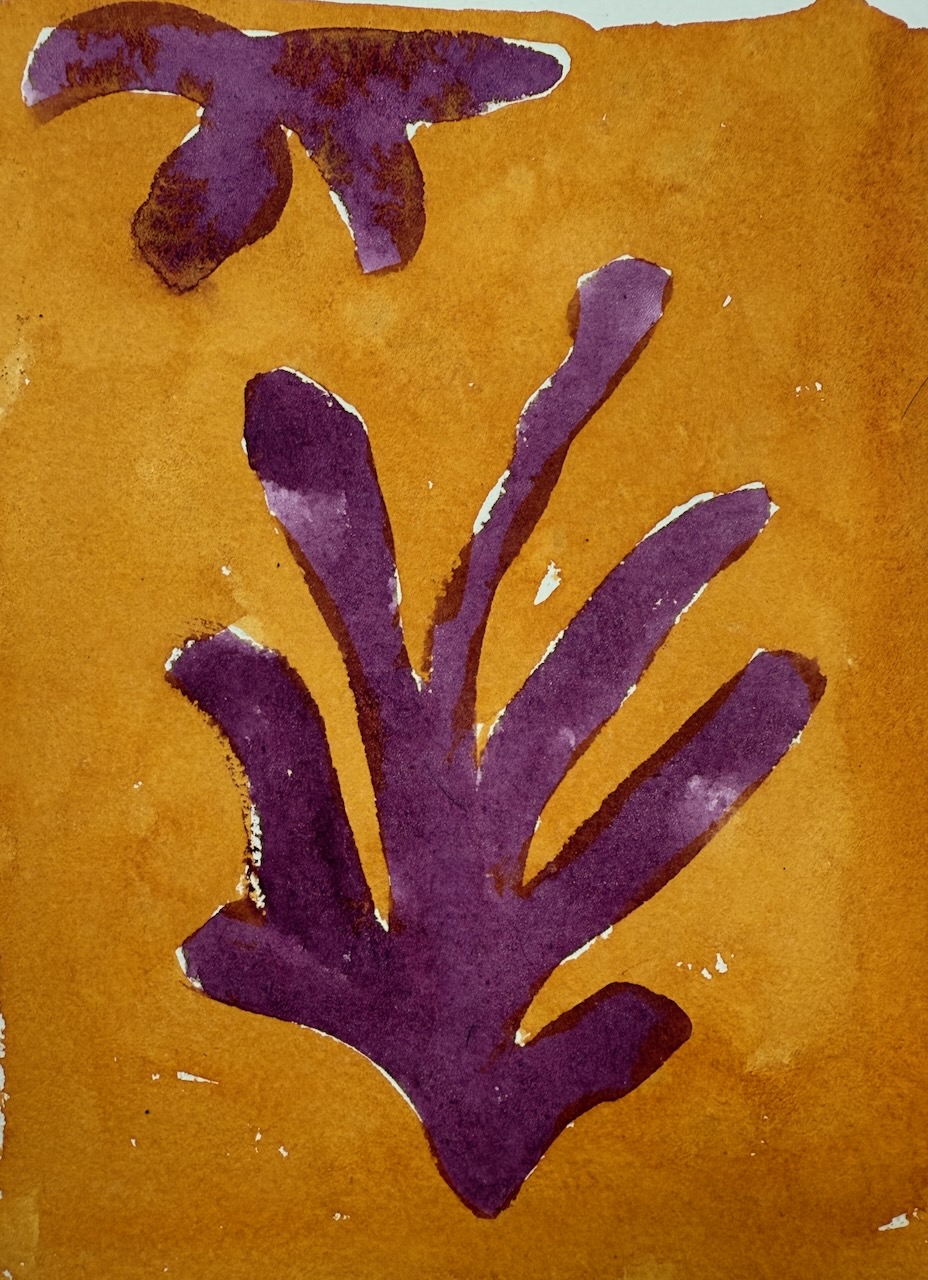
Perfect Pairs

Explore two-colour combinations inspired by Matisse's cut-outs.

Exercise: Pick any two colours. Paint the shape first. Let dry. Add the second colour.

Why: Discover the power of limited palettes for bold, graphic impact.

ColourComposition & Planning
Read full tutorial
Hazy Shades

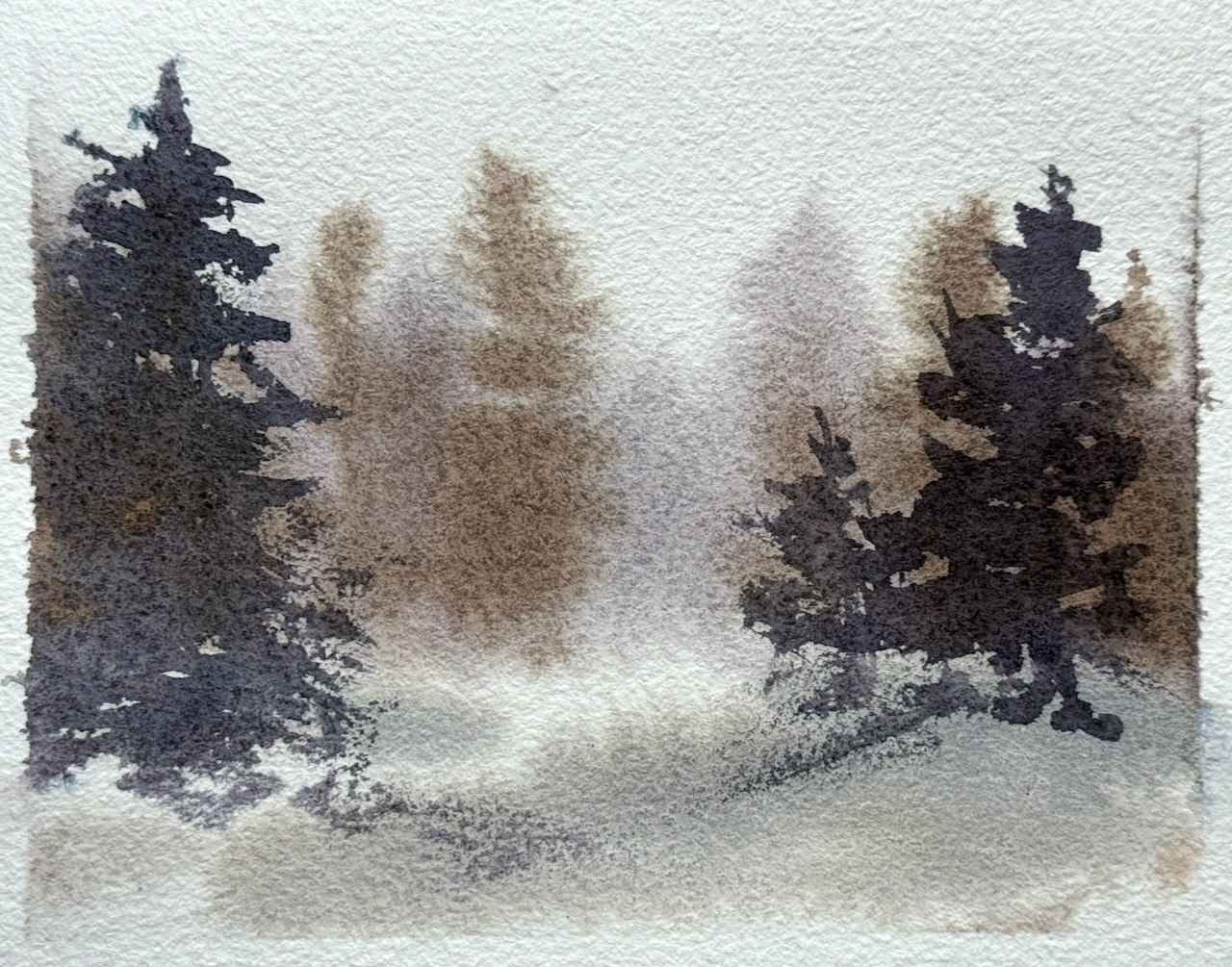
Hazy Shades

Create atmospheric depth through layered soft edges and careful timing.

Exercise: Wet paper, add light colour. Drop in tree shapes while glossy. Add more rows.

Why: Practice water control and timing; build softness through layers.

Water ControlLayering & Glazing
Read full tutorial
Mix And Match

Mix And Match

Create sea and sky paintings by matching or contrasting their moods.

Exercise: Paint the sky first, let it dry. Choose a colour for the sea that matches or contrasts.

Why: Understand how colour relationships create mood in seascapes.

ColourSubjects
Read full tutorial
Mirror Mirror

Mirror Mirror

Paint water reflections to enhance paintings depicting bodies of water.

Exercise: Flip the shape vertically. Make it slightly less detailed. Use wet-in-wet or squiggly lines.

Why: Add depth and atmosphere to water scenes.

SubjectsWater Control
Read full tutorial
Composition Conundrums

Composition Conundrums

Experiment with unconventional focal point placement.

Exercise: Place your subject: close to the edge; dead centre; squashed into a corner.

Why: Learn to see composition as choices, not formulas.

Composition & Planning
Read full tutorial
Playful Abstraction

Playful Abstraction

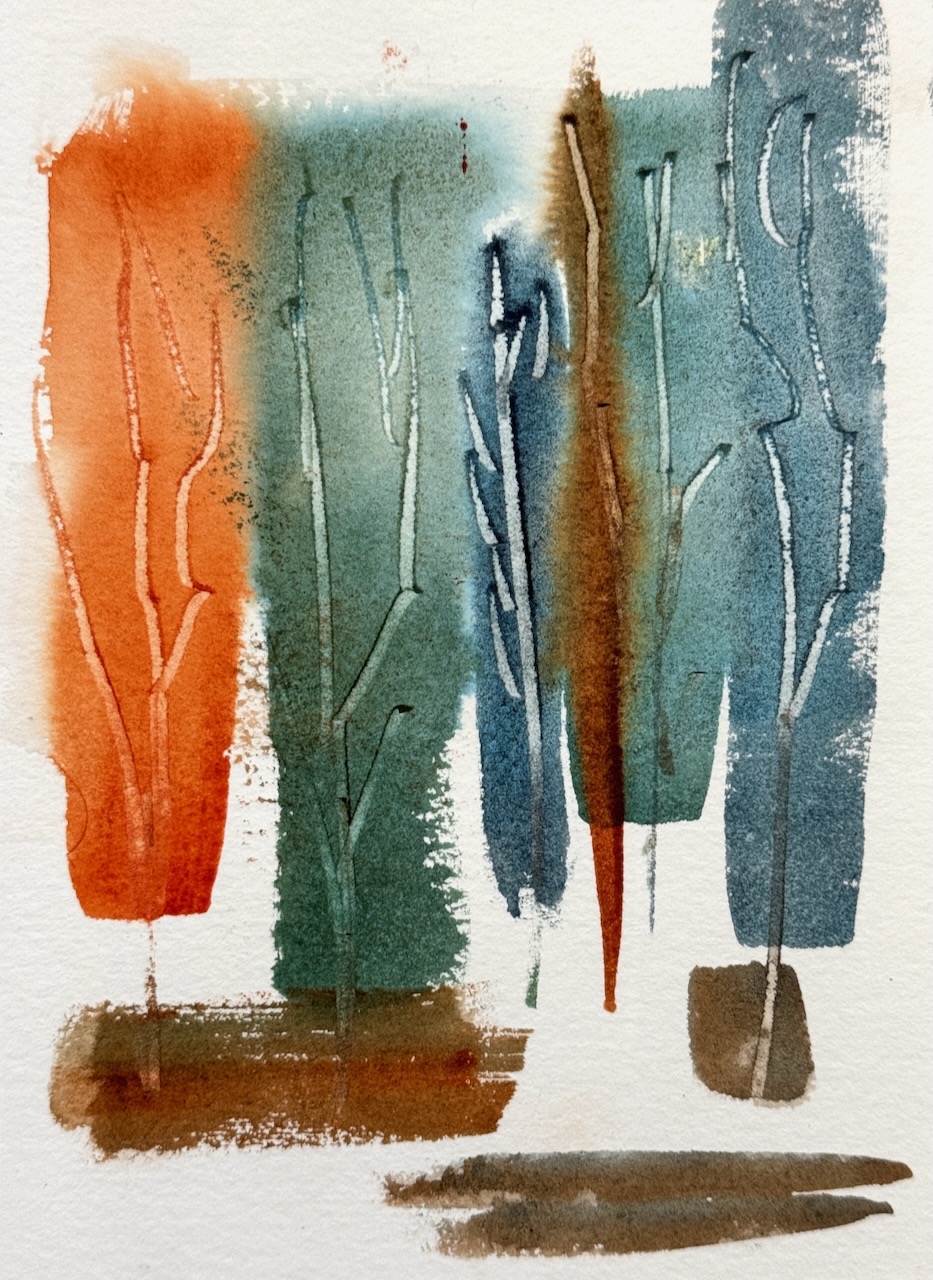
Respond to paint and water behaviour to discover textures through abstraction.

Exercise: Pick 3 colours. Wet top half of paper. Paint vertical marks from dry into wet.

Why: Let go of accuracy and discover textures that can be used in realistic work.

Water ControlTexture
Read full tutorial
Counterchange

Counterchange

Use counterchange—alternating light against dark—to create visual interest.

Exercise: Observe objects overlapping light and dark backgrounds. Create sketches using counterchange.

Why: Create depth and visual interest without relying on outlines.

ValuesComposition & Planning
Read full tutorial
Start With Dark

Start With Dark

Reverse the typical light-to-dark approach by painting darks first.

Exercise: Choose a reference with strong shapes and plenty of darks. Paint darkest elements first.

Why: Understand value structure by working backwards from your usual approach.

ValuesLayering & Glazing
Read full tutorial
Ranson Rules

Ranson Rules

Learn by copying paintings from watercolour books you admire.

Exercise: Choose a painting from a book. Paint it as a small tonal study.

Why: Reveals elements of good paintings: shape, value, edge, brush economy.

ValuesComposition & Planning
Read full tutorial
Let's Mingle

Let's Mingle

Mix colours on the paper instead of on the palette for spontaneous effects.

Exercise: Prepare 2+ colours but don't mix them. Apply to paper and let them mingle.

Why: Bring spontaneity and surprise to your work; key to expressive alla prima style.

ColourWater Control
Read full tutorial
Stepping Out Of Line

Stepping Out Of Line

Start with bold pen outlines and purposefully paint outside them.

Exercise: Draw outlines in waterproof black pen. Paint colour that doesn't stay within lines.

Why: Create energy and spontaneity by breaking the 'rules' of colouring in.

Brush ControlColour
Read full tutorial
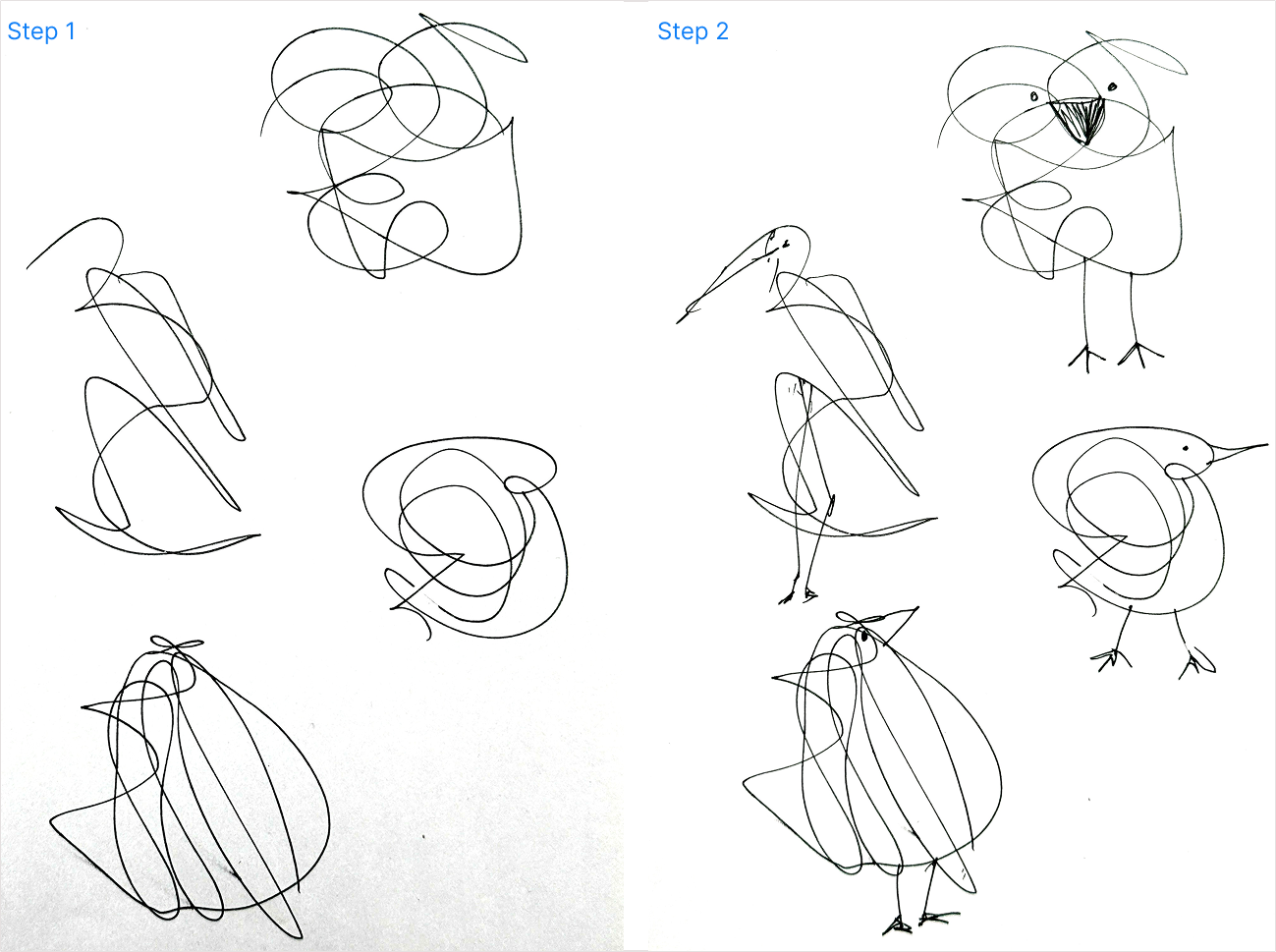
Birds In Disguise

Birds In Disguise

Lean into abstraction with quick, expressive bird paintings.

Exercise: Make random squiggles as fast as you can. Be free, loose and vigorous.

Why: Embrace spontaneity and discover unexpected forms through playful mark-making.

SubjectsBrush Control
Read full tutorial
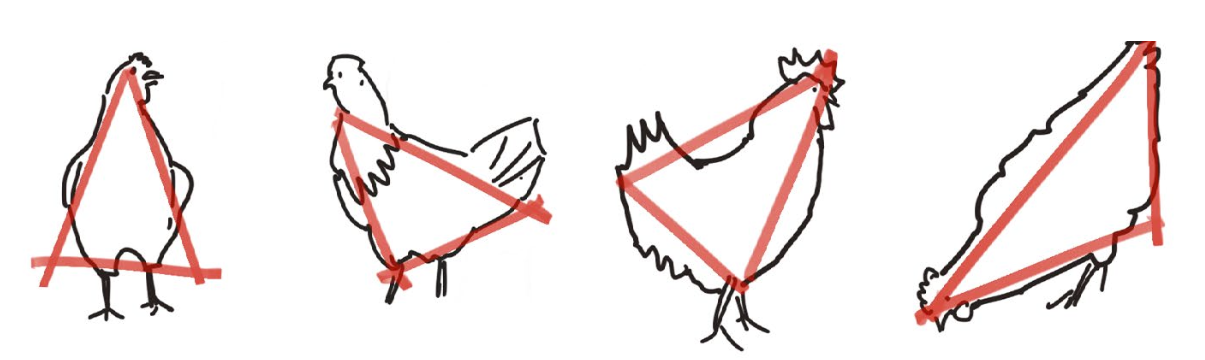
Form Over Feathers

Form Over Feathers

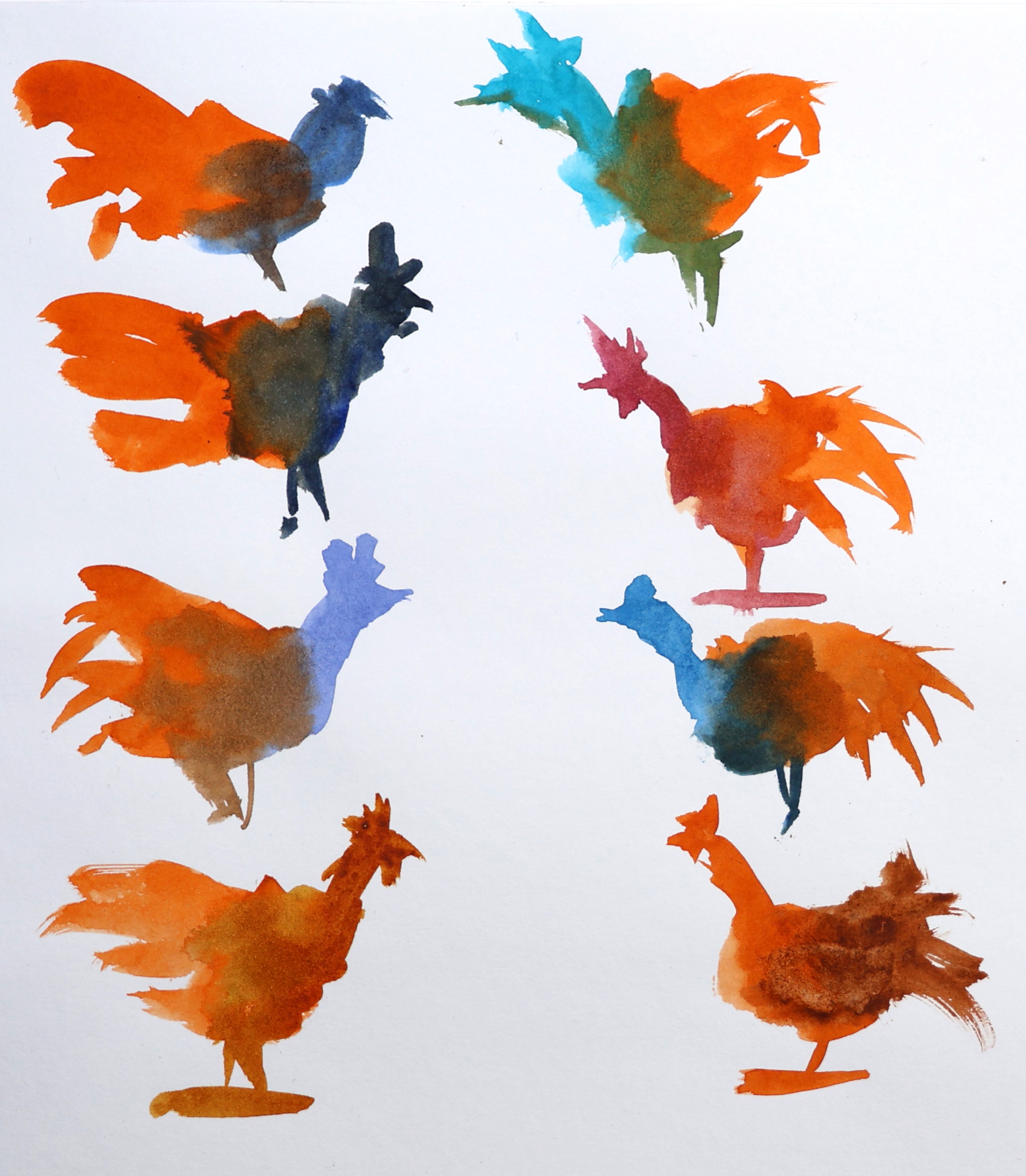
Paint birds by focusing on simple shapes and form rather than detail.

Exercise: Chickens are triangles with tiny heads and legs. Draw shapes, fill with colours.

Why: Learn to capture birds expressively without getting lost in feather details.

SubjectsBrush Control
Read full tutorial
In Good Form

In Good Form

Use curved brushstrokes that follow the shape of objects to suggest form.

Exercise: Pick round objects like fruit. Use bold, curved brushstrokes that follow the contour.

Why: Create convincing three-dimensional form through intentional stroke direction.

Brush ControlValues
Read full tutorial
Against The Grain

Against The Grain

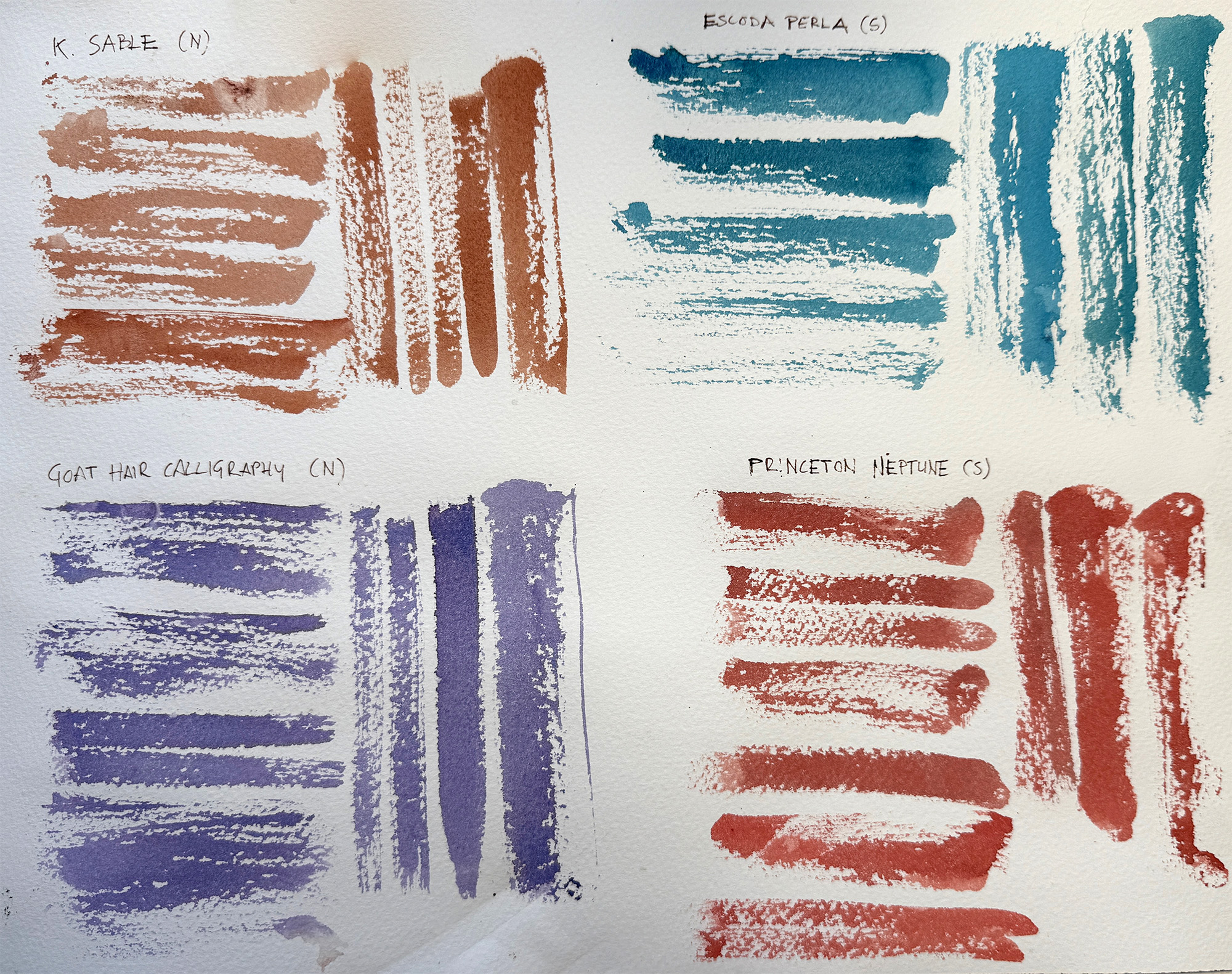
Explore dry brush technique for creating texture.

Exercise: Use different brushes with very little water, decent pigment load. Drag across paper.

Why: Add variety and interest through texture; suggest surfaces like wood or stone.

TextureBrush Control
Read full tutorial
High Contrast

High Contrast

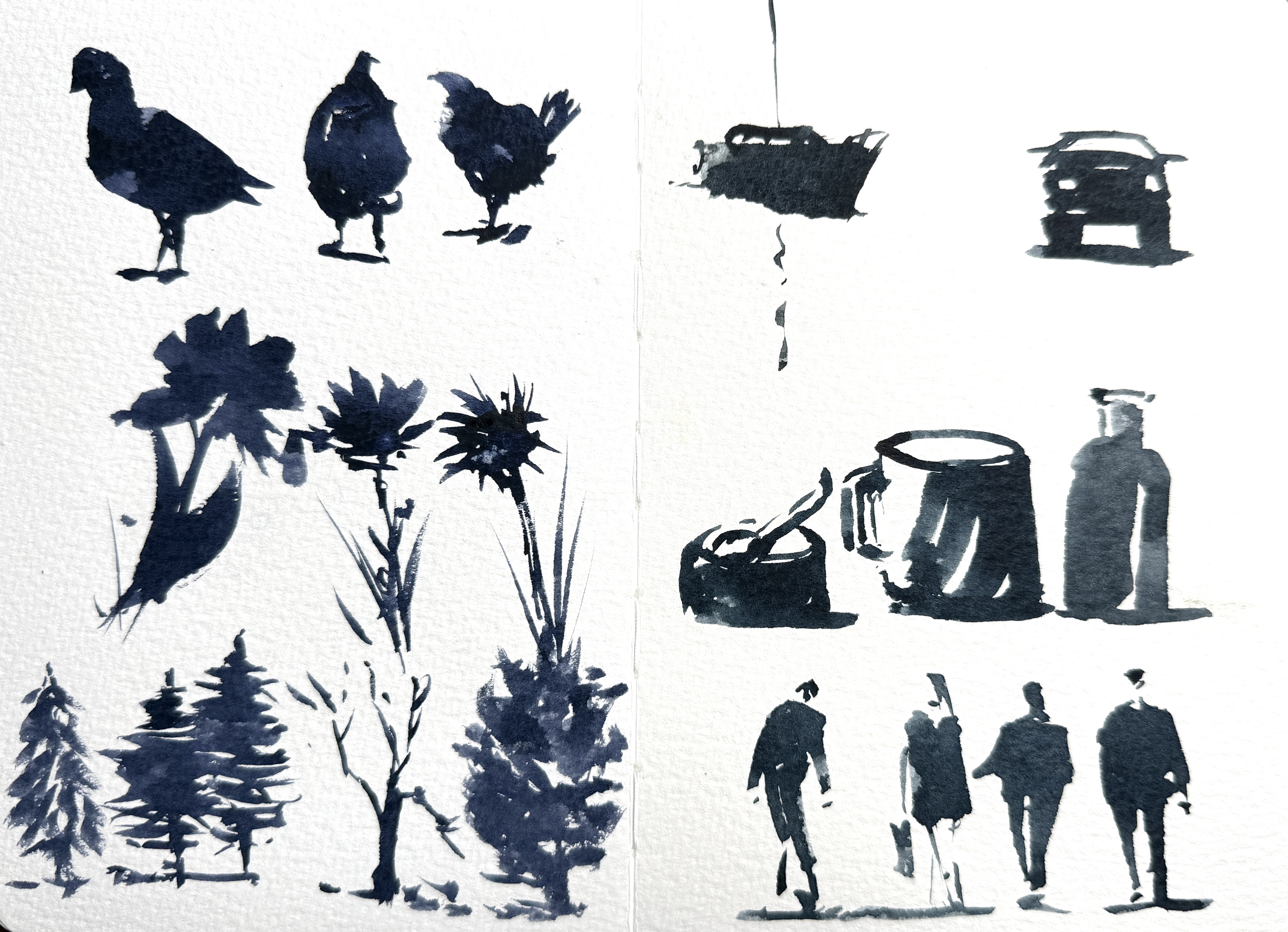
Paint silhouettes and backlit scenes to practice value contrast.

Exercise: Silhouettes teach you to simplify forms; backlit scenes train you to see value contrast.

Why: Understand the power of strong value contrast in creating impactful paintings.

ValuesSubjects
Read full tutorial
Master The Dark Arts

Master The Dark Arts

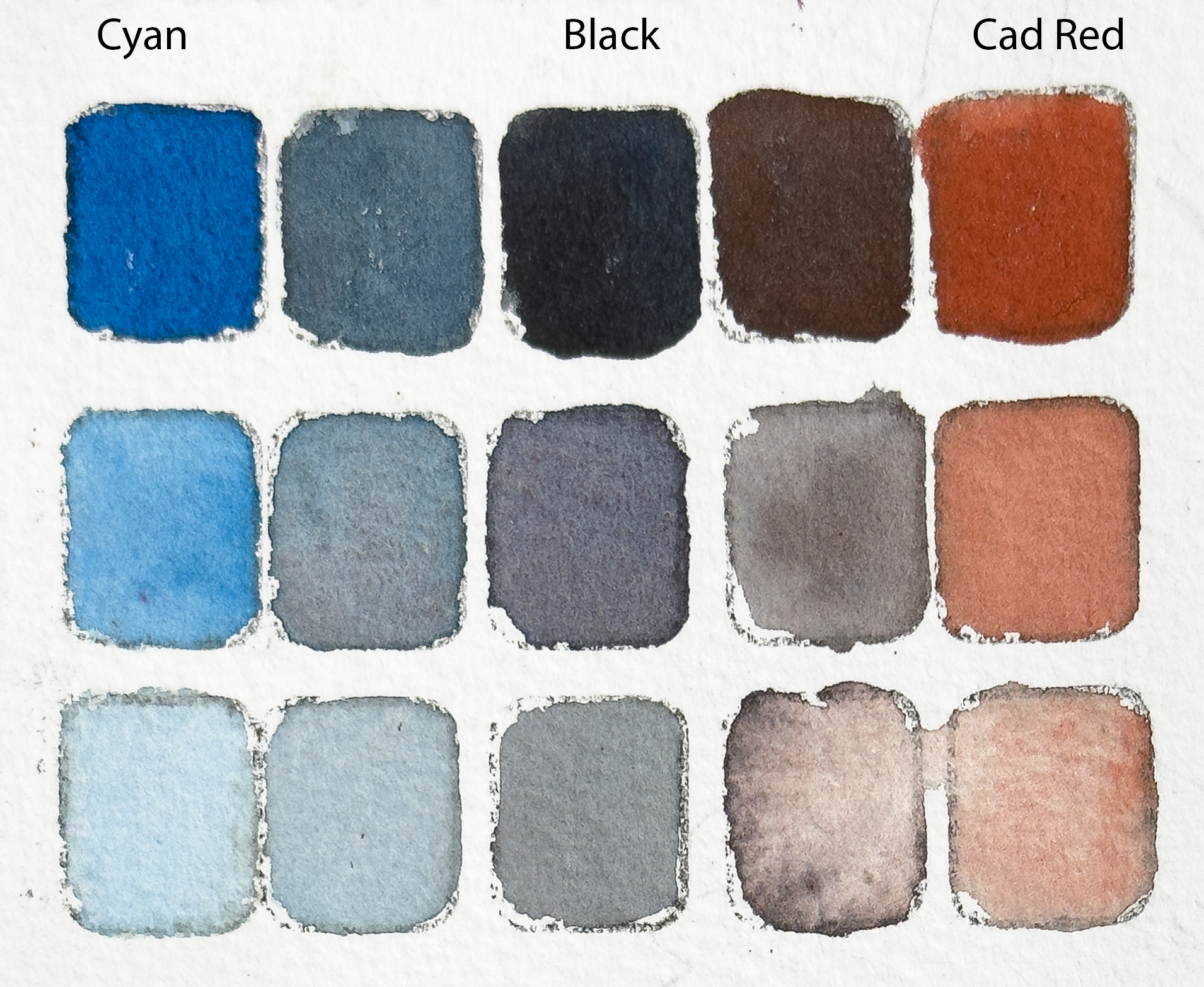
Mix rich, lively blacks from two or three pigments instead of using tube black.

Exercise: Cool Black: Cyan family + warm red. Earthy Black: Indigo + VanDyck Brown.

Why: Mixed darks create colour harmony and avoid the flat look of tube black.

ColourValues
Read full tutorial
Sky Full Of Clouds

Sky Full Of Clouds

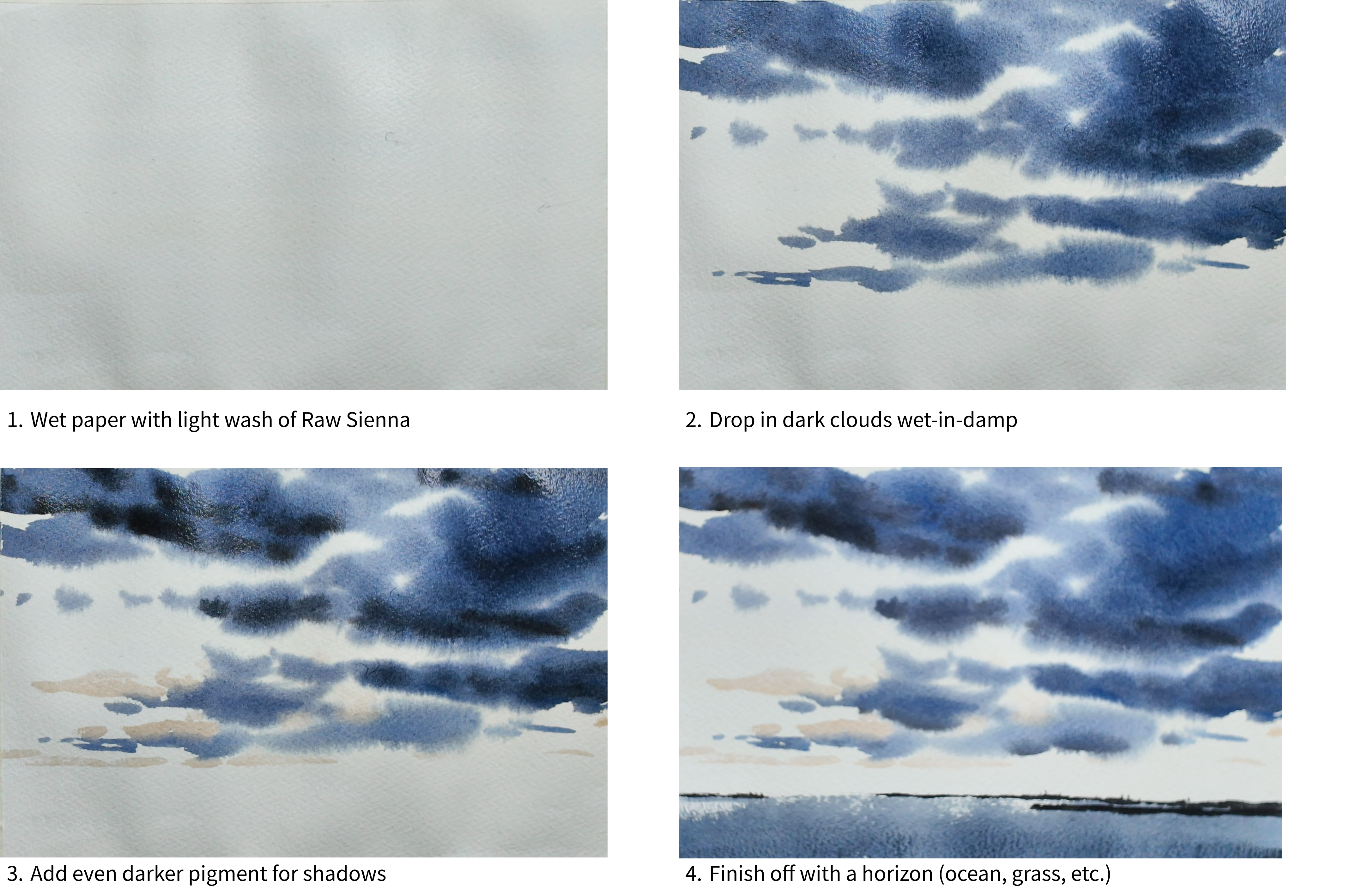
Paint expressive clouds—one of the most enjoyable watercolour subjects.

Exercise: Wet paper with faint Raw Sienna. Let it go damp. Mix a dark cloud colour and paint.

Why: Express mood and atmosphere without worrying about realism.

SubjectsWater Control
Read full tutorial
Master Class: Tom Hoffmann

Master Class: Tom Hoffmann

Learn from master watercolourist Tom Hoffmann's approach to value and layering.

Exercise: Layer 1: Paint all mid-value shapes. Layer 2: Once dry, add your darkest shapes.

Why: Learn a master's approach to building paintings through intentional value layers.

Layering & GlazingValues
Read full tutorial
Think Inside The Box

Think Inside The Box

Use odd-shaped paper scraps for a powerful exercise in composition.

Exercise: Use small pieces in non-standard formats (squares, skinny verticals, wide panoramas).

Why: Learn to adapt compositions to any format; reduce waste creatively.

Composition & Planning
Read full tutorial
Wash And Go

Wash And Go

Practice the fundamental skill of laying smooth, translucent washes.

Exercise: Flat wash: Mix plenty of colour, sweep side to side. Graded wash: Add more water as you go.

Why: Master this essential foundational watercolour technique.

Washes & GradientsBrush Control
Read full tutorial
Cut To The Shape

Cut To The Shape

Paint a complete scene with a single colour and one brush.

Exercise: Choose a brush and paint a small, simple scene. Focus on silhouette and big shapes.

Why: Forces clarity in brushwork and shape design; see subjects as abstract shapes.

Brush ControlValues
Read full tutorial
People Are People

People Are People

Add people to paintings with a few well-placed strokes.

Exercise: Fill a page with different versions—vary body types, clothing, gestures.

Why: Add life and scale to your paintings without needing to be a figure painter.

SubjectsBrush Control
Read full tutorial
Branching Out

Branching Out

Paint trees with loose, expressive strokes focusing on overall shape.

Exercise: Use a big brush. Keep it loose and fast—no detail. Start with the canopy.

Why: Learn to simplify complex natural forms into expressive shapes.

Brush ControlSubjects
Read full tutorial
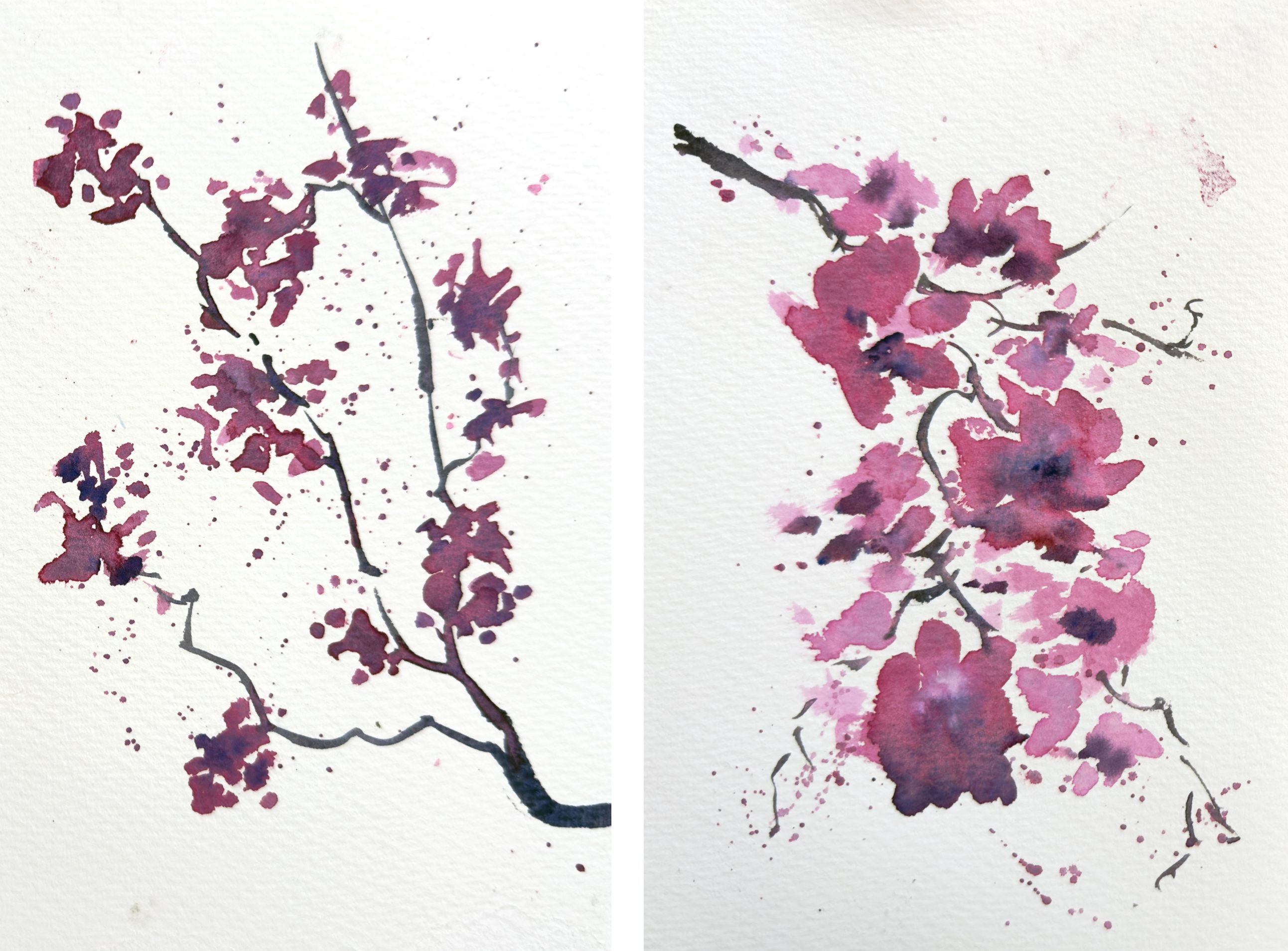
Blossom Up

Blossom Up

Paint spring blossoms with varied pressure and sharp, unpredictable lines.

Exercise: Use varied pressure to taper ends. Keep lines sharp—let them zig, zag, and fork.

Why: Practice brush control while capturing the delicate energy of spring flowers.

Brush ControlSubjects
Read full tutorial
It Takes Two

It Takes Two

Limit yourself to just two colours for smarter, stronger paintings.

Exercise: Pick exciting combinations that create a range of values and temperatures.

Why: Build stronger colour mixing instincts; create naturally harmonious paintings.

ColourValues
Read full tutorial
Let It Flow

Let It Flow

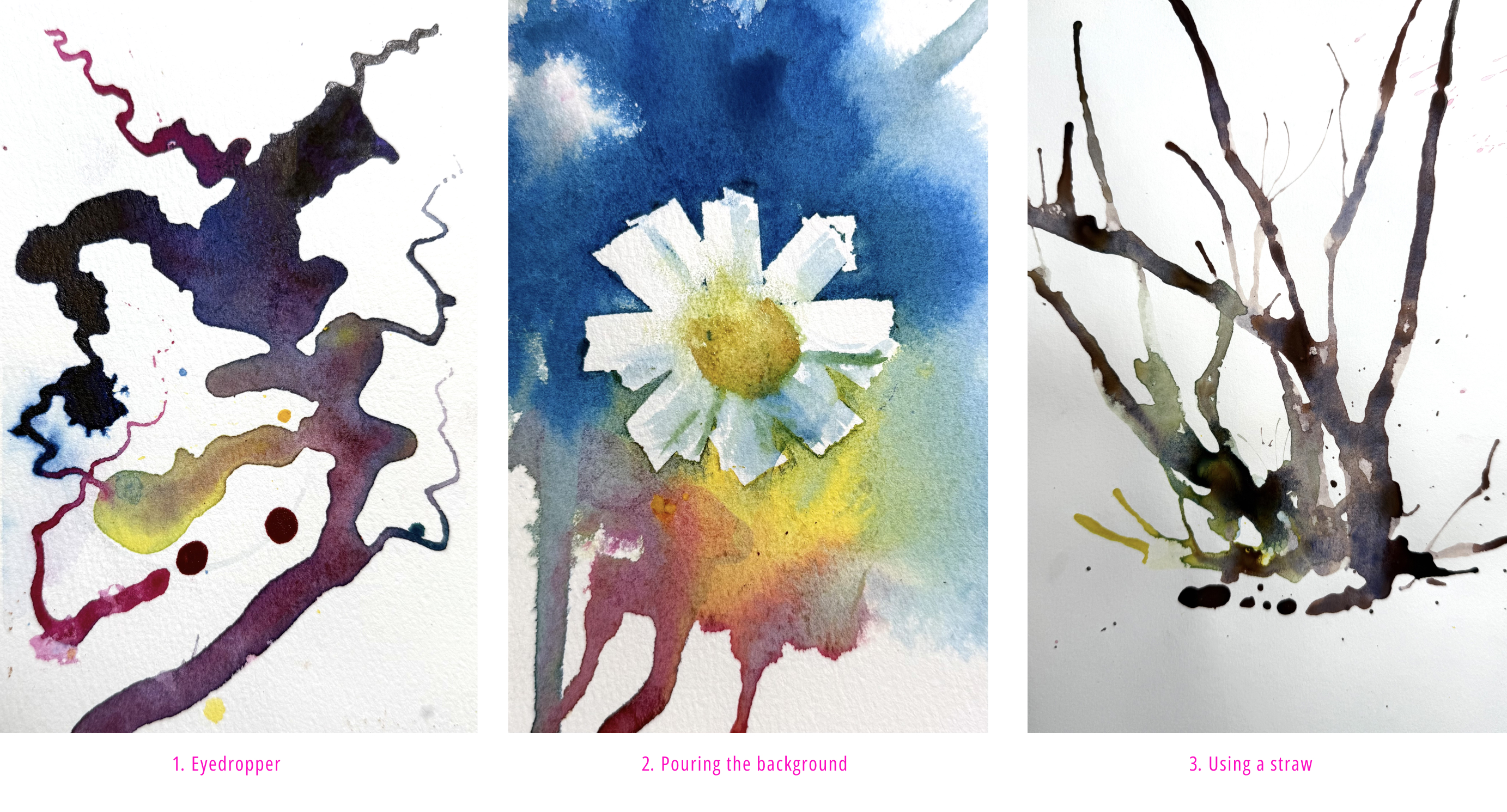
Discover what happens when you set brushes aside and play with water flow.

Exercise: Use droppers to drop pigment and tilt paper. Pour colours from dishes. Blow with a straw.

Why: Learn to predict and embrace blooms; understand the water-pigment relationship.

Water ControlWashes & Gradients
Read full tutorial
Strokes Of Genius

Strokes Of Genius

Develop your artistic signature through varied brushstroke practice.

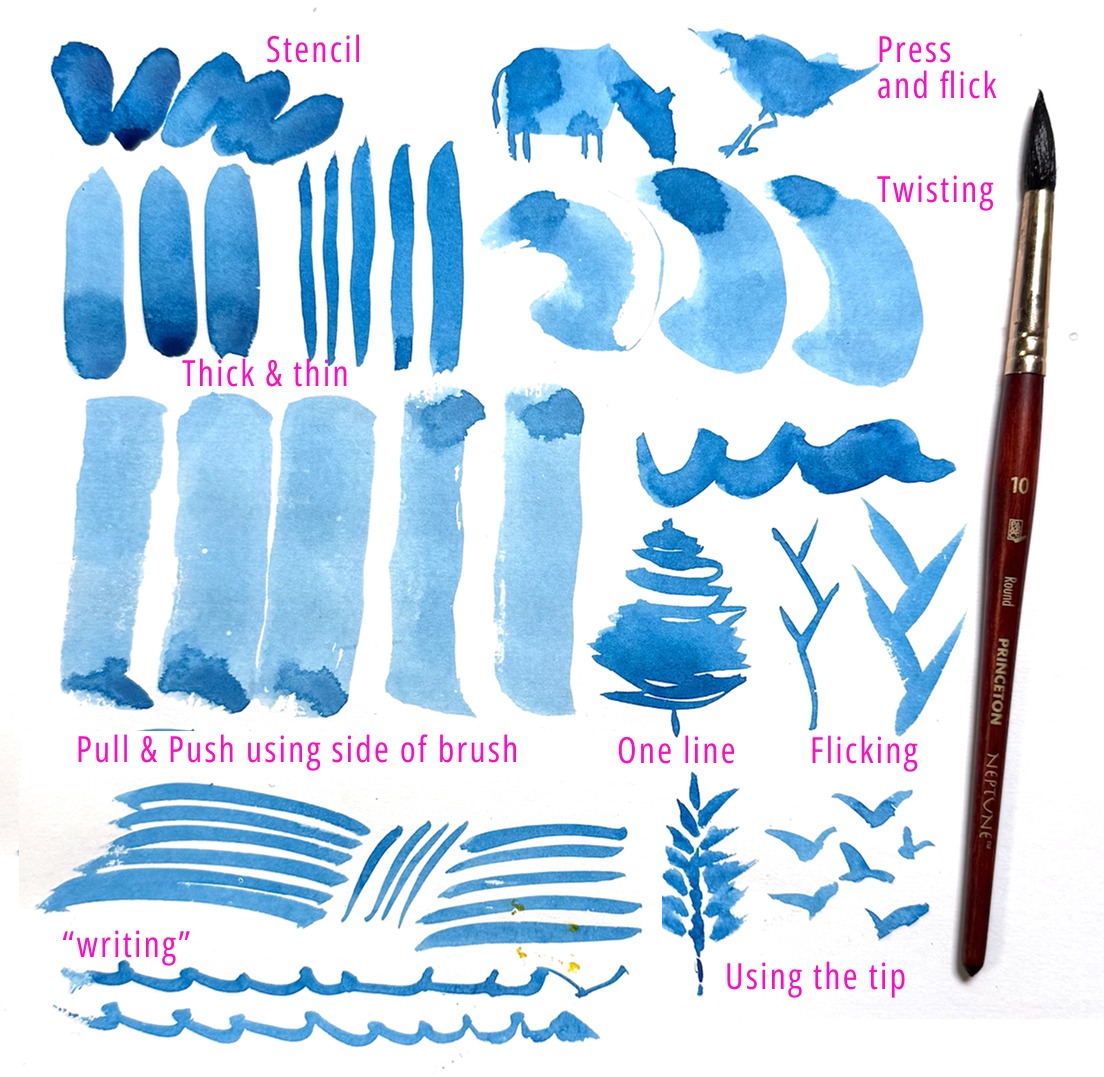
Exercise: Use the full belly of the brush. Push and pull, drag sideways. Press and lift.

Why: Develop your artistic signature; improve brush control for a wide range of marks.

Brush ControlTexture
Read full tutorial
Mapping Memories

Mapping Memories

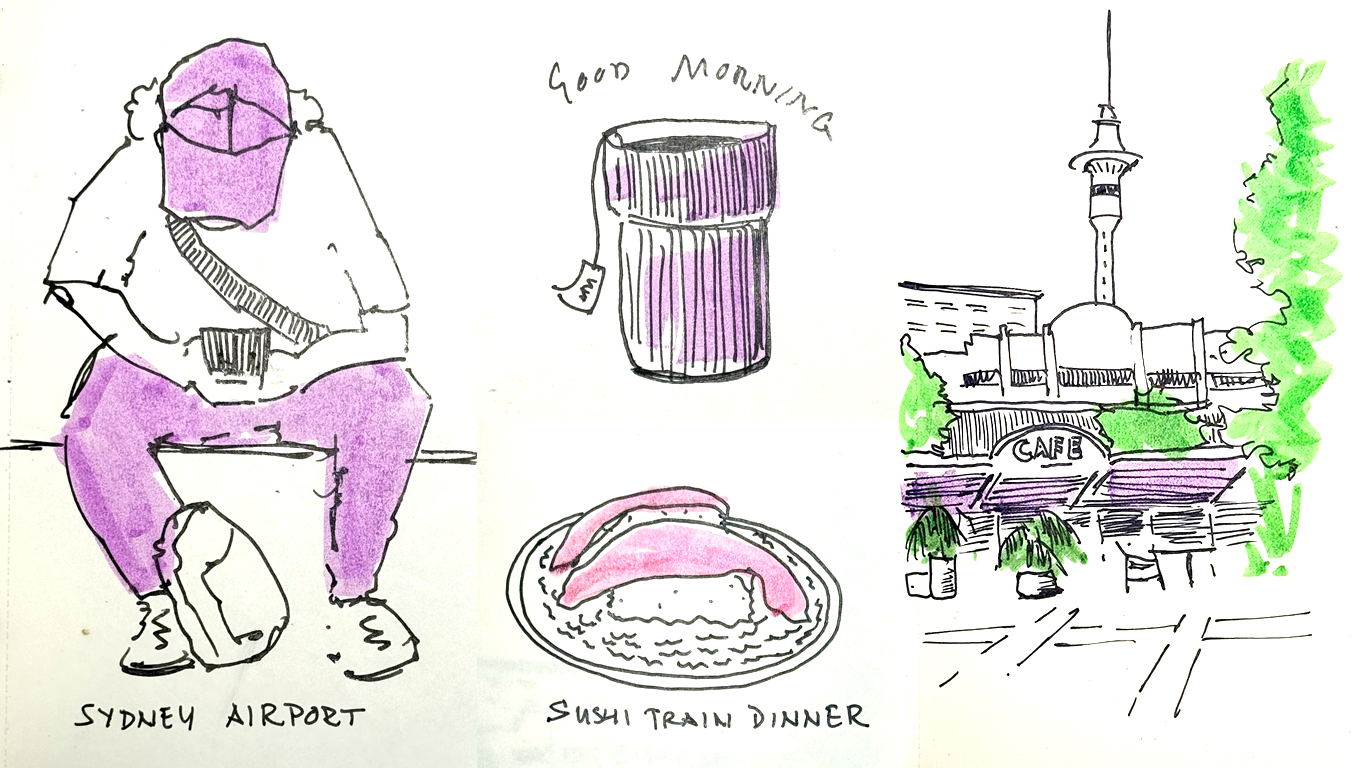
Practice sketching in the in-between moments—on trains, in cafés, waiting.

Exercise: Capture things that represent a moment. Break it down into simple shapes. Keep it fast.

Why: Keep creative momentum going; sharpen observation skills.

Composition & PlanningSubjects
Read full tutorial
Give It Form

Give It Form

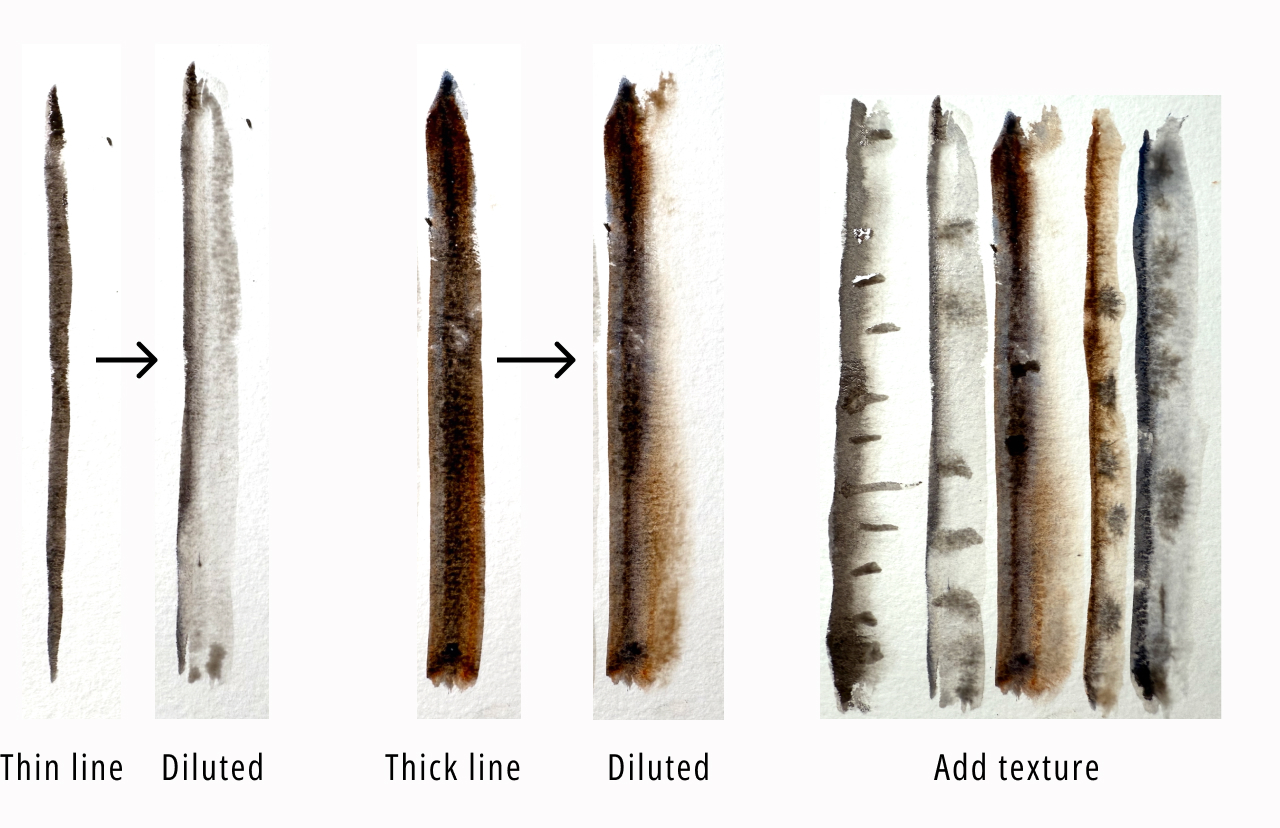
Use soft edges to create three-dimensional form in your paintings.

Exercise: Load brush with strong mix. Make a straight line. With a damp brush, drag and dilute.

Why: Create convincing form with a simple two-brush technique.

EdgesValues
Read full tutorial
Living On The Edge

Living On The Edge

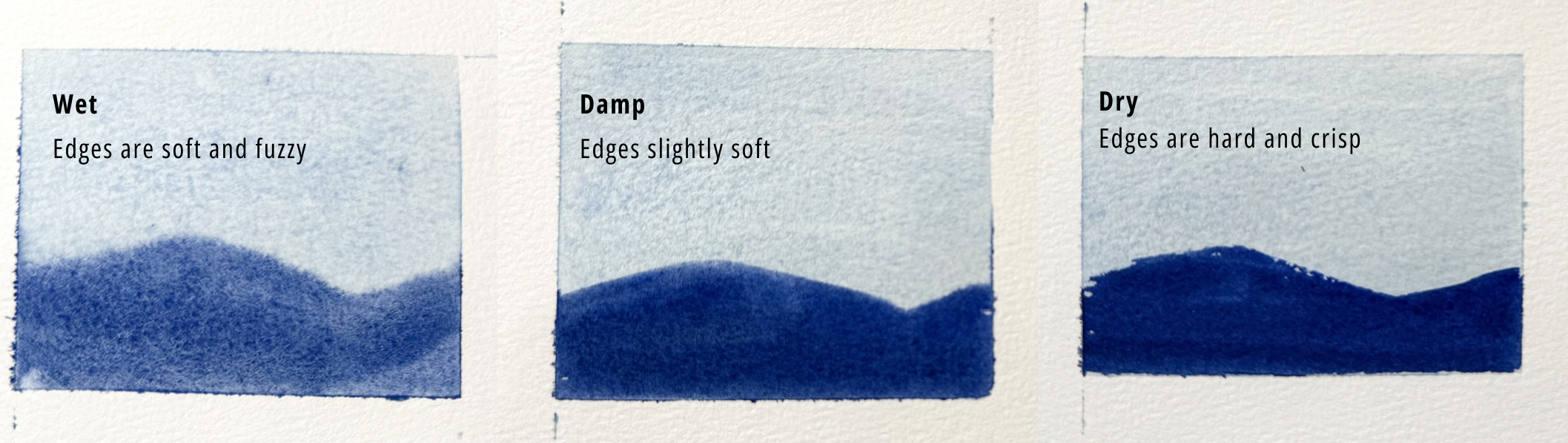
Master hard, soft, lost and found edges—how we handle them defines mood and depth.

Exercise: Paint three rectangles at different wetness levels to see how edges form differently.

Why: Direct the viewer's eye; enhance depth; express mood through edge control.

EdgesWater Control
Read full tutorial
Seeing Through Layers

Seeing Through Layers

Explore glazing—one of the most powerful tools in watercolour for building depth.

Exercise: Start with a Venn of three primary colours. Where they overlap, secondary colours emerge.

Why: Glazing is foundational. It builds depth, atmosphere, and unifies colours.

Layering & GlazingColour
Read full tutorial
Start Close In

Start Close In

Zoom in on small areas to find unexpected compositions.

Exercise: Zoom into a very small area and draw the shapes—a corner of the couch, edge of a cup.

Why: Discover that the best compositions sometimes come from looking closer.

Composition & PlanningValues
Read full tutorial
Find What's Missing

Find What's Missing

Focus on negative space—the shapes around objects rather than the objects themselves.

Exercise: Find simple objects. Outline only the negative space. Paint the negative first.

Why: Sharpen observation skills; improve composition through 'in-between' spaces.

Composition & PlanningValues
Read full tutorial
Seeing The Forest Not The Trees

Seeing The Forest Not The Trees

Paint groups of shapes as unified forms to create stronger, more cohesive compositions.

Exercise: Choose a group of shapes. Draw only the group's outer contour—no internal lines.

Why: Learn to see and paint connected shapes for powerful compositions.

Composition & PlanningWashes & Gradients
Read full tutorial
Harmonious Hues

Harmonious Hues

Explore analogous colours while practicing direct painting techniques on household objects.

Exercise: Pick two analogous colours. Find household objects. Paint directly—no pencil sketch!

Why: Build confidence painting directly; practice simplifying forms.

ColourBrush Control
Read full tutorial
Painting Bold Silhouettes

Painting Bold Silhouettes

Paint objects as bold silhouettes using a single colour, inspired by Matisse's paper cuts.

Exercise: Pick a round brush; choose objects with distinctive shapes; paint directly with a single colour.

Why: Practice observation and abstraction; build confident brush control.

Brush ControlEdges
Read full tutorial
Making Your Mark

Making Your Mark

Reacquaint yourself with your brushes by exploring the different marks they can make.

Exercise: Load each brush with colour and make random marks: drag, push, pull, twist. Create torsos, add legs and arms.

Why: Know and practice the marks of your brushes; practice loose figures.

Brush ControlSubjects
Read full tutorial
Light And Atmosphere

Light And Atmosphere

Observe how different lighting conditions affect the mood and appearance of a scene.

Exercise: Sketch or paint a subject under different lighting conditions. Compare morning/afternoon, sunny/cloudy.

Why: Develop sensitivity to atmospheric effects and mood in your paintings.

ValuesColour
Read full tutorial
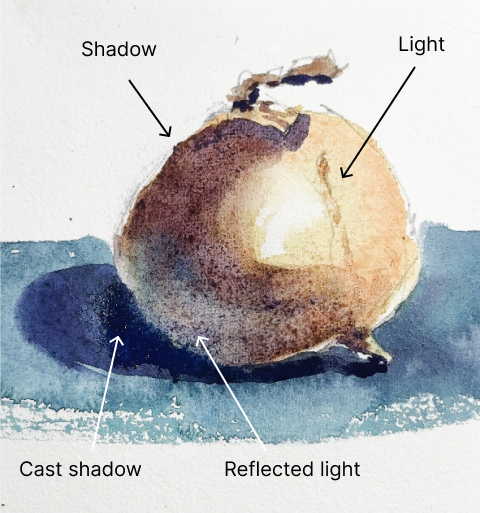
Light And Shadow

Light And Shadow

Practice painting different objects lit by a single light source, observing the 4 zones of light.

Exercise: Paint objects focusing on: Light, Shadow (with soft transition), Reflected light, and Cast shadow.

Why: Understanding light zones is fundamental to creating form and depth.

ValuesEdges
Read full tutorial

A new exercise every week

Join thousands of painters building their skills with 15-minute focused workouts.

Subscribe on Substack — it's free